Published November 25, 2025 09:00AM
After My Dad’s Cancer Diagnosis, Every Ski Day With Him Feels Like a Gift
You never know when it's their last season, so treasure every run with the ones you love.
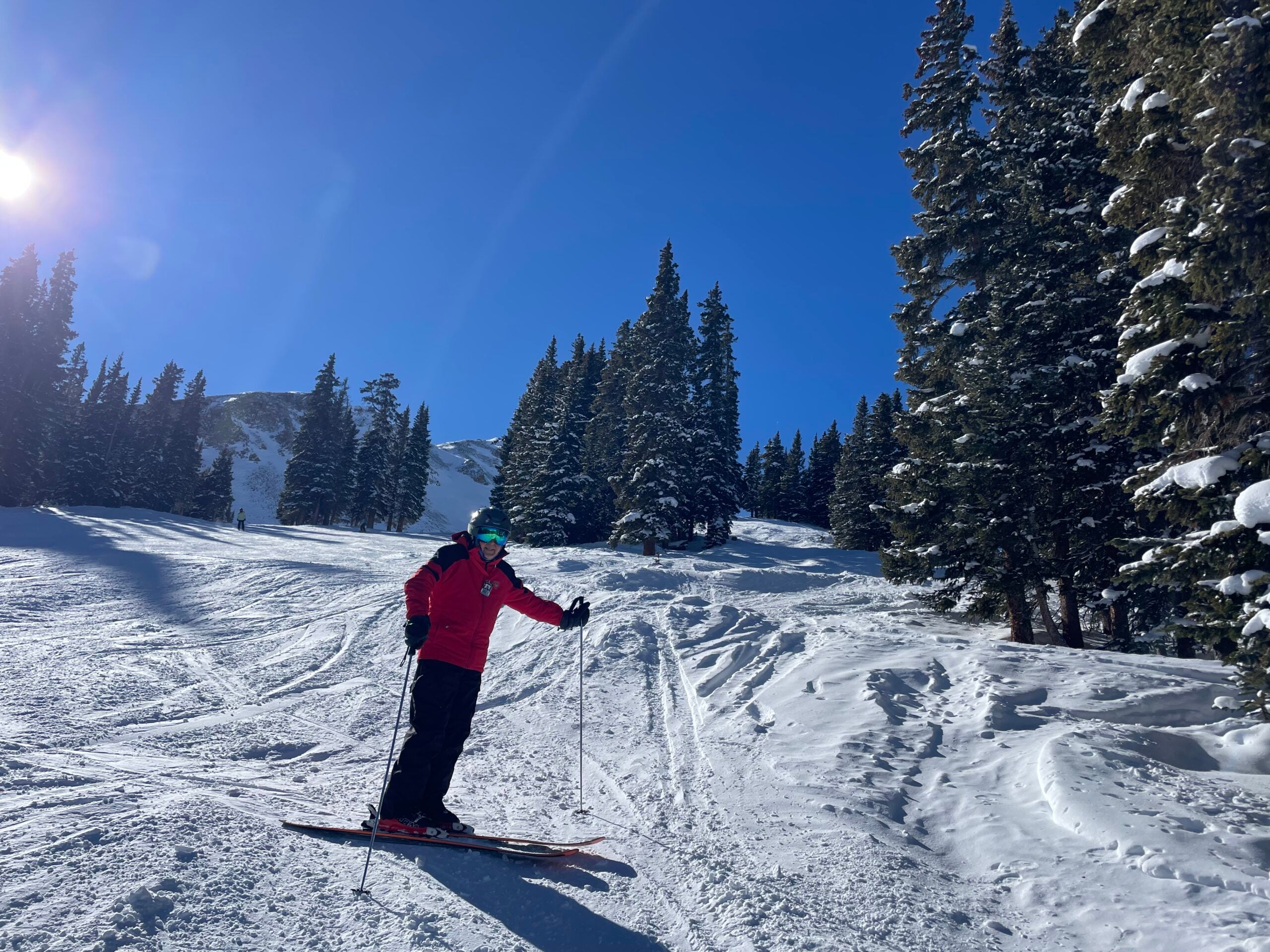
(Photo: Chryss Cada)
Last year, I believed my 84-year-old dad when he told me his cancer diagnosis was “no big deal”—right up until the lifelong skier mentioned he was thinking of not getting a season pass.
No ski pass? It doesn’t get any more serious than that.
Dad taught me how to ski 50-some years ago, and every season since we’ve spent several days on the slopes together. In fact, the combination of a retiree’s flexible schedule and a general “Let’s go for it!” attitude has made Frank my go-to ski partner for most of my life. So when he mentioned the possibility of not getting a pass last season, it stopped me in my tracks.
Of course, Dad did end up getting that pass, and what I learned from skiing with him last season was there’s nothing like cancer to make you appreciate something you’ve always had—and, somewhere in the back of your mind, think you always will.
Dad thinks he was “about 7” when he began experimenting with a pair of cedar boards on his backyard mountains in northern Montana.
ADVERTISEMENT
“There was no turning those boards,” he explains. “So I had to find a hill steep enough to get up speed, but not so steep I couldn’t stop. If I was lucky, I’d find a slope that leveled out at the bottom—if not I’d have to come up with some creative ways to stop.”
While attending Montana State in Bozeman, he would go with his PE class to Bridger Bowl, where the only instruction he remembers receiving was what time to be back on the bus. “I’ve never really had a lesson,” he says. “I would just look around and see what other people were doing and then try it myself.”
He took the same approach with first my mom (who had never skied when she met him) and then my brother Mark and me.
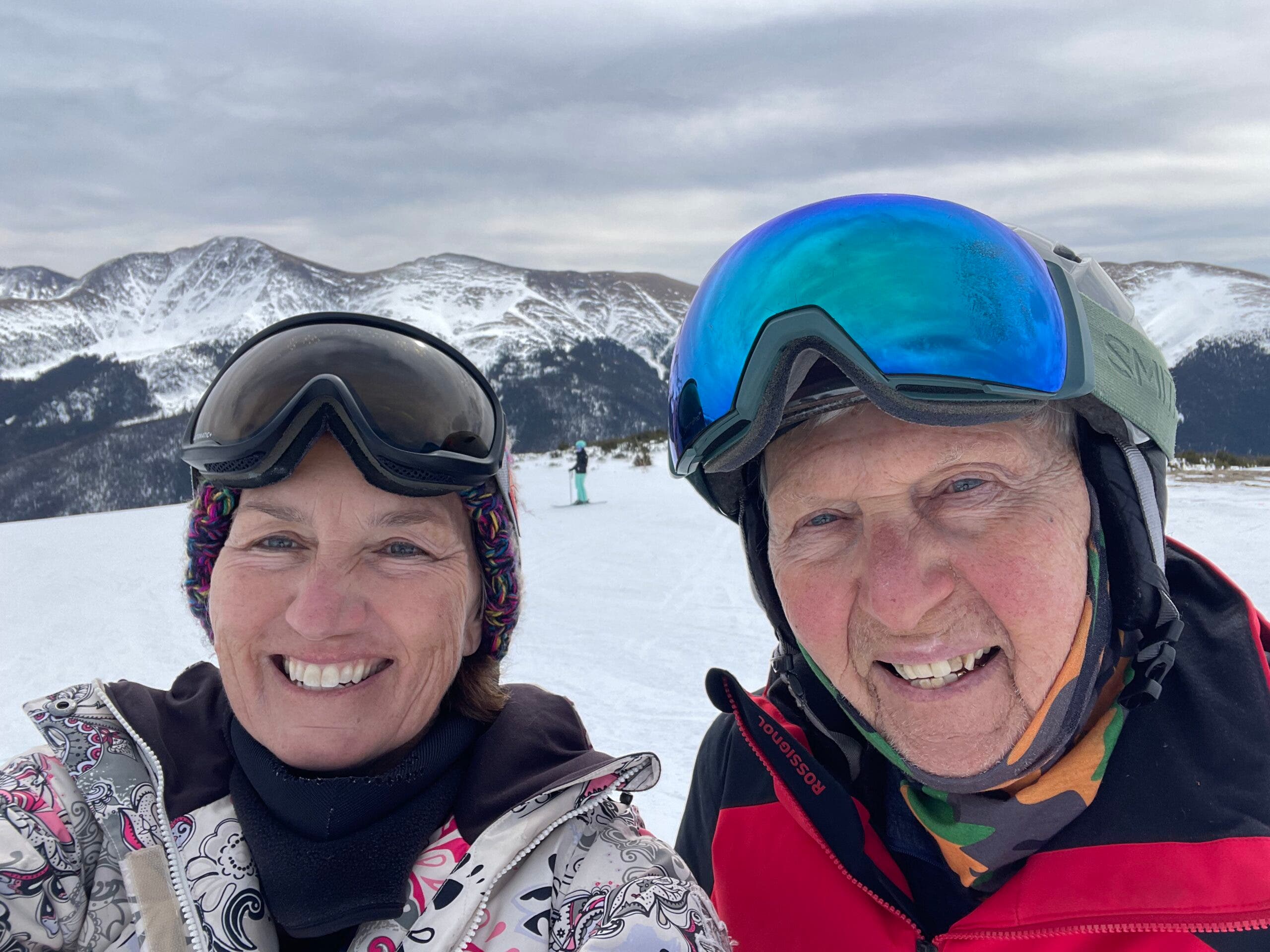
“I don’t really remember teaching you kids to ski,” he says. “I remember being at Steamboat, helping you get up a small slope, showing you how to make a snowplow and watching you go down.”
ADVERTISEMENT
Independence was the foundation of my family’s approach to skiing. Mom and Dad were by my side for my earliest turns, but would ski farther and farther down the run in front of me as I progressed. Forever scarred by making my family wait as I slowly made my way back and forth across the easiest of slopes, I’ve spent my adult life seeking out the gnarliest terrain on the mountain and charging down it with all my might.
This “Nobody has to wait for me” approach is how I almost lost my Dad to the 4,139-foot vertical drop of Jackson Hole’s legendary Corbet’s Couloir.
Following my usual MO of skiing ahead, I was midway down the Rendezvous Bowl when I heard Dad’s cries for help. Taken down by an icy day that rendered even the most skilled skier struggling to hold an edge, Dad was sliding on his back toward Corbet’s. Luckily an everyday hero saw what was happening and threw himself in front of Dad.
“Maybe I should have adopted him,” Dad jokes.
ADVERTISEMENT
Older skiers who keep their sense of adventure stay a few turns ahead of Father Time. Through the years, Dad and I have gone helicopter skiing together in the San Juans, cross-country skiing deep in the Wyoming backcountry, and steep skiing at Canada’s most challenging resorts. Our home mountain is Winter Park’s Mary Jane, best known for her monster moguls.
“I actually feel like I was skiing my best when I was about 80,” he says. “That’s when I remember having the most fun in the bumps instead of worrying I was going to fall and hurt myself.”
I didn’t notice Dad slowing down. Then along came his cancer treatment, accelerating the challenges skiers face as they approach the end of their time on the slopes. When you are decades older than the resorts you are skiing, equipment seems heavier to maneuver, the walk from the parking lot stretches long, and catching the last chair doesn’t seem nearly as enticing as catching a cat nap in the car before the drive home.
ADVERTISEMENT
While it was not, thankfully, Dad’s last season (he has since been given a clean bill of health), last season’s chemo sapped his energy and cut his ski day roughly in half. Since some days we only had a couple runs together, we made sure they were good ones.
On a February powder day up at Loveland, I had just led him to the top of one of my favorite stashes when he promptly disappeared. Sniffing out the goods, the wiley old powder hound had gone ahead of me.
When I heard Dad’s signature “YEEHAAW” rise from the foggy, snow-shrouded forest, I was suddenly a little girl again, shouting back, “Dad! Wait for me!”
He did, and we skied down a pair of deep, fresh lines side by side.
ADVERTISEMENT
In Other News: Why Are Senior Discounts Shrinking?
When Dad started with the crazy talk about not getting a season pass, I decided I would get one for him. I mean, he’s in his mid-80s, how expensive could it be? When I was growing up most resorts offered free skiing to everyone starting on their 70th birthday. I knew those days were fading, but figured an octogenarian wouldn’t have to pay much to ski. Wrong.
The two major players, Epic and Ikon, offer slim (if any) senior discounts. Some major resorts (like Alta) don’t charge skiers older than 80, but at the vast majority of resorts someone in their 80s (or 90s even) will pay the same as a sprightly 65-year-old.
ADVERTISEMENT
Colorado has three resorts (Wolf Creek, Purgatory and Sunlight) that offer free lift rides to octogenarians.
Purgatory is part of the national Power Pass collective that offers a free Super Seniors pass good for unlimited skiing at Snowbowl, Brian Head, Sipapu, Pajarito, Nordic Valley, Lee Canyon, Sandia Peak and Willamette Pass.
Back in Colorado, it’s worth mentioning that Ski Cooper has a $10 season pass for skiers 75 and up, Monarch offers a $25 pass for skiers 69 and up and Powderhorn offers $29 passes for skiers 75 and older.
Just last season, Telluride did away with free skiing for those 80 and up. When the decision was met with public outcry, resort officials said they would provide free passes for octogenarians in need. Ski Telluride for free? I know just the 85-year-old in need of that.