Updated February 9, 2026 01:47PM
If you buy through our links, we may earn an affiliate commission. This supports our mission to get more people active and outside.Learn about Outside Online's affiliate link policy
The 7 Best Ski Packs of 2026, Tested
Smart storage, secure carry, and dialed organization—these packs stood out in our real-world testing.

The year's best ski-specific packs for backcountry skiers and alpine tourers. (Photo: Brad Kaminski)
Table of Contents
After testing 27 backcountry ski packs and alpine touring packs, we rated the Ortovox Freerider 28 as the best for freeriding for its snug fit and the Raide Research SB 30L as the best for avalanche terrain for its safety features. Meanwhile, the Black Crows Dorsa 23 Freebird is a budget-friendly option.
When you’re moving through the mountains in winter, you can’t afford a junk show on your back. Between navigating difficult terrain, weather, layering, and face shots, you don’t want to have the extra stress of fidgeting with your ski pack and worrying that you might lose some of the gear inside. The best backcountry ski backpacks are roomy enough to hold all your essentials and organized enough to keep them accessible in a tight, streamlined package. With that in mind, we tested 27 backcountry ski packs and alpine touring packs specifically designed for ski touring and winter travel. Then we narrowed it down to the seven best options for every kind of winter adventure.
February 2026: We updated this article’s links and prices.
Best Backcountry Ski Packs: At a Glance
- Best for Freeriding: Ortovox Freerider 28 ($240)
- Best for Avalanche Terrain: Raide Research SB 30L ($879)
- Best for Quick Transitions: Black Diamond Cirque ($230)
- Best Technical Features: Blue Ice Yagi 28L ($140) [currently out of stock but check back or scroll the site for more options]
- Best Compact Pack: Deuter Freecline 15 ($72) [currently out of stock but check back or scroll the site for more options]
- Best Organization: Ortovox Switchback Touring Pack ($240)
- Best for Fast Missions: Black Crows Dorsa 23 Freebird ($209)
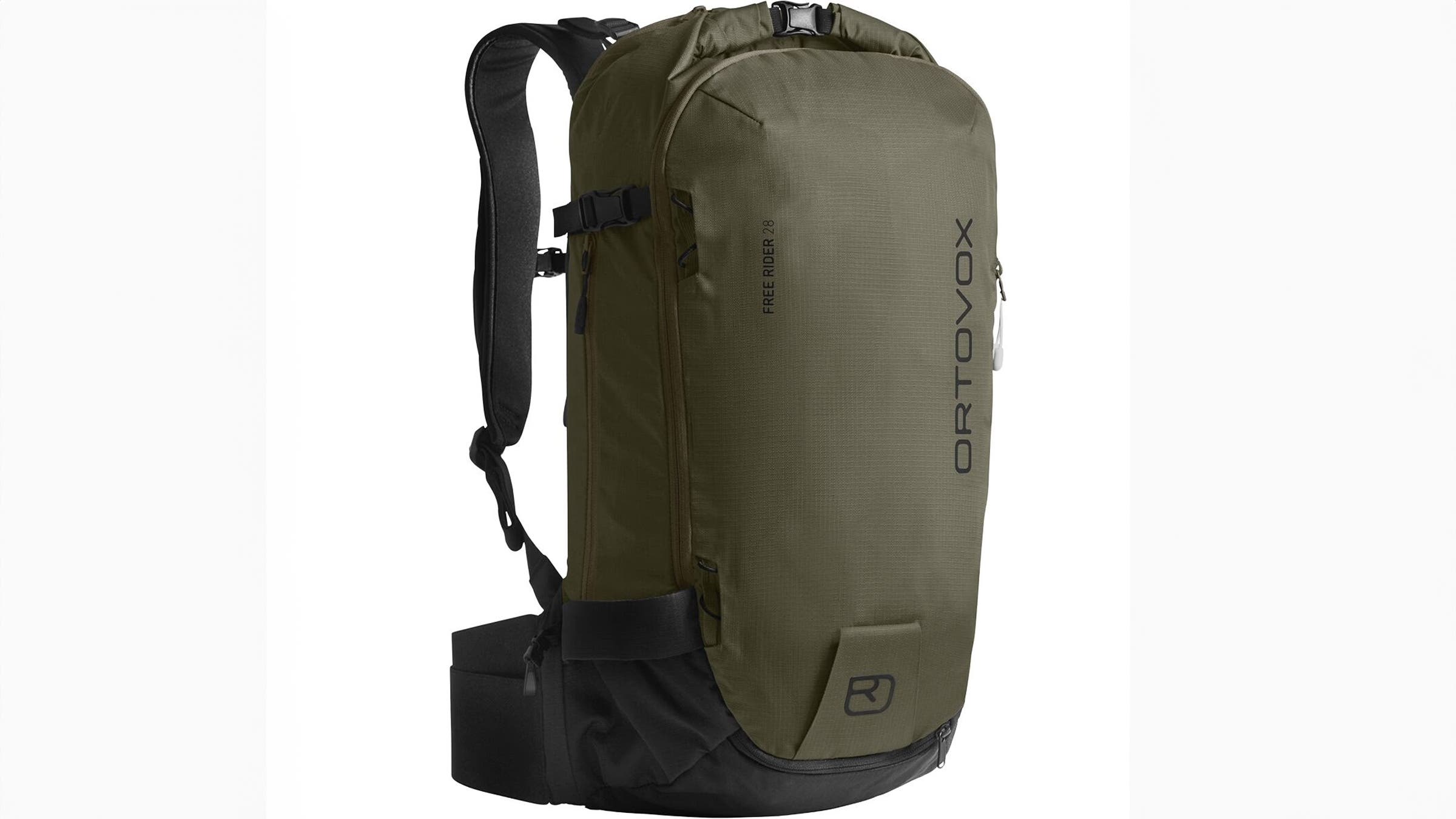
Best for Freeriding
Ortovox Freerider 28
Weight: 2.6 lbs
Sizes: 20 SL, 22 L, 26 SL, 28 L
Pros and Cons
+ Snug fit
+ Rolltop closure
– Not the best for carrying fat boards
While backcountry tourers are used to skiing with a backpack, freeriders looking to shred big lines while sometimes leaving the ground on jumps and cliff drops are less excited about having extra bulk and weight hampering their movements and tipping them into the back seat. That’s where fit and balance come into play. Our tester, who regularly competes in big mountain events, was a huge fan of the Freerider 28’s elastic waistband and upper and lower cinches. “I could get the bag very snug on my back, and the contents and avy tools closer to my body,” he said. “When descending, it felt great dropping cliffs, spinning 360s, and backflipping on big mountain lines. Sometimes packs pull you with your rotation on landing and this did not. It almost felt like a back protector instead of a pack.” That may be due in part to this pack’s compatibility with a foam spine protection pad that adds safety when going big.
An update to older models, the larger volume versions now feature a roll-top with an integrated wet compartment as well as several convenient side stash pockets. Some testers appreciated the external pockets on the side for quick, on-the-go access to smaller items like snacks and water, while others wished they were big enough to hold a camera, skins, or crampons. Integrated internal and external holders for radios truly made this pack a hybrid resort/backcountry weapon.
One tester wished that the upper side compression straps were 4 inches longer in order to A-frame wider skis and also thought the ice axe carry was a little looser than it needed to be. But when ascending a bootpack outside of Riksgransen, Sweden, he didn’t have any issues transitioning from A-frame carry to skiing thanks to easy access through the backpanel zipper.
ADVERTISEMENT
No doubt aggressive skiers will reach for this pack on big missions in stable snow conditions, on long ski tours, or when the agenda calls for bootpacking steep lines.
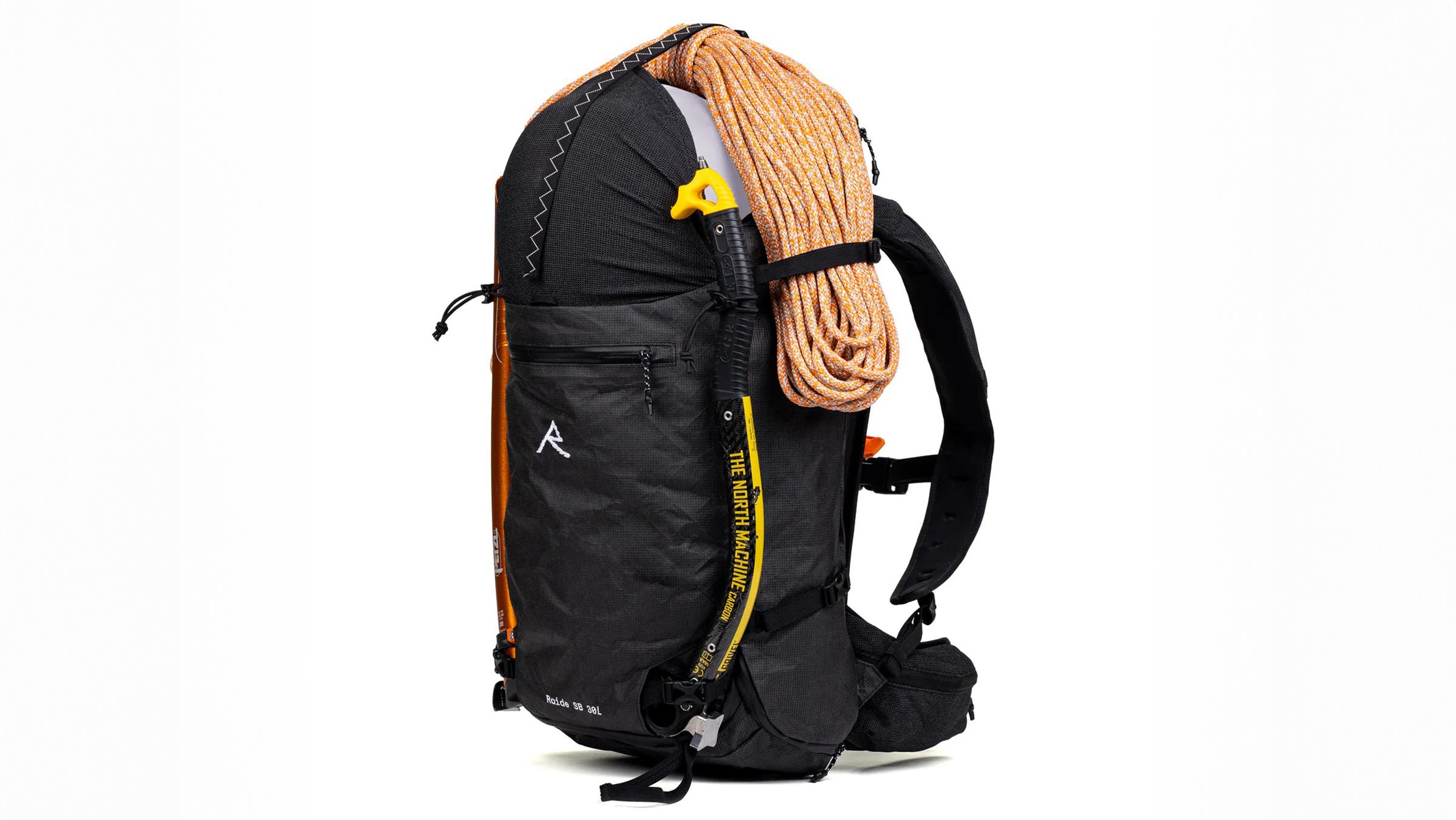
Best for Avalanche Terrain
Raide Research SB 30L
Weight: 3.7 lbs
Sizes: 30L
Pros and Cons
+ 90+ minutes of air in a burial
+ Mitigates asphyxiation
– Expensive
Last year, we awarded the Raide LF30 “Best in Test” for its meticulous design and unmatched features in a lightweight ski-mountaineering pack built for big, technical ascents and descents. From roll-top integration to modular ski- and rope-carry systems to hands-free probe retrieval, this pack broke new ground for a small garage brand competing in the big leagues.
We still love the original pack, but we were excited to test the new SB 30L, which integrates Norwegian Safeback (SBX) technology for added avalanche safety. When a skier is buried in an avalanche or tree well and triggers the SBX unit via the shoulder-strap T-handle, a lithium battery–powered fan pumps clean, oxygenated air from the pack to the victim’s air pocket through mesh tubes while pushing out exhaled carbon dioxide. The goal is to prevent asphyxiation—the cause of 75 percent of avalanche deaths—by extending a buried skier’s survival window from the typical 15 minutes to up to 90 minutes.
ADVERTISEMENT
“The new Safeback system in this pack is a great improvement,” said our Jackson-based tester, who previously tested Safeback in the Db vest before trying it in the Raide SB 30L. “The device is so small as to not be noticeable, and the removable nature means it can be added depending on conditions. But even with it in, it doesn’t noticeably impact comfort, fit, or the amount of available space in the pack.”
Our tester is 6’1” and reported that the large size fit him perfectly, even with the SBX unit. “The pack sits perfectly with weight just above your hips, and the multiple ski-carry options lend to comfort regardless of how many vertical feet you intend to bootpack,” he said.
Because both the probe and shovel can be accessed without taking off the backpack, the SBX stays on the rescuer’s body during probing and digging in case another avalanche occurs. This makes the SB 30L an excellent option for Search and Rescue operators looking to improve burial outcomes, as well as for guides and recreational ski tourers.
Also available in a 40-liter version (SB 40) with an additional cinch top.
Best for Quick Transitions
Black Diamond Cirque 35L
Weight: 2.1 lbs (35L, S/M)
Sizes: S/M, M/L
Pros and Cons
+ Easy access to inside storage
+ Removable snowboard carry straps
– Avalanche tool pocket is too large
It’s a bold move to update a classic product, but Black Diamond took a leap on the tried-and-true Cirque by making several big changes. The brand added a side zipper to access the main compartment and more durable materials, including a PFC-free 210D nylon fabric and Dynex grid that’s stronger than the older version and more water repellent. Testers loved these new features and didn’t encounter any durability issues during the whole season of slamming the pack on and off in quick transitions with sharp ski edges and tools rubbing on the outside.
The new Cirque 35 excels on spring missions in the alpine, where quick access to crampons, an ice axe, and other gear is key. “I love a roll-top pack, and this is one feature that I really appreciate,” says one tester who toured it during winter and spring days around Aspen, Colorado. “I was able to throw in an extra layer for tours without hesitation because of the space it offered and how easy it was to get in and out, especially with the large side zipper.” The diagonal ski carry system with a bottom loop and top webbing strap with a hook was quick and easy to deploy in transition, and the ice-axe bungees were a breeze to unfasten on unexpected sections of steep terrain.
ADVERTISEMENT
Our 6’1″ tester thought the pack was a bit short, and some disliked the hassle of opening both the webbing hook and roll-top buckle to get inside. Snowboard straps are sturdy but removable when you don’t need to carry a board on your pack.
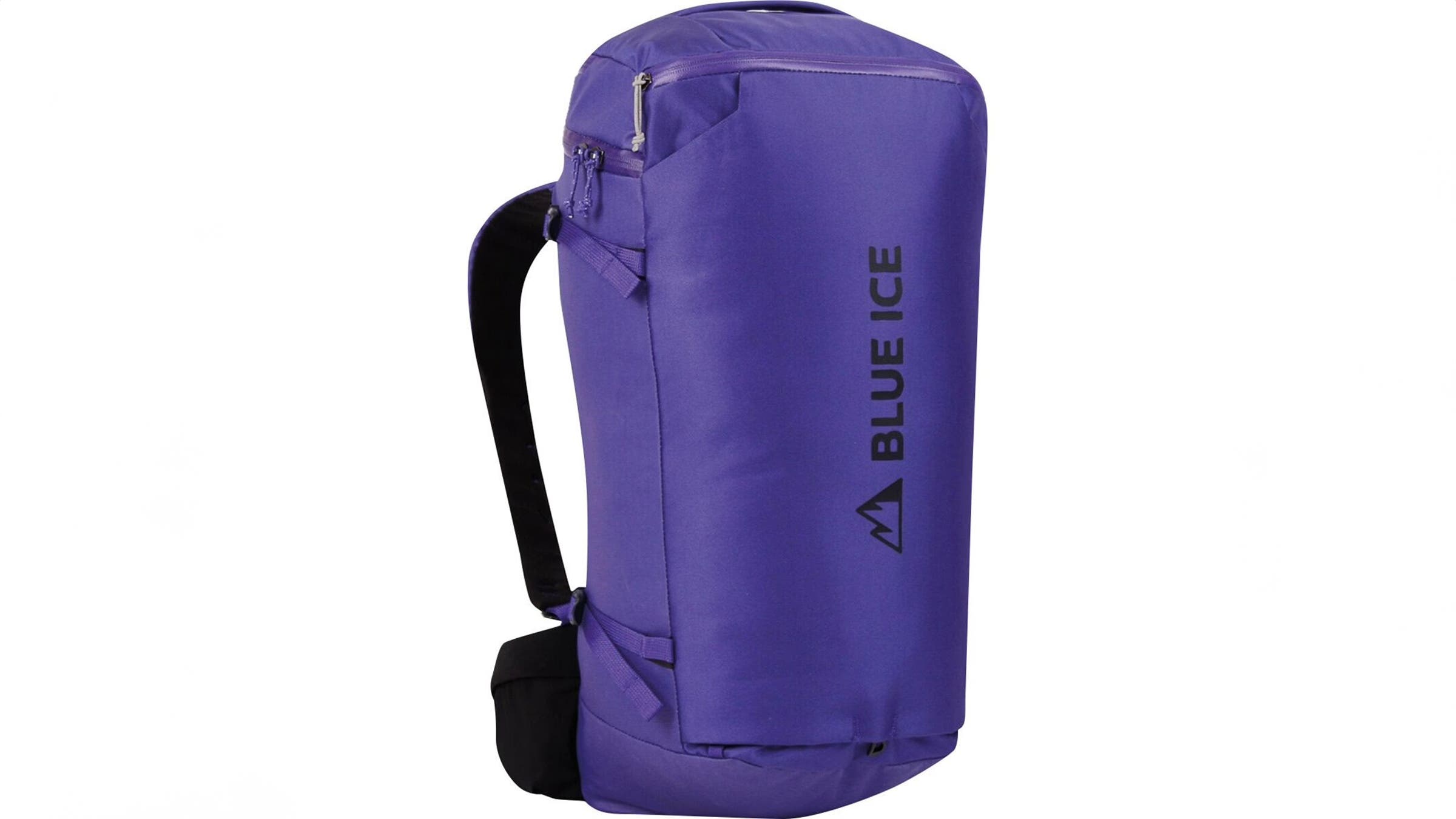
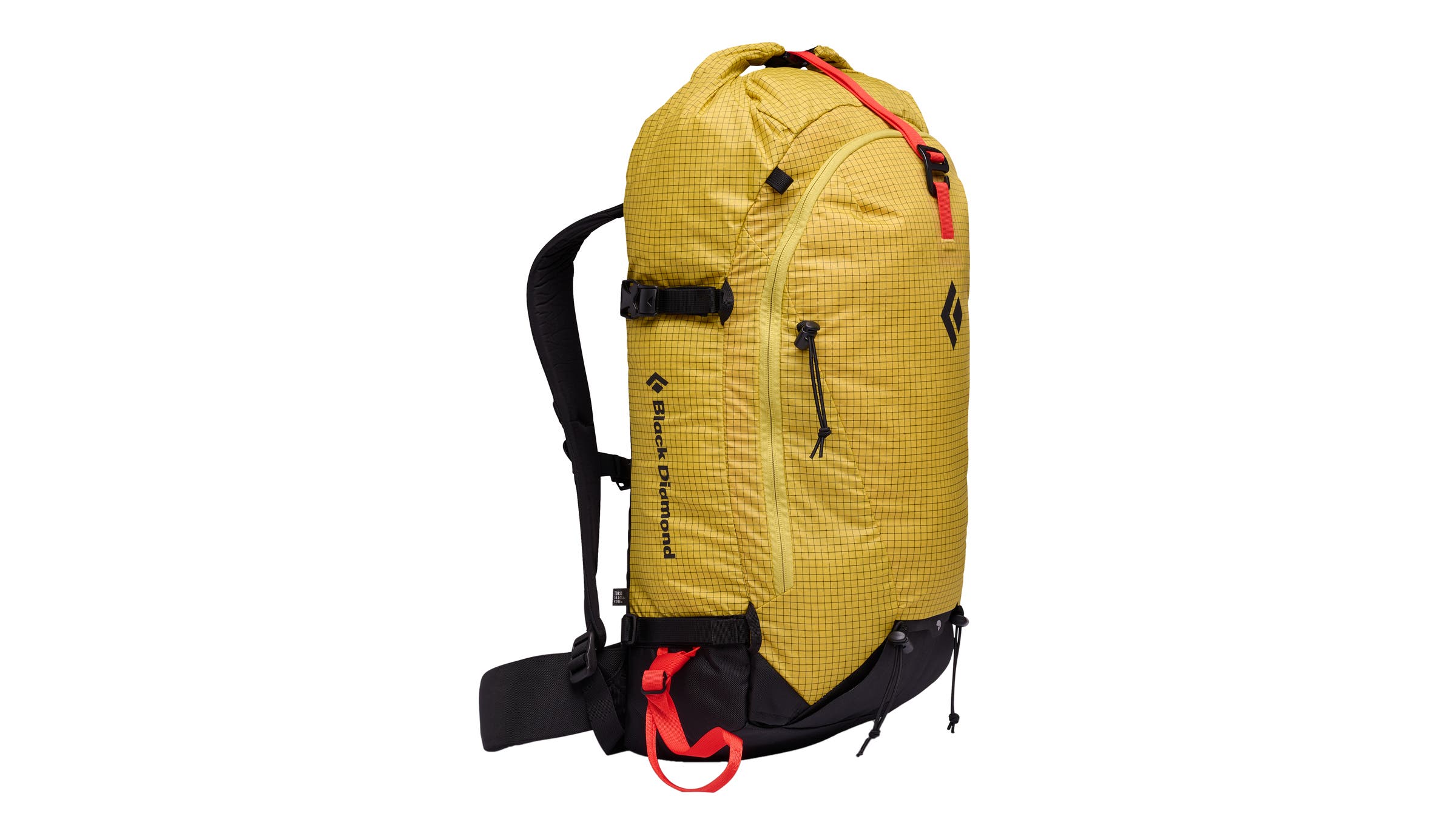
Best Technical Features
Blue Ice Yagi 28L
Weight: 1.85 lbs
Sizes: 28L and 35L
Pros and Cons
+ Thoughfully designed backpanel access
+ Comfortable strap materials and placement
– Not everyone loved the grey and purple color options
Sometimes an updated pack only needs a few minor tweaks to make a huge difference in how they perform in the field. That’s the case with this pack. The newly redesigned Yagi reimagined the backpanel access, simplified the hipbelt buckle, and added a handle in just the right spot. Our Colorado-based tester took this pack ski mountaineering in the Teton and Alaska Ranges and can’t stop calling it “one of the most thoughtfully designed packs I’ve ever used.”
Instead of fully unzipping around the perimeter, the backpanel splits into thirds, preventing everything from falling out. The top of these flaps also contains a hidden magnet that keeps unzipped flaps from flying open on transitions. “We rappelled into a steep couloir in Grand Teton National Park and after putting the rope on the top of the pack and transitioning, I wanted a snack and drink,” our tester said. “The back access panel made it super easy to dig out the snacks in the bottom of my pack without having to unload all the gear and dig through it.”
ADVERTISEMENT
Other features are just as thoughtful: Carry your ice axe upside down in the traditional position or with the head at the top—both options securing the shaft in a pack-length sleeve. The hipbelt opts for a glove-friendly metal hook instead of a plastic buckle and the easy grab handle at the top of the pack made for seamless maneuvering. “This pack works awesome for classic winter ski touring outings in moderate terrain, but has the features and just enough space to carry ice axes for bigger spring missions that might require a rap line and gear if you operate light and fast,” said our tester.
He also called the fit “extremely comfortable with the lightly padded waist belt and adjustable-height upper chest buckle.” Diagonal ski carry options with both a strap and skimo-style hook, along with large, stretchy hipbelt pockets (one zippered, one overlap style) were the icing on the cake.
Best Compact Pack
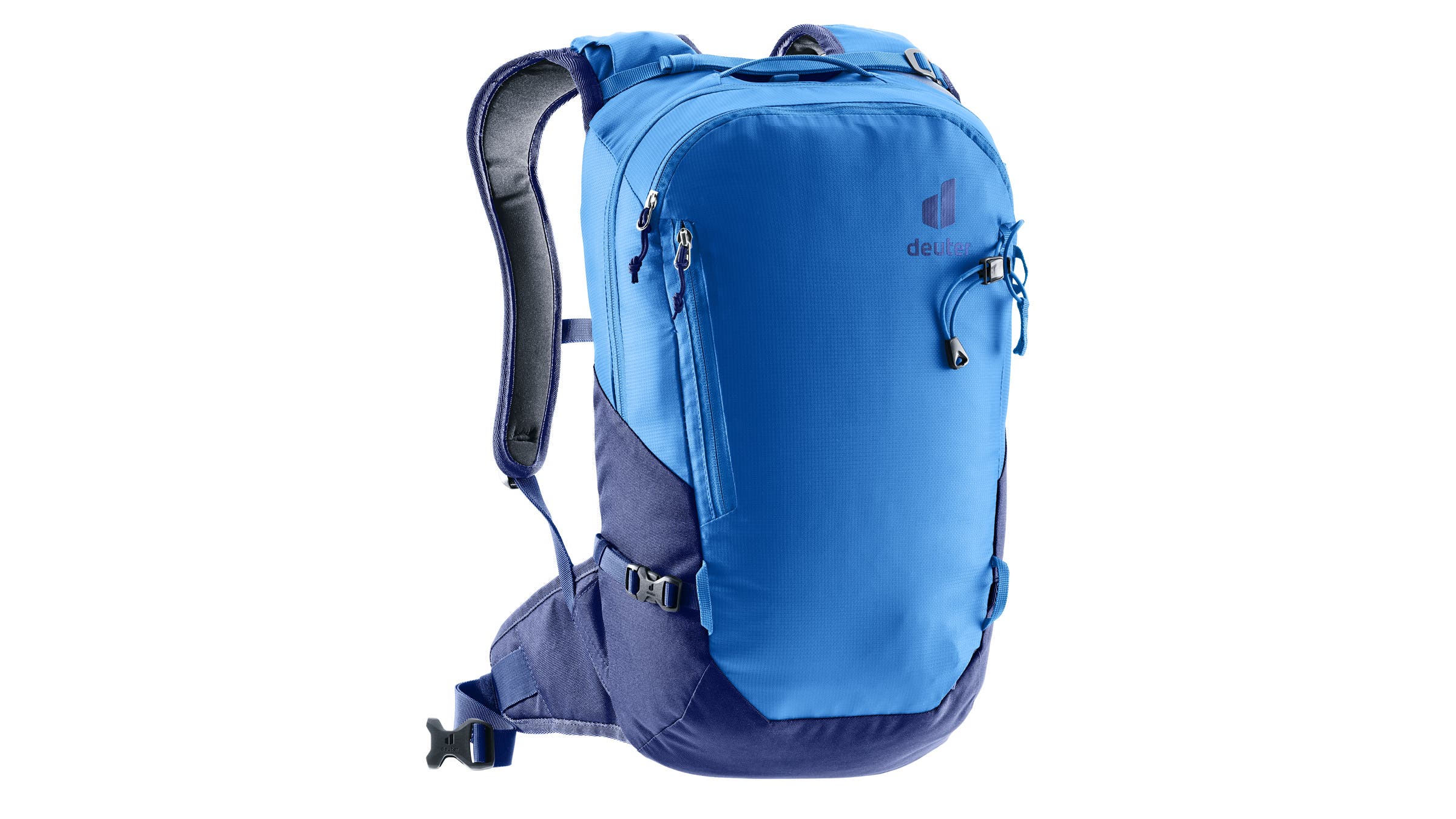
Deuter Freecline 15
Weight: 1.5 lbs
Sizes: One size
Pros and Cons
+ Excellent freedom of movement
+ Compact fit
– Limited carrying capacity
Skiing or snowboarding with too much extra space in a backpack allows the contents to rattle around inside, which can be an annoying distraction. Our Montana tester didn’t have that problem when hiking the ridge at Bridger Bowl, their local ski resort, with this compact, 15-liter pack with clever pocket placement and internal organization. Thanks to the low profile, it was comfortable enough to wear on the chairlift, and the fit felt snug while riding, too, with padding in all the right spots on the upper back, hips, and shoulder straps.
“It didn’t flop around at all like bigger packs do when empty, nor did it limit my movement in bumps or when really laying down carves,” another Montana tester said after securing the pack’s wide, sturdy hipbelt. They rode with this pack at Bridger Bowl in sub-freezing temperatures, requiring extra fuel and layers, and didn’t feel that it was too bulky. He also appreciated the glove-friendly A-frame and vertical ski carry options on short sidecountry hikes and bootpacks, along with snowboard straps and an internal avalanche tool compartment for sidecountry missions.
Overall, this is a small, space-efficient pack with smart pockets (fleece-lined goggle and external side zip) for short missions just beyond the gates or for fully-supplied resort laps.
Best Organization
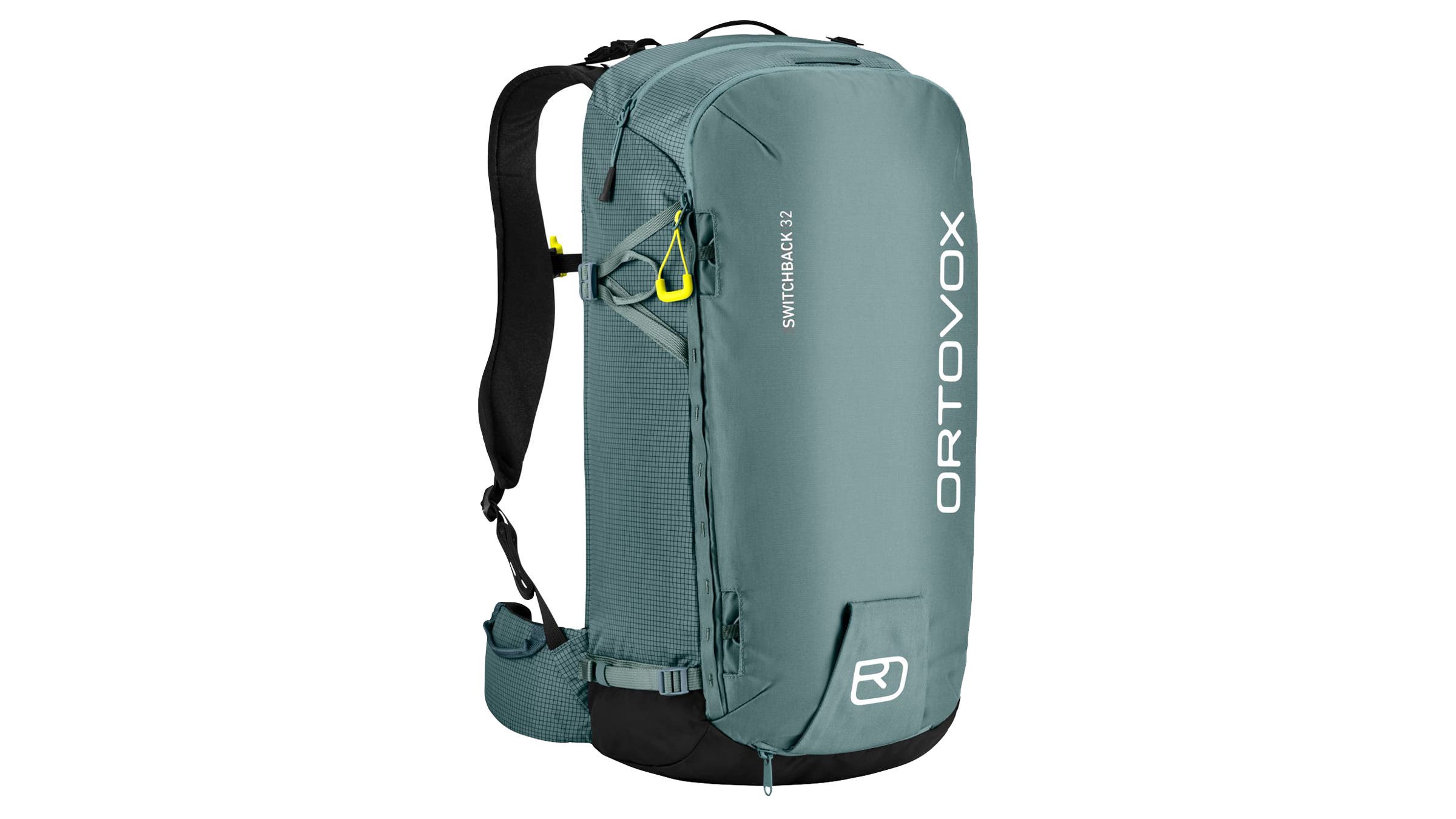
Ortovox Switchback 32
Weight: 2.3 lbs
Sizes: One size
Pros and Cons
+ Excellent organization
+ Comfortable shoulder and hip straps
– Small avalanche tool pocket
We’ve dinged Ortovox packs in the past for not having enough pockets, but this one corrected course—and became a favorite among the organizational fanatics on our test roster. The Switchback delivers with a separate side-panel pouch, two small stashers inside the main body of the pack, a single hip belt pocket, and a stretchy open sleeve on the left shoulder strap perfect for a monocular, snacks, inReach, or hydration flask.
With all of that organization, a Colorado avalanche forecaster loved taking this one out for field work, digging pits, and making observations. “I especially liked the top strap for the diagonal ski carry with a big hook that stows clean and lets me sling my skis on and off pretty easily with the pack on,” she said. “However, I had no chance of getting my 300-centimeter probe, a saw, and my shovel all in the avalanche tool compartment, which was too short.” The fit was excellent on her short torso and narrow chest, she said, and the padded hip belt felt like a snug, secure hug on the uphill and the downhill on long tours in the West Elk mountains.
Best for Fast Missions
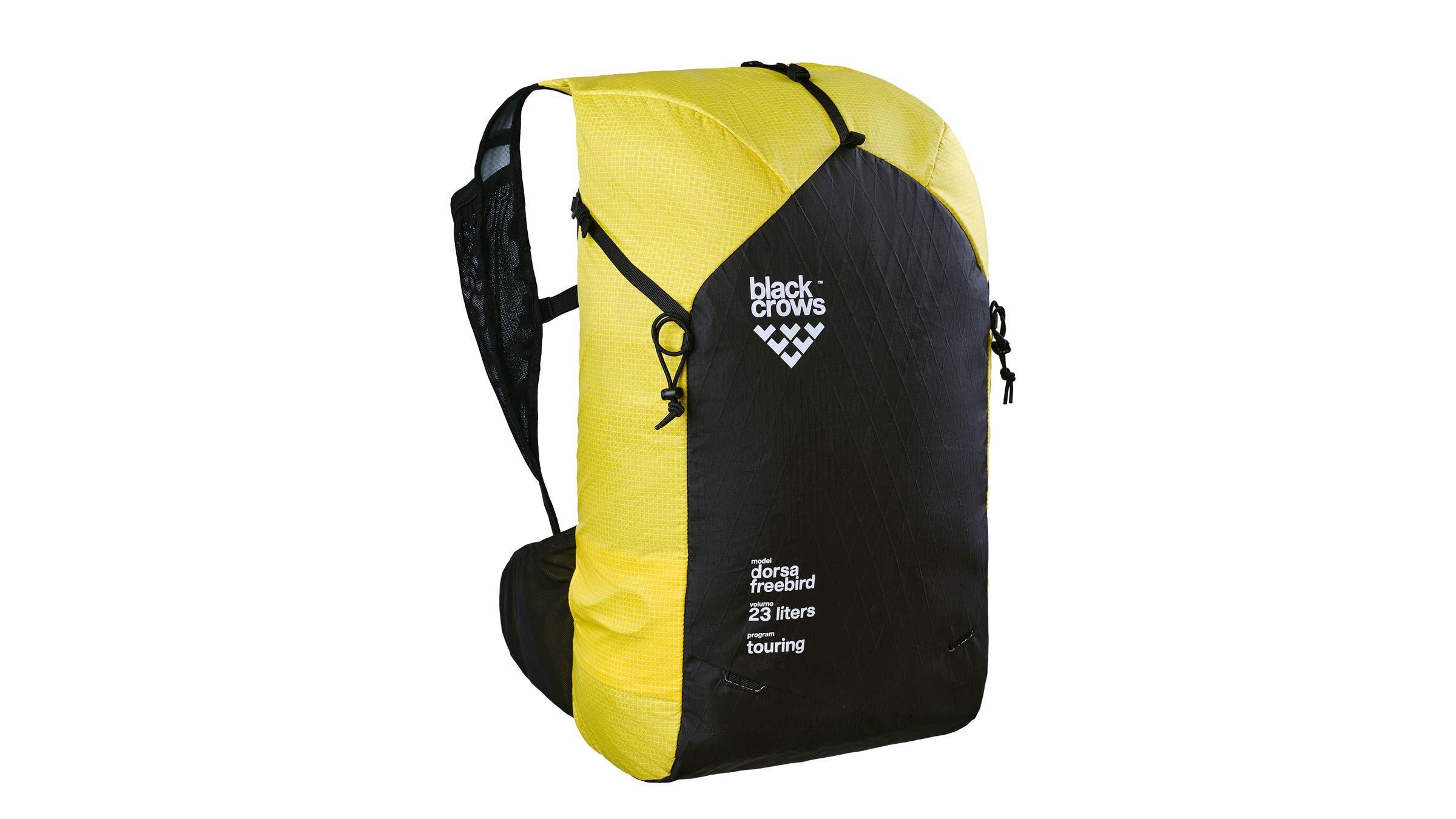
Black Crows Dorsa 23 Freebird
Weight: 1.3 lbs
Sizes: One size
Pros and Cons
+ Lightweight
+ Quick, easy access
– Durability could be better
Though skimo racers and morning uphill lappers both need a lightweight pack for the bare essentials, ultralight skiers still demand a full-featured pack for ski mountaineering races and objectives. Despite minimal fabric and space, everything has a place in the Dorsa 23 Freebird. “The best feature of this pack is how evenly the weight is distributed with each internal compartment, allowing for superb organization and quick retrieval of gear and nutrition on the go,” said our skimo racing tester, who brought this pack along to compete in stormy spring conditions in the Pennine Alps of Switzerland. The bottom skin and crampon pockets were accessible on the fly with one hand, and the back panel access was key for quick transitions without having to pull everything out of the top of the pack. One called the snug, adjustable fit “spectacular,” thanks to the modular sternum strap system that can go relatively high or low depending on chest configuration.
Testers were surprised at how well it held two ice axes for such minimalist fastenings but were bummed to find that the two pockets on the breathable mesh shoulder strap pockets were too small to hold a 500-milliliter flask.
How to Choose a Backcountry Ski Pack
1. Choose a backpack that fits your body.
Backpacks come in various sizes to accommodate different torso lengths, so measure the length of your spine from the base of your neck to the top of your hips and choose your backpack size accordingly. Backpack torso lengths generally range from 15 inches (size XS) to 20-plus inches (size L). Because fit is the most significant single factor in pack comfort and carry, we recommend going into your local gear shop wearing the layers you plan to tour in and trying the packs on for size. The hipbelt should securely wrap your iliac crest, and the back panel shouldn’t hit you in the back of the head when you have a helmet on.
ADVERTISEMENT
2. Choose a backpack that suits your skiing adventure.
If half-day backcountry tours are your norm, choose a lower-volume pack (20 liters to 30 liters) that fits just the essentials (shovel, probe, water, extra layers, snacks). If you typically spend full days in the backcountry, you’ll want a higher volume pack (30 liters to 40 liters) that fits extra supplies for the extra time you’ll be spending out in the elements.
ADVERTISEMENT
Also, make sure that your avalanche shovel and probe easily slip in and out of the dedicated avy pouch in case of emergency, and that the pack is both big enough and sufficiently organized for your touring preferences. Don’t be afraid to size up to a larger pack capacity if you’re unsure how much space you’ll need—a few extra liters of empty space won’t weigh you down that much. If you’d like to be able to secure your skis to your pack, look for a pack with an A-frame or diagonal ski carry strap system—and the back-panel suspension to support the extra weight. The same goes for your helmet: most packs have integrated helmet-carry systems but not all do, so be sure to double-check if this is an essential feature to you.
What Should I Pack for Backcountry Ski Days?
Always carry avalanche safety equipment when traveling in the backcountry. That includes wearing a beacon and carrying a shovel and probe in your pack. You’ll also need extra layers, a helmet, sufficient hydration (including some hot liquid in an insulated bottle for longer backcountry adventures), snacks, a first aid kit, and a basic repair kit.
How We Test
- Number of testers: 15
- Number of products tested: 24
- States tested in: 6
To nail down the best ski packs of 2026, we seeded 24 products with 15 different testers. Each tester was matched to packs according to their planned objectives, body type, ability level, and testing environments. Then, we set testers loose in the mountains, mainly in Colorado, Utah, Wyoming, Montana, Washington, and Alaska, with a few trips to Scandinavia and the Alps. Testers jammed gear into packs and pushed them to their limits on both rugged and mellow ski ascents and descents.
ADVERTISEMENT
We focused on newly designed packs with practical, ski-specific features that make traveling on snow easier, safer, and more enjoyable. We also brought tried and true, unchanged models into the mix to make sure you’re seeing the best of what’s available. Comfort is a must, even for packs meant to carry smaller, lighter loads, as is durability, so we asked testers to evaluate straps, back panels, and hipbelt carry alongside the quality of materials used.
Every time a pack was taken out, testers filled out feedback forms assessing fit, weight distribution, ease of access, and even pocket size and placement. Testers noted how easy it was to find what they needed, transition in the skin track, and carry their skis and boards on their backs while climbing steep couloirs. After a full season of rigorous testing, we selected the cream of the crop and reviewed those packs here.
Meet Our Testers
Scott Yorko is a former gear editor for Backpacker, SKI, TransWorld SNOWboarding, and Outside. He lives on the edge of West Central Colorado, where he splits his ski time between the world-class resorts around Aspen and the backcountry terrain of the West Elk Mountains. He loves to chase storms and visit pow-shredding friends, many of whom tested this year’s crop of ski packs in places like Alaska, Jackson Hole, the Sierras, Utah, and the Colorado Rockies.
Trexler Hirn is a PSIA Level 2, CS1 ski instructor in Aspen who competes in freeride competitions around the world, including several in northern Sweden this past spring. When not throwing backflips under the Loge Peak and Deep Temerity lifts at Aspen Highlands, he carries ample camera equipment in his airbag packs while ski touring through the backcountry, capturing creative content for his production company.
Patrick King hails from Maine, where he brings his high tolerance for cold to his current home on the Western Slope of Colorado. A former ski bum and industry pro turned strategic partnerships director of Protect Our Winters, Patrick manages to slip out for hot laps in the backcountry and morning sidecountry runs between meetings in which he advocates for the preservation of snow.
ADVERTISEMENT
More from the 2026 Winter Gear Guide
The Best All-Mountain Skis
The Best Backcountry Skis
The Best Ski Jackets