Updated October 17, 2025 03:45PM
If you buy through our links, we may earn an affiliate commission. This supports our mission to get more people active and outside.Learn about Outside Online's affiliate link policy
The 11 Best Ski Helmets of 2026
We tested this year’s top helmets for comfort, protection, and style—so you can ride safer and longer
(Photo: Keri Bascetta )
Table of Contents
When it comes to the best ski helmets, nobody wants to have different helmets for various activities. You want one singularly well-built helmet that can go from an inbounds powder day to a backcountry tour. One helmet that works seamlessly with a few pairs of goggles and ventilates on a sunny bootpack as well as insulates on a storm day. One helmet that does it all.
Safety, of course, is of utmost importance—which is why we looked for helmets with technology like MIPS, which inhibits rotational forces to the brain in the event of a crash. But style, comfort, and fit matter, too.
We put a whole bunch of helmets (44, to be exact) through the wringer to see which ones held up best during the widest range of uses. Our crew of testers spent the last two winters wearing helmets on powder days in Utah, spring tours in the Sierra, and far-flung trips to Norway and Canada. These 11 best ski and snowboard helmets ranked the highest across the board for qualities like versatility, durability, breathability, and comfort.
Best Ski Helmets: At a Glance
- Best Ski Helmet Overall: Pret Fury X ($230)
- Best Value: Smith Rodeo MIPS ($105)
- Most Durable: Salomon Brigade Index MIPS ($215)
- Best Ventilation: Giro Owen Spherical ($280)
- Best for Beating Gaper Gap: Glade Tenmile MIPS ($149)
- Best for Backcountry: POC Fornix BC MIPS ($280)
- Most Comfortable: Shred Totality NoShock ($200)
- Best for Park or Freeride: Anon Oslo WaveCel ($220)
- Most Versatile: Sweet Protection Adapter MIPS ($200)
- Best Fit: Scott Flow Plus ($230)
- Best For Eco-Conscious Skiers: Bollé Eco Ryft Pure MIPS ($220)
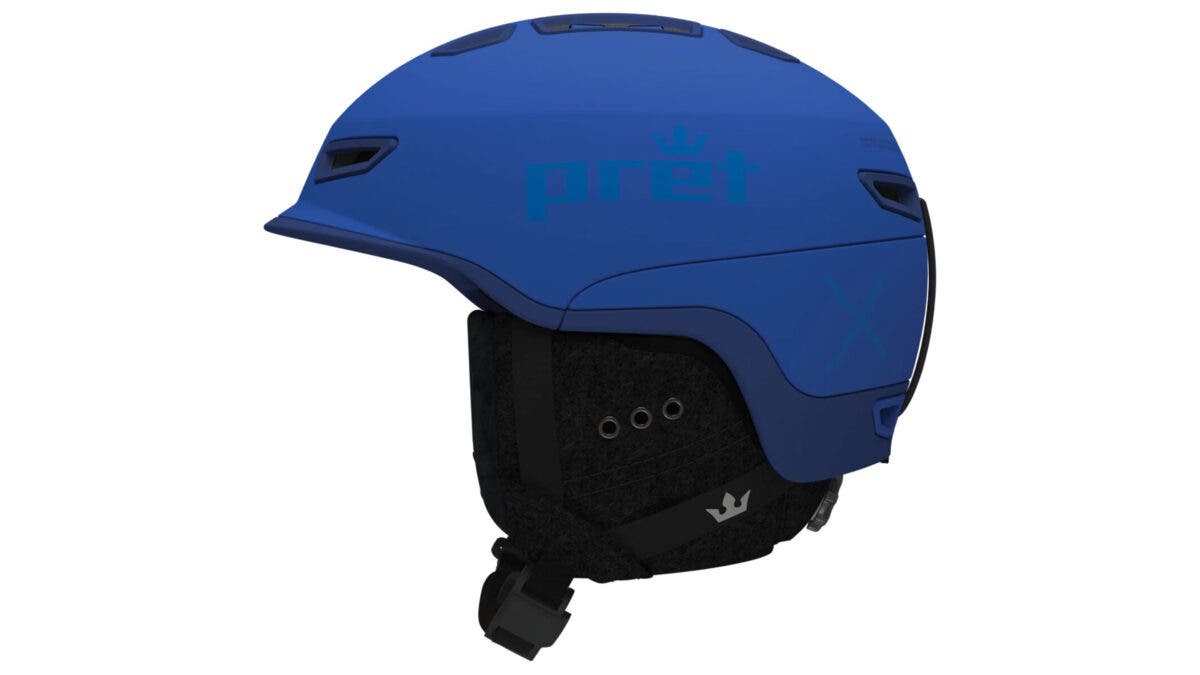
Best Ski Helmet Overall
Pret Fury X
Sizes: S-L
Weight: 435 g (medium)
Key technology: ACT in-mold multi-shell construction, plus MIP
Pros and Cons
+ Best temperature regulation in the test
+ Vents easily with a single toggle
+ Headphone pockets in earpads
– Vents allow air in, even when closed
The Pret Fury X and its women’s version, the Vision X, are crowd pleasers and earned our vote as the best ski helmet overall. Every tester who wore this helmet—each with different tastes and needs—liked it. “The liner material is best described as fuzzy wuzzy. It felt soft against my ears,” said one tester.
A Tahoe-based tester went for an inbounds hike in this helmet in sunny spring weather and found it cooled and breathed nicely, despite its fuzziness. (The liner’s EPS foam also has an antimicrobial treatment to help keep it from getting funky.) Vents in the front and across the top of the head are all controlled easily with a single switch and make the helmet highly breathable. Cozy ear flaps can be removed on warm days and the magnetic chin strap was easy to attach, and can be even done using one hand.
The helmet fit seamlessly with both Pret and non-Pret goggles without leaving any gaps.
ADVERTISEMENT
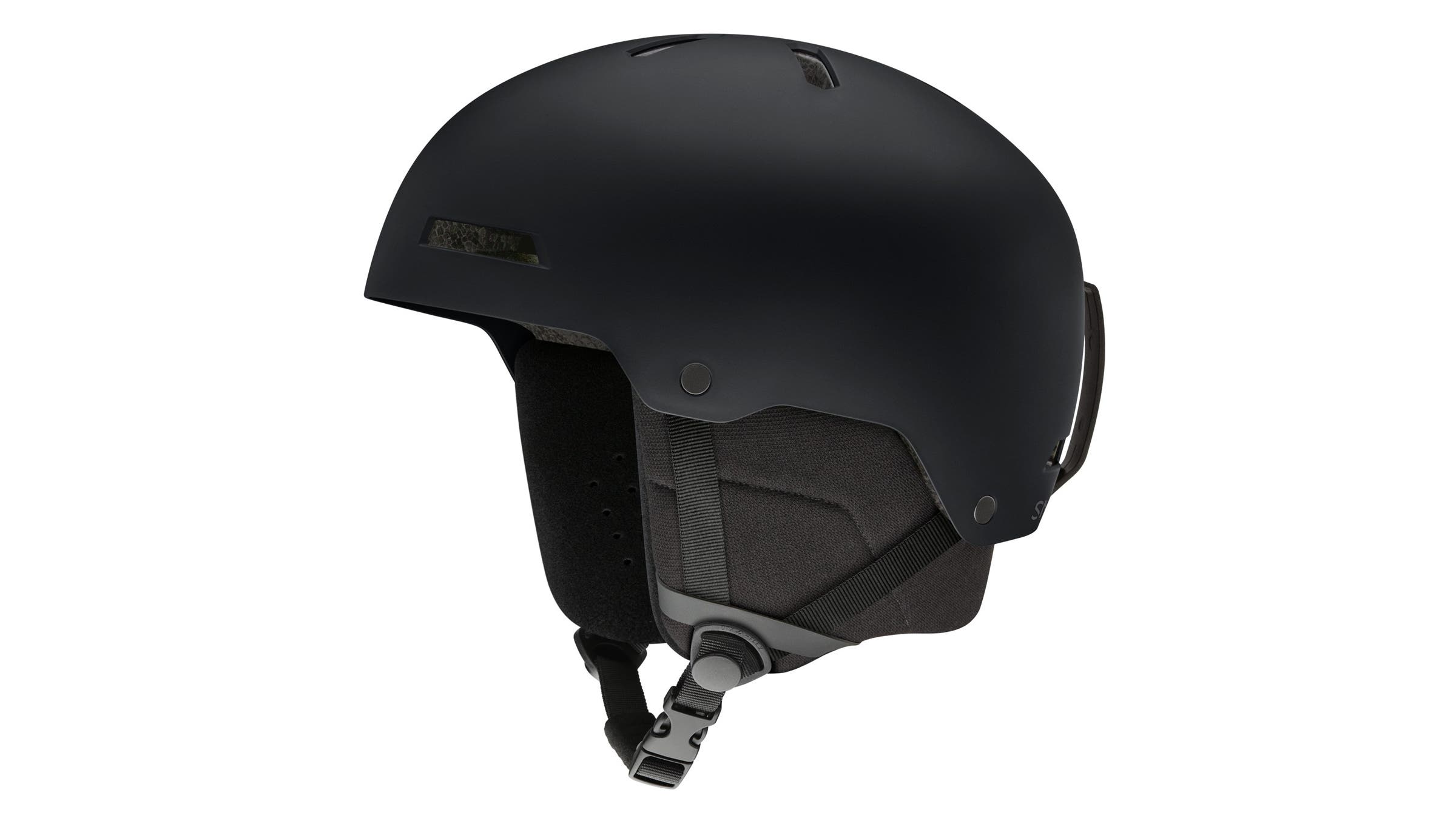
Best Value Helmet
Smith Rodeo MIPS
Sizes: S-XL
Weight: 550 g (medium)
Key technology: Comes in MIPS and non-MIPS versions; also features Smith’s Round Contour fit designed specifically to minimize pressure points for round heads
Pros and Cons
+ Half the price of more tricked-out helmets
+ Most eco-friendly helmet we tested
– Vents don’t close
– Plastic goggle holster and chin buckle feel flimsy
It’s not often you find a MIPS helmet for around $100, which is why the Smith Rodeo feels like a sneaky score. One tester called it an “all-rounder” and praised its versatility while skiing the park one day and the backcountry the next. “This is a super simple helmet that’s lightweight and has heaps of style,” said another.
Despite being designed for round heads, even our testers with bigger, oval-shaped heads had no complaints, thanks to generous adjustability and a spacious, high-cut injection-molded ABS shell, which is designed to handle heavy-duty impacts and resist denting.
One of few helmets made with a majority of recycled materials, the Rodeo has the low-profile look of a retro BMX helmet and is best suited for those who want style first, bells and whistles second. Ear pads are easily removable for warm spring days or park riders who wear goggles underneath their helmets. It has 10 good-sized vents, but you can’t close them in a blizzard; they’re permanently open. The Rodeo paired well with the oversized goggle look that’s trending now.
ADVERTISEMENT
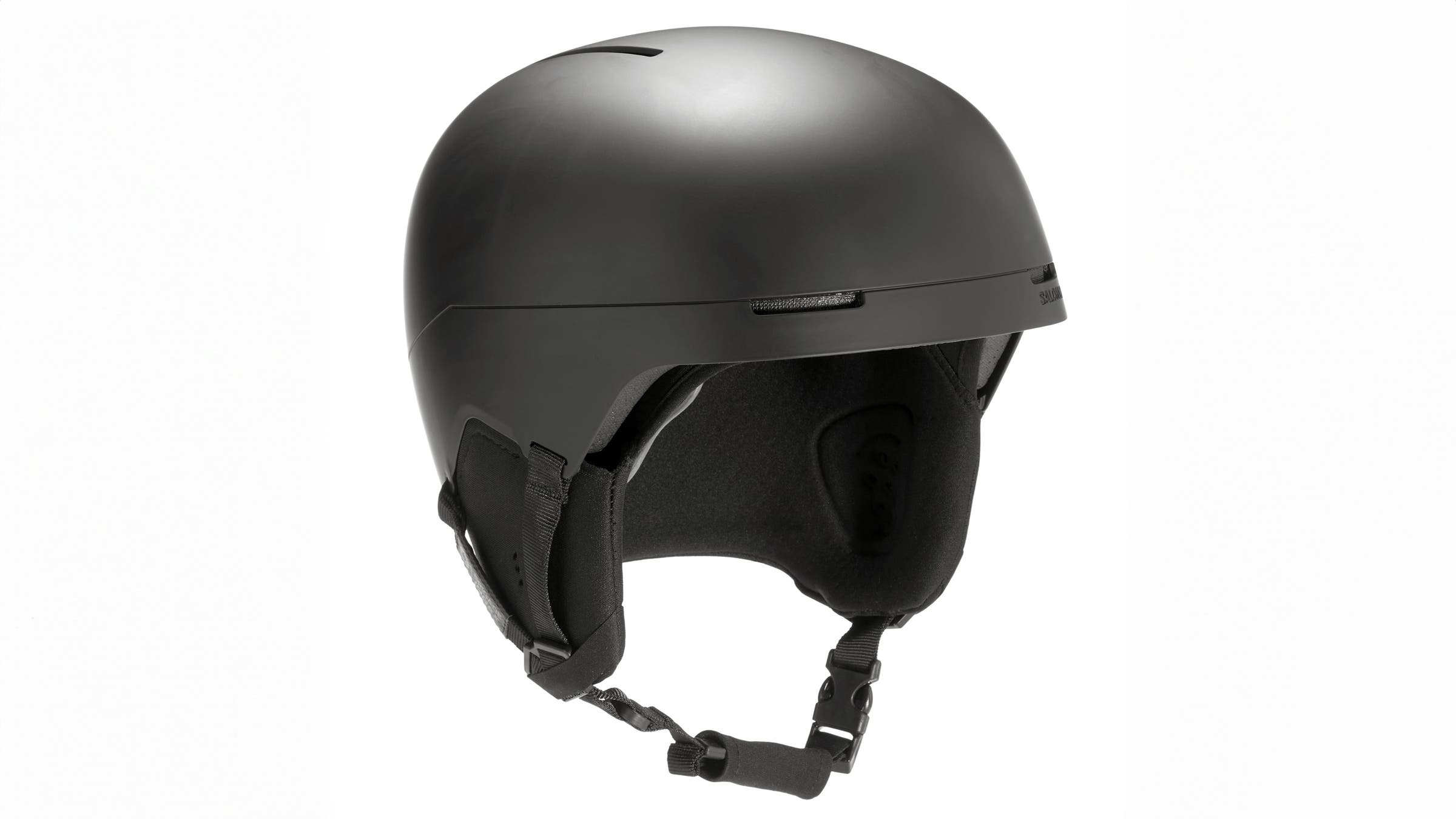
Most Durable Helmet
Salomon Brigade Index MIPS
Sizes: S-L
Weight: 485 g (medium)
Key technology: MIPS and EPP4, which offers shock absorption
Pros and Cons
+ Quick-drying, neoprene-like liner
+ Can be fully recycled when you’re done using it
+ Tough rubber goggle retention strap
– Clunky, hard-to-clip plastic chin buckle
Salomon launched the Brigade Index helmet in fall 2024 as the ski industry’s first fully recyclable helmet. It’s made nearly entirely from a single type of polyolefin, a thermoplastic that can be turned into things like car bumpers or plastic crates. The idea is that when you’re done using your ski helmet, you can send it back to Salomon (through an easy-to-use send-back program on their website) and they will have it ground down and reprocessed for its next use.
New for fall 2025, Salomon is rolling out a MIPS version of the Brigade Index, so you don’t have to choose between lower-impact design and high-end safety features. (The MIPS version is $50 more expensive.) Our testers loved this helmet for its sturdy, no-nonsense design and super comfortable, low-profile fit. “This feels like the kind of helmet that you cannot break,” said one tester, who wore it for 80 days this winter skiing around Tahoe and beyond. It has less vents than some of our other best helmet picks, but they’re effective.
Paid Advertisement by Backcountry
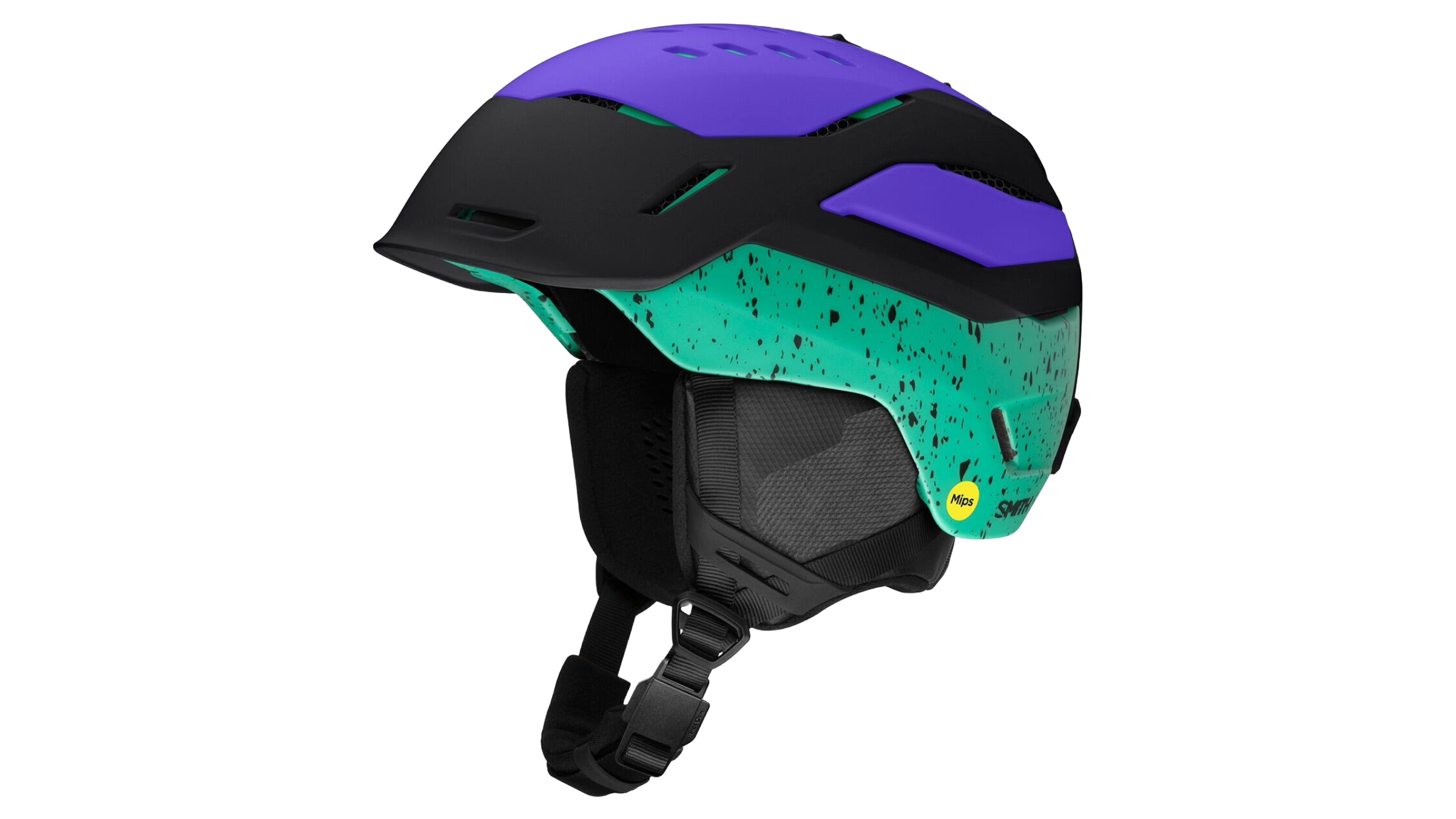
Smith Vantage 2 Mips Helmet
This all-mountain helmet doesn’t compromise on protection or ventilation. It features full Koroyd impact protection for lightweight energy absorption. Add in Mips technology, and you’re protected from angled impacts, too. You know a helmet fits well when you forget you’re wearing it. Thanks to the BOA 360 dial system, you can customize the fit so the helmet is secure yet comfortable. To top off the wearing experience, Smith integrated 40 adjustable vents for airflow control and removable ear pads with audio system compatibility.
Best Ventilation
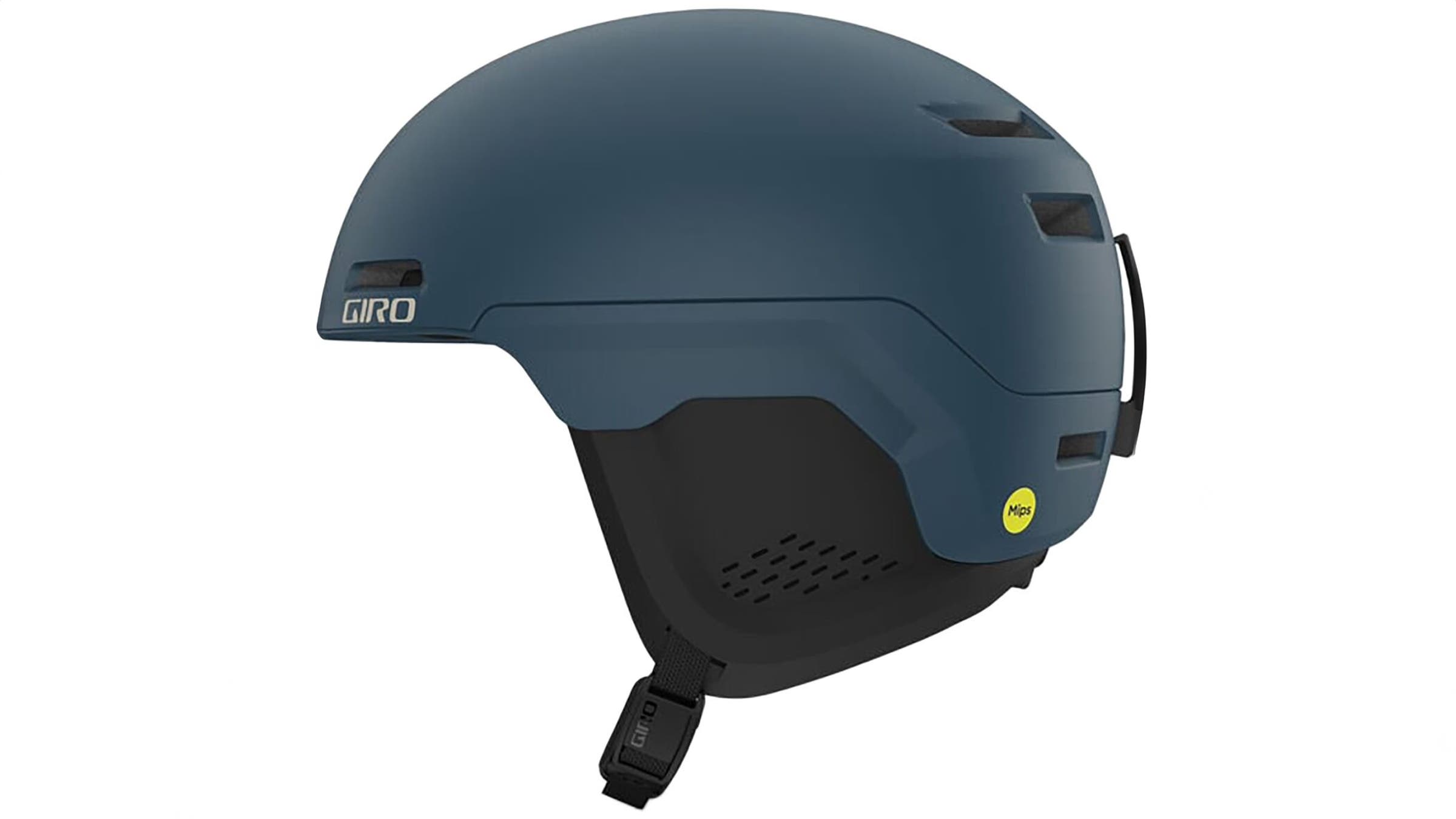
Giro Owen Spherical
Sizes: S-L
Weight: 425 g (small)
Key technology: MIPS Spherical
Pros and Cons
+ Superior fit and comfort
+ Clean, understated aesthetic
+ Easy-to-use magnetic chin buckle
– Pricier than other helmets with similar tech
– The vents open from the inside
Sometimes, MIPS safety technology—which typically sits between the helmet’s foam and liner to reduce rotational impacts to the brain—can restrict comfort and breathability. But in the case of the Giro Owen Spherical helmet, Giro worked with MIPS to create a new ball-and-socket design that incorporates the safety system into the shell and utilizes two liners that rotate independently to cut forces to the brain. The result is a ski helmet that testers called exceptionally well ventilated, despite only having six small vents. “This lightweight helmet felt breezy on spring bootbacks and became my go-to helmet because it was so comfortable,” one tester said.
One downside: You have to open and close vents with a switch inside the helmet, which gives you a cleaner look on the exterior of the lid, but also makes it tricky to adjust your temperature on the go. If you’re someone who prefers to open and close vents throughout the day, consider the Giro Tenet MIPS, which has a vent adjuster on the outside. The Owen’s sleek magnetic chin buckle, smooth fleece liner, and comfy removable ear pads round out this Giro ski helmet’s notable features.
Best For Beating Gaper Gap
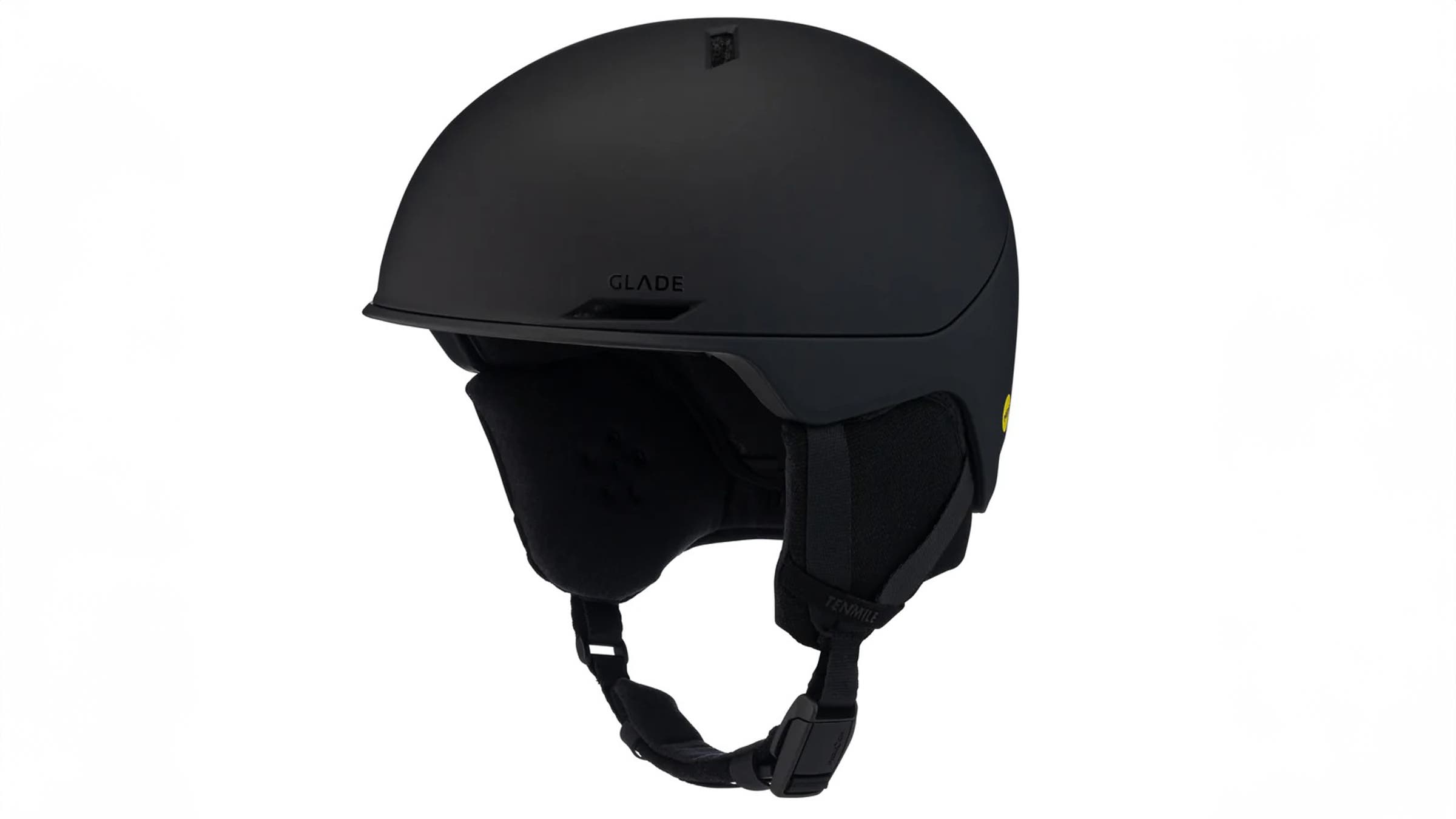
Glade Tenmile MIPS
Sizes: S-L
Weight: 492 g (medium)
Key technology: MIPS
Pros and Cons
+ Clean, understated look
+ Lightweight feel
+ Approachable price
– Vents are permanently open
Glade has had the Tenmile helmet in their lineup for a few years now, but for 2025, they added a MIPS version and managed to keep the cost down, making this a great choice for skiers looking for a value-driven helmet that doesn’t sacrifice safety. Testers wore this helmet skiing inbounds around the Lake Tahoe area, as well as backcountry tours in the Sierra, and praised it for being uncomplicated and easy to wear. It has user-friendly features like a slick magnetic chin strap, lightweight in-mold construction that’s easy to strap to your pack on a skintrack, a sturdy goggle holster, and media-compatible earpads. But here’s what our testers loved most about it: “I wore goggles from several brands and they all fit seamlessly with this helmet. No more dreaded forehead gaps,” one tester said.
This may be a superficial point but matte-colored ski helmets—versus shiny ones—look so much cooler in the liftline. The Tenmile comes in a few muted, earthy colorways, all in matte.
Best Backcountry Helmet
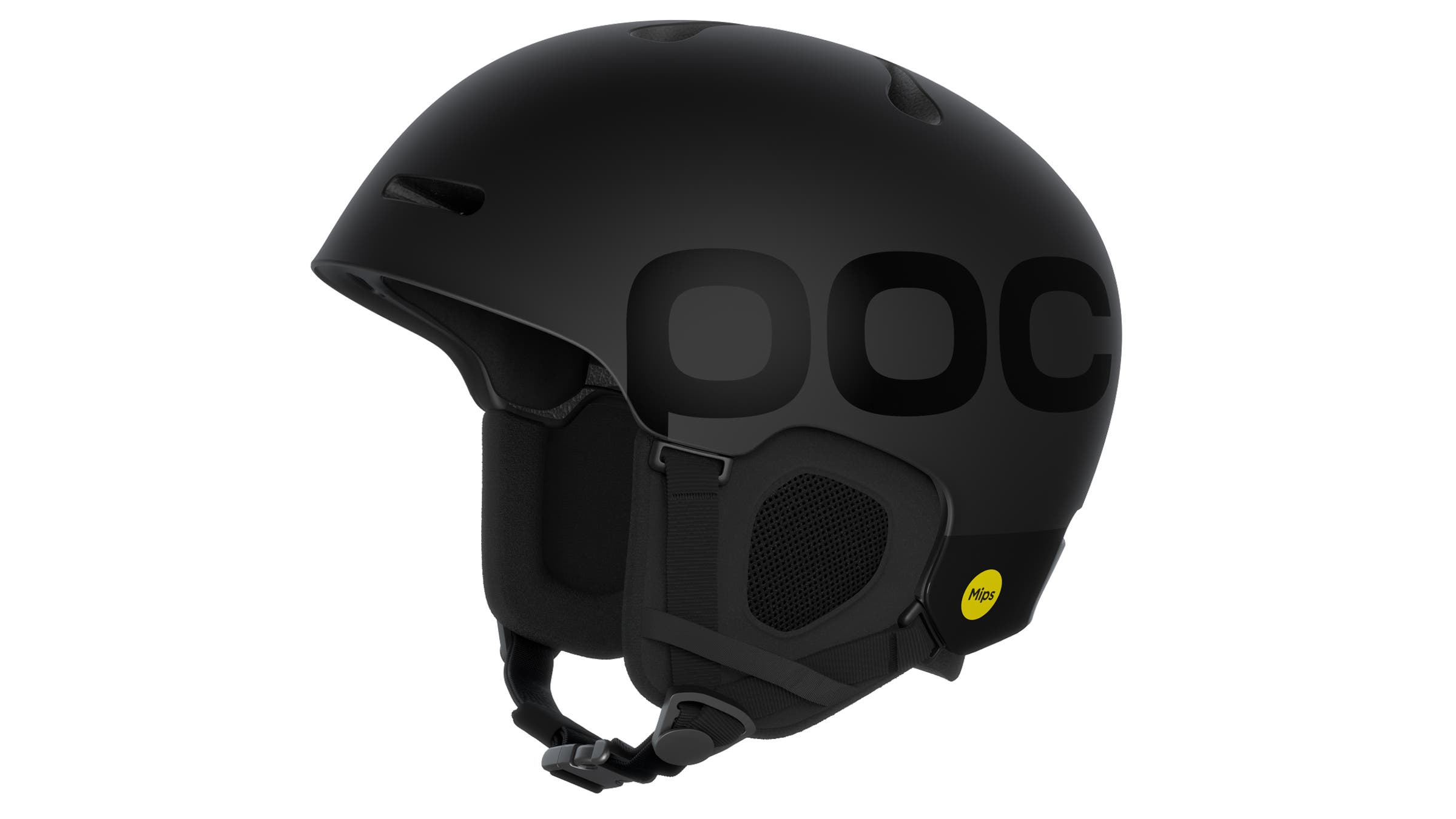
POC Fornix BC MIPS
Sizes: XS-XL
Weight: 420 g (medium)
Key technology: MIPS
Pros and Cons
+ Super breathable
+ Good style
+ Tough rubber goggle strap that won’t break
– Heavier than basic backcountry helmets
POC’s Fornix helmet has been a liftline favorite for years now, but the Fornix BC MIPS is a new addition to the line that’s more suited to backcountry travelers looking for a lightweight, safety-oriented option. It’s got a sturdy, protective feel to it, thanks to a thick polycarbonate outer shell, but it comes in a pared-down, lightweight package (just 420 grams) with heaps of vents to keep you cool on a climb or when temps rise. In a storm, warm ear coverings created a comfortable, hollow feeling around our ears, so we could hear our backcountry partner even if the wind was howling.
Testers used this lid hiking peaks along Lake Tahoe’s west shore and while inbounds skiing at Snowbird, Utah, and Palisades Tahoe, California. “It was as comfortable in the backcountry as it was lapping the tram,” one tester said. “I felt warm and protected but not like I was carrying a heavy bowling ball around on my head.”
For added safety perks, the Fornix BC MIPS comes with a RECCO reflector for recovery in the case of an avalanche and a medical ID chip implanted in the helmet; wearers can fill out critical information that first responders can access with their phone. Bottom line: If you want a lightweight helmet for ski touring that doesn’t skimp on safety features or durability, this is the best helmet for the job.
ADVERTISEMENT
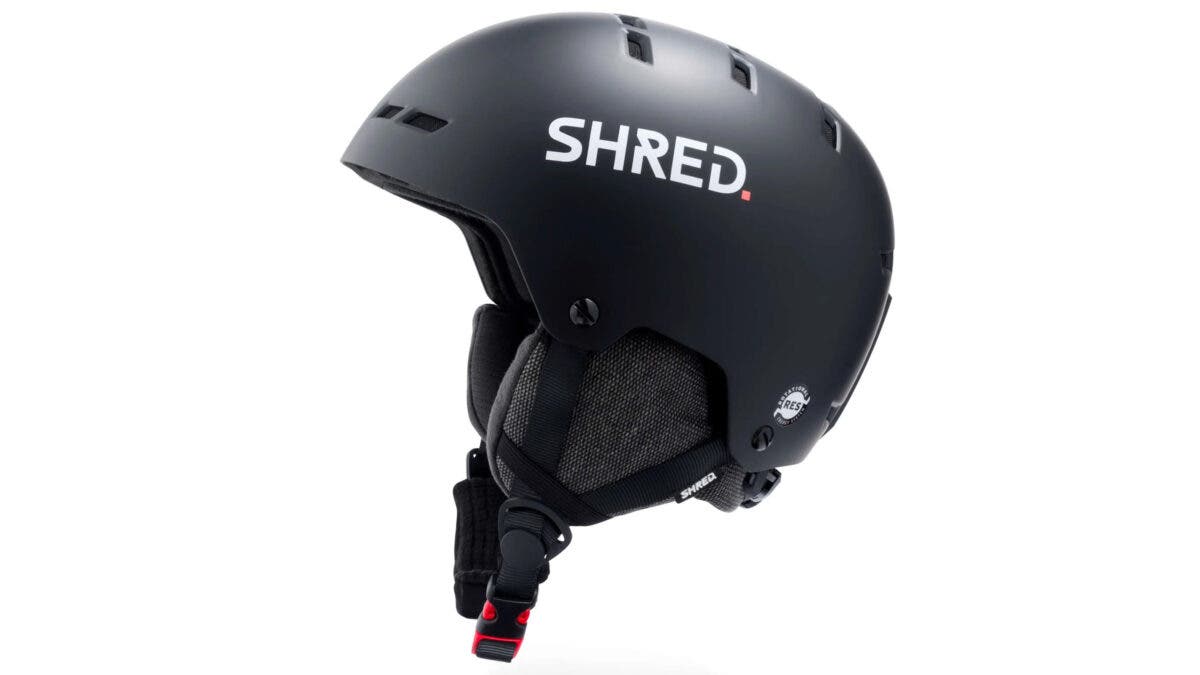
Most Comfortable
Shred Totality NoShock
Sizes: S-L
Weight: 460 g (medium)
Key technology: Shred’s patent-pending Rotational Energy System
Pros and Cons
+ Fits a variety of head shapes
+ Easy adjustability
+ A dozen well-placed vents
– Vents are always open
The Shred Totality NoShock helmet won praise from testers for its no-fuss adjustable fit, soft antimicrobial liner, and low-key look. Even our testers with big noggins said this helmet made their head look smaller, thanks to its slim profile. “It’s so minimal-looking I thought it would feel tight on my big dome, but it actually was the most comfortable helmet I tested,” one tester said.
Shred got its start in the ski racing world—the brand was cofounded by Olympic ski racer Ted Ligety—but the Totality NoShock has more of a skateboarding or freeskiing vibe. Stylish tweed-like ear coverings add a touch of flair and warmth on cold days.
This is one of few helmets on this list that doesn’t come with MIPS safety technology, but it has a patent-pending system created by Shred that acts similarly to MIPS, employing a thin elastic layer in the shell that absorbs shock and manages rotational accelerations. Plus, not having MIPS helps keep the cost of this helmet down.
ADVERTISEMENT
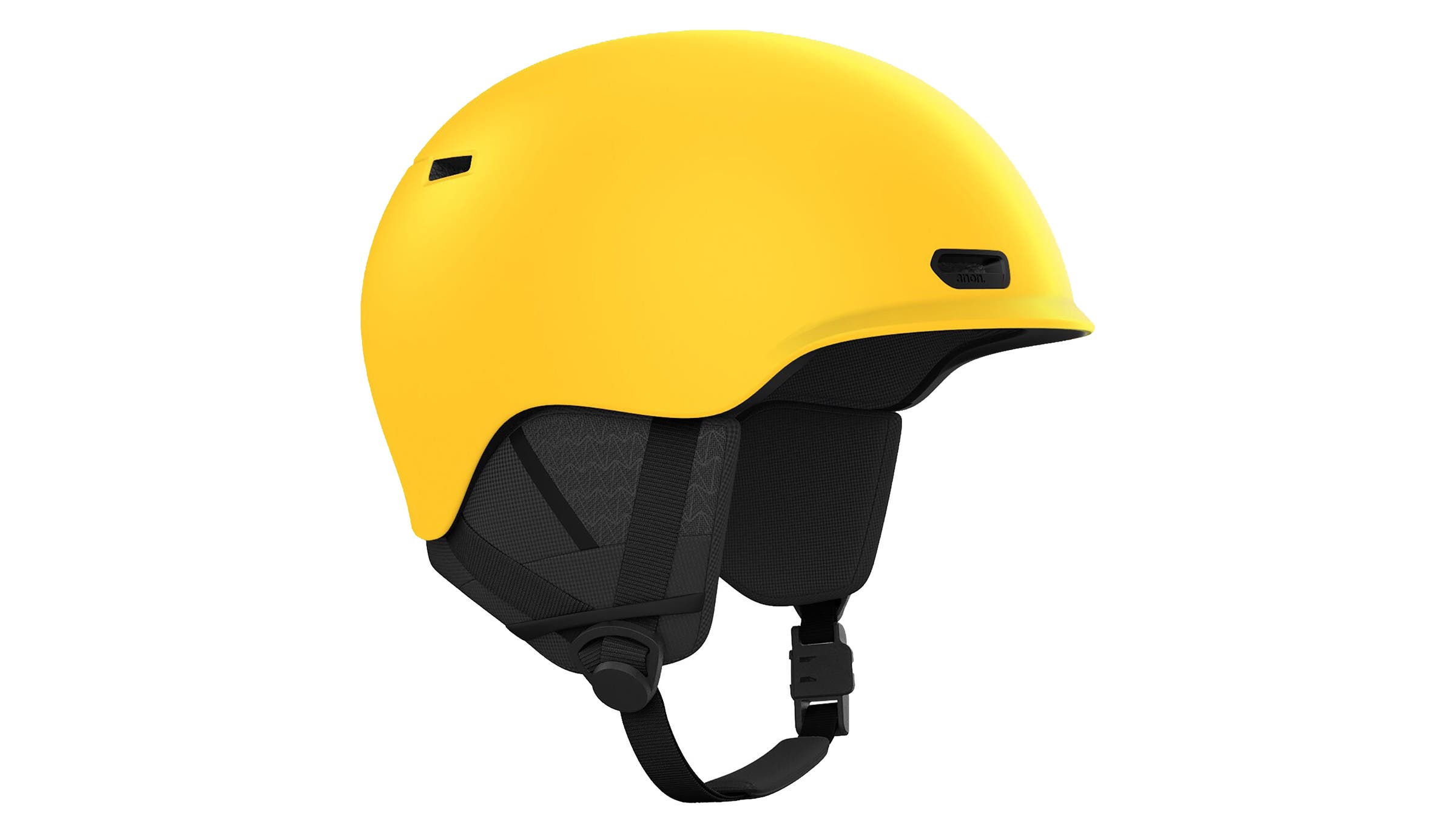
Best Helmet for Park or Freeride
Anon Oslo WaveCel
Sizes: S-XL
Weight: 450 g (medium)
Key technology: WaveCel, Anon’s own safety technology, distributes impact energy and diverts rotational forces through a network of cells.
Pros and Cons
+ Minimalist, sleek urban style
+ BOA fit system offers precise adjustability
+ Comfy plush liner and earpads
– Not much in the way of venting.
The Anon Oslo helmet is admittedly bare bones—but that’s what some of our testers loved most about it. “So many helmets feel overbuilt. This one is simple and clean, while getting the job done,” said one tester, who wore the helmet on a ski trip to Colorado.
It’s got a sleek street style that makes it a good fit for park skiers or snowboarders. Ventilation is minimal—just four small vents—but air flows through a breezy, moisture-wicking honeycomb-style interior lining that serves as its main safety technology.
Streamlined and lightweight, its polycarbonate shell has an EPS foam liner for a non-bulky feel and fit. A turn-knob BOA Fit System offers good micro-adjustability in both directions if you need to make it a touch smaller or bigger, and a magnetic buckle under the chin was a cinch to snap.
ADVERTISEMENT
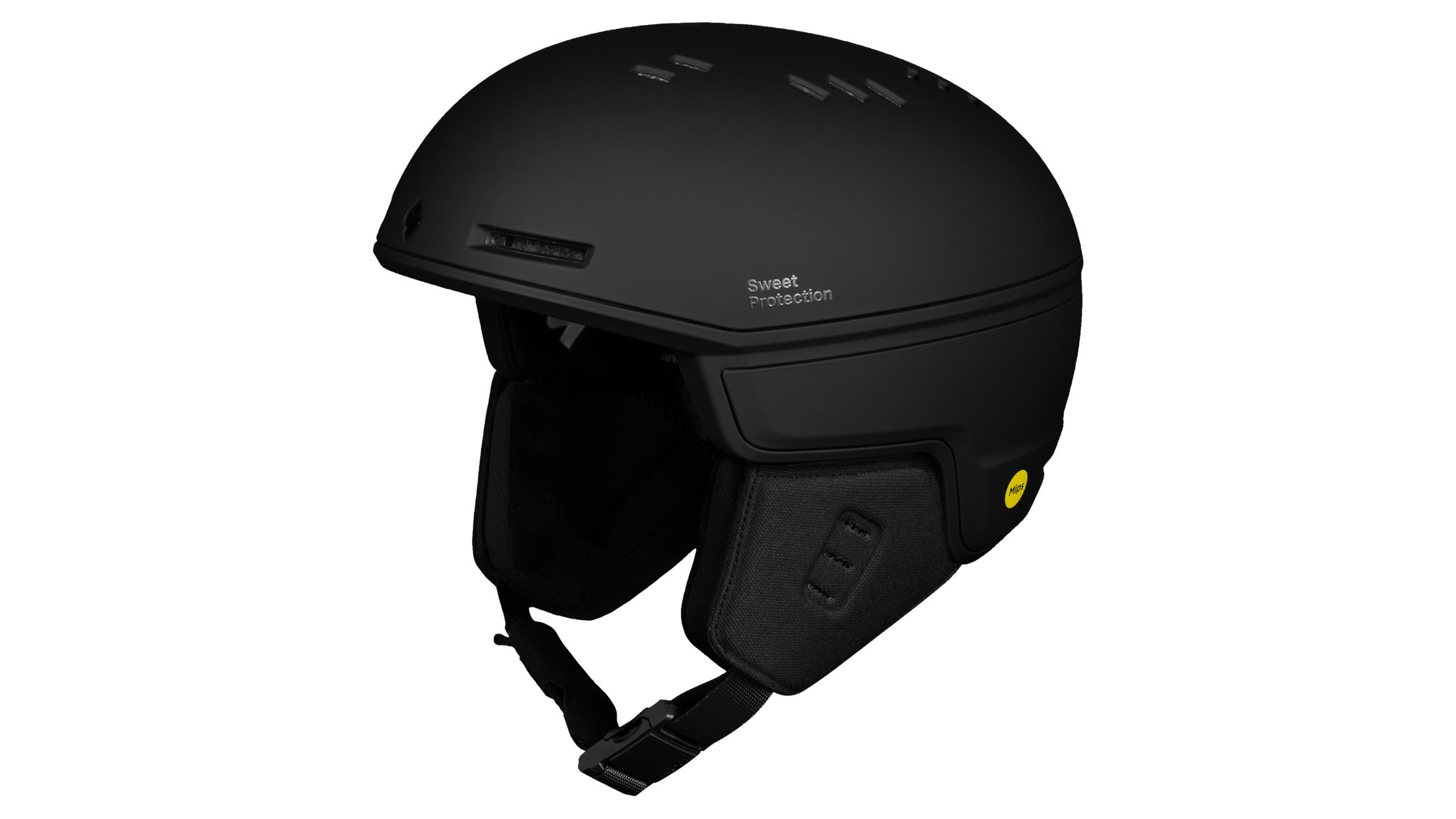
Most Versatile Helmet
Sweet Protection Adapter MIPS
Sizes: S-XL
Weight: 480 g (medium)
Key technology: MIPS
Pros and Cons
+ Wide and sturdy silicone strap keep goggles in place
+ One-quiver helmet for touring and resort
+ Super lightweight
– Faux fur-lined ear pads might not be for everyone
Testers lauded the Sweet Protection Adapter MIPS for its top-notch industrial design and high-quality materials. We used this helmet skiing inbounds at ski areas around Lake Tahoe and Utah, as well as a dozen backcountry tours. It’s lightweight and breathable enough (thanks to 19 well-placed vents) to be your go-touring touring helmet, but full featured enough for the resort. “You could boot up a couloir in this lid,” one tester said.
Everyone loved the mega-wide silicon goggle retention strap. “That beautifully burly goggle strap on the back, oh my!” one tester said. “It’ll never break or fall off and my goggles will always stay in place. Why isn’t everyone making goggle attachment systems like this one?” A smart indent around the helmet where the goggle strap goes keeps lenses securely in place. The Adapter fit medium heads nicely right out of the box but it’s also easy to adjust for narrower noggins. It’s the best ski helmet for skiers who go in and out of bounds and want one robust safety-forward helmet to take everywhere.
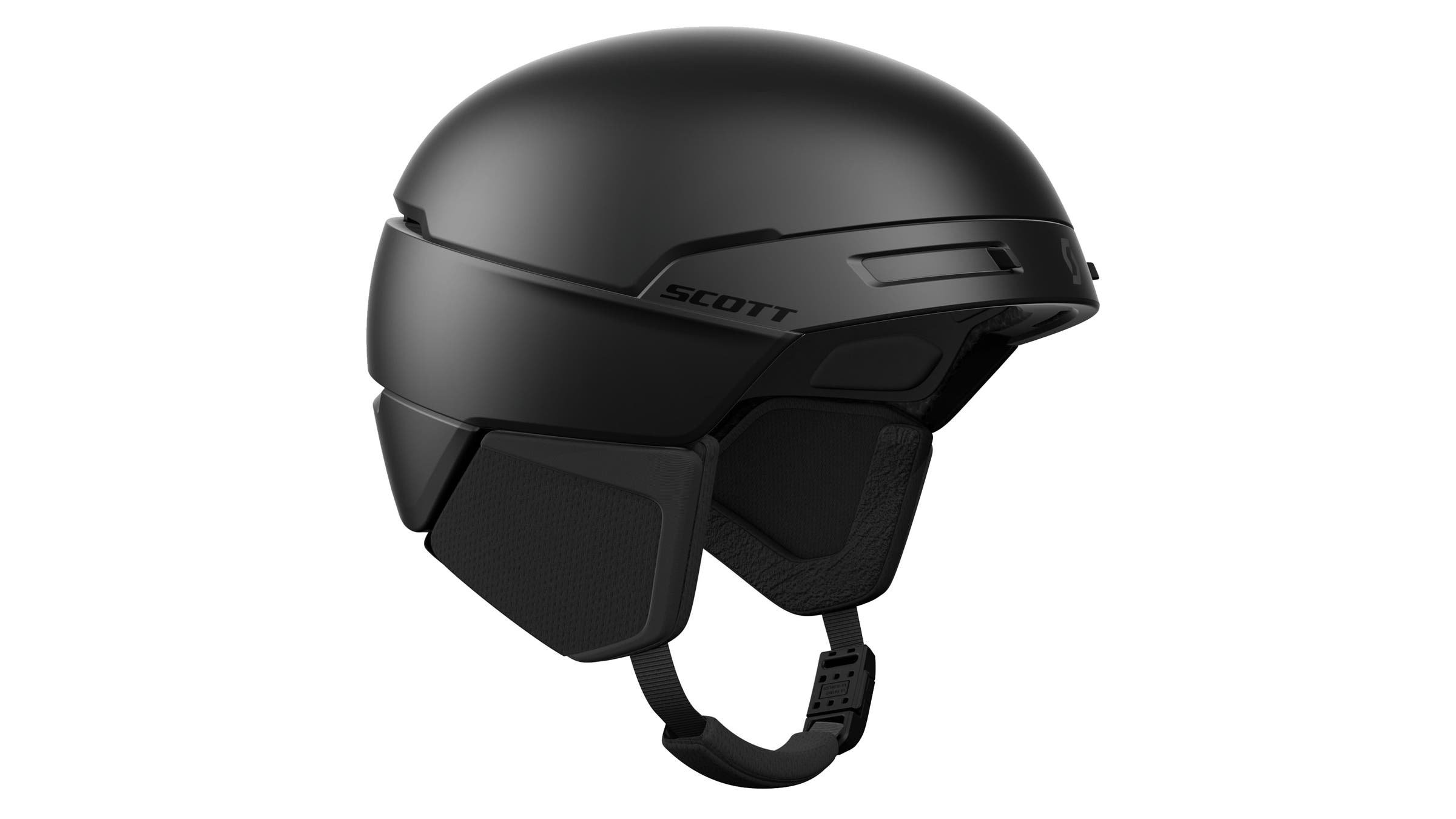
Best Fit
Scott Flow Pro MIPS
Sizes: S-L
Weight: 506 g (medium)
Key technology: MIPS, plus Scott’s 360 Pure Sound Tech & Recco technology for superb noise detection
Pros and Cons
+ Super comfortable thin yet cushioned liner
+ Excellent moisture management
+ Clean, streamlined style
– Could use some venting up top
While some helmets have a thick lining that takes on sweat like shag carpeting, the Scott Flow Pro MIPS’ sparse, unobtrusive padding inside made it ultra-comfortable on everything from storm days at Alta to spring skiing at Mammoth. And while other helmets cause pinching or pressure points, this well-cushioned lid fit like a dream even on oval-shaped heads.
Thinly padded ear covers let sound in better than other helmets. The liner material is thermoregulating and kept testers from overheating—but most wished for a few more vents. The only adjustable vent is on the front rim of the helmet. “Not sure why it’s called the Flow helmet. It’s got minimal venting,” one tester said, while another added that “the vents were small but effective.”
Best For Eco-Conscious Skiers
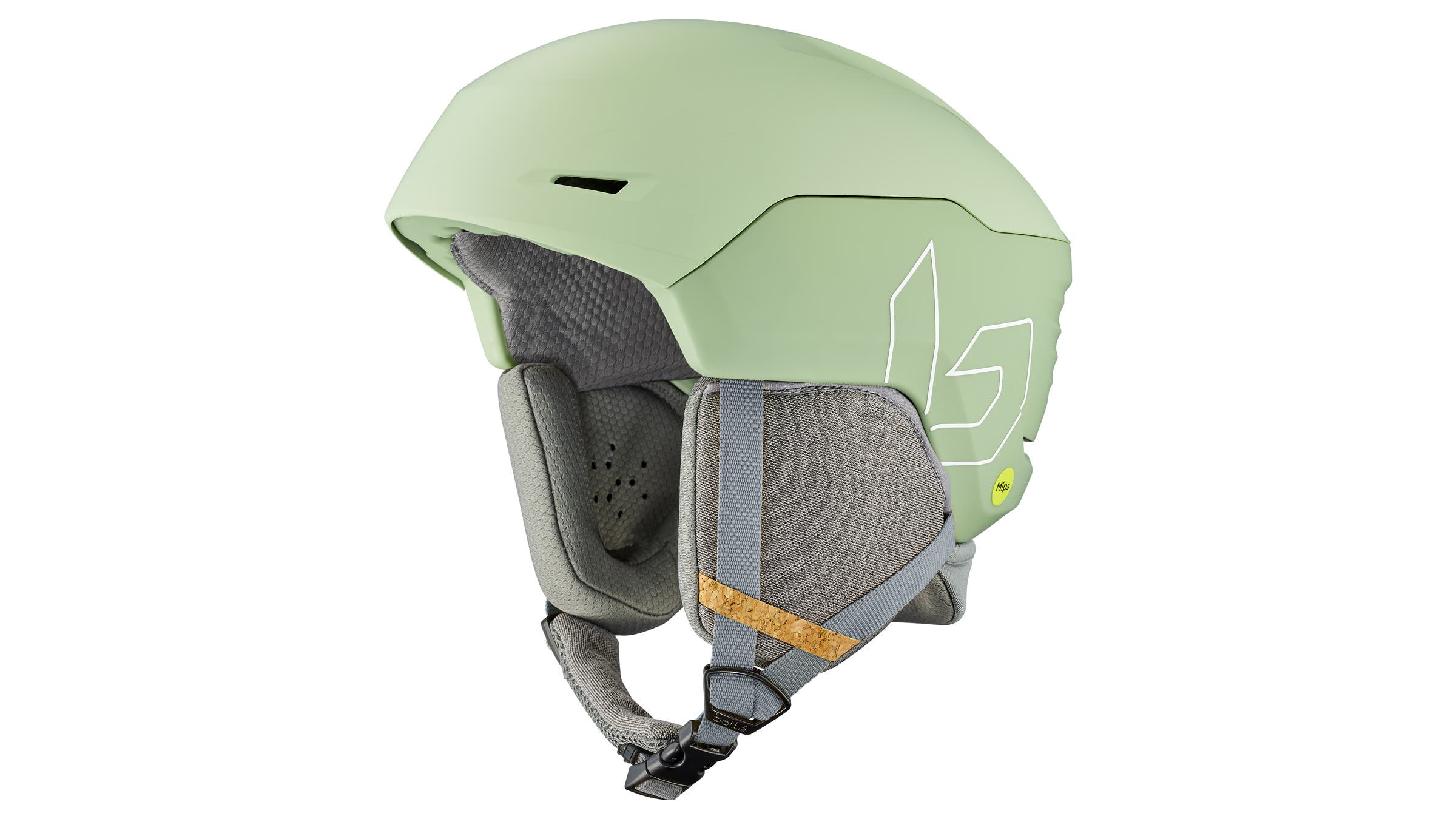
Bollé Eco Ryft Pure MIPS
Sizes: S-L
Weight: 545 g (medium)
Key technology: MIPS, plus Bollé’s AViD Progressive EPS, which combines strategic ventilation with progressive shock absorption
Pros and Cons
+ Made with 100-percent recycled or bio-based materials
+ Excellent ventilation
+ Plush, comfortable liner
– On the heavy side
You know you’re wearing a good-looking headpiece when you get compliments from strangers on the chairlift about your helmet. That’s what happened to one tester who was wearing the Bollé Eco Ryft Pure MIPS. But the reason you’ll choose this helmet is because it’s got some of the best ventilation of any helmets we tested. Six well-placed vents release hot air, and testers didn’t overheat even on steamy in-bounds hikes.
“I appreciated the easy-to-find vent adjustment and the oversized cinching dial that was easy to turn with gloves on,” one tester said. Others described the fit and padding as both “vacuous” and “plush.”
Everything in this helmet—outer shell, straps, earpads, goggle retainer, padding—is made from recycled or bio-based materials. The helmet also comes in a non-MIPS version called the Ryft Pure for $50 less. The general consensus from testers was that if you run hot and appreciate recycled goods, this is a great helmet for you.
ADVERTISEMENT
Best Ski Helmets Comparison
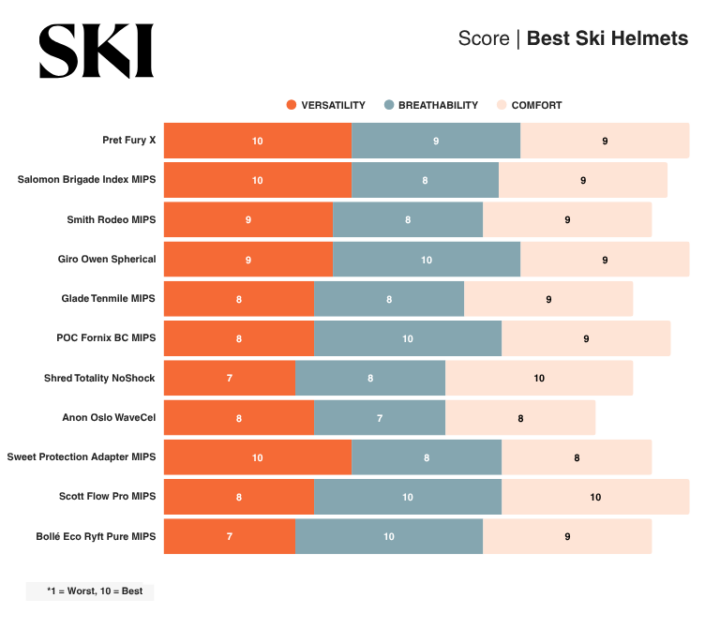
See how the best ski helmets scored in individual performance criteria. SKI measures helmet performance across three scoring criteria: versatility, breathability, and comfort.
How to Choose the Best Ski Helmet
Impact Protection
A well-constructed snowsports helmet should last you a few years, depending on the number of days you ski or ride and how many big crashes you take. If your helmet has been dented or damaged or seen years of heavy use, it’s probably time for an upgrade.
Most of the helmets we tested come with MIPS, which stands for Multi-Directional Impact Protection System, a layer of lining between the shell and foam that allows the helmet to rotate on impact, reducing rotational forces to the brain in the event of a big tumble. Some brands have developed their own proprietary technology that offers similar safety protection as MIPS. If you’re purchasing a new helmet, we do recommend seeking out a lid with multi-directional impact technology.
ADVERTISEMENT
Fit and Sizing
When it comes to fit, it can be helpful to try helmets on in person in a store to ensure the sizing works for your uniquely-shaped head. If you’re buying online, measure your head circumference with a soft tape measure just above your ears and about an inch above your eyebrows and look for helmet sizing that fits that range (most helmet brands use centimeters in their size ranges). You don’t want excessive movement or extra space in your helmet, but you also don’t want pinching or squeezing. Every helmet we tested has a micro-adjustable knob on the back to get a more precise fit. All helmets should fit with other goggle brands, but we’ve found the best fit (read: no gap on the forehead) tends to be when you purchase a helmet and goggles from the same brand.
Features
In terms of temperature control, helmets with insulating lining or a layer of fleece run warmer than others that are more barebones on the interior. If you run hot, also look for lots of controllable vents.
How We Test Ski Helmets
- Number of testers: 12
- Number of helmets tested: 44
- Number of resorts skied at during the test: 21
- Number of 14,000-foot peaks climbed: 8
- Number of testers who traveled north of the Arctic Circle: 6
Every tester wore helmets skiing both inbounds and on backcountry tours. All testers live in the North Lake Tahoe area but traveled extensively during two winters of testing, including stops around Colorado, Utah, B.C, and spring ski touring trips to Lofoten Islands, Norway, and the Caucasus Mountains of Georgia.
Meet Our Testers
Freelance journalist Megan Michelson is a longtime skier based in Tahoe City, California. She’s been covering the ski industry as an editor and writer for over 15 years and contributes regularly to publications across the outdoor industry and beyond. Her crew of testers quoted here include Palisades Tahoe ski patroller Jason Mack, ski race coach Karl McDade, marketing specialist Kerstin Ulf, ski shop employee Kim Olenic, and Alpine Meadows lift electrician Brian Guinn.
More Gear Reviews
The 10 Best Goggles of the Year
The Best All-Mountain Skis of 2025, Ranked
The Best Men’s Ski Jackets
