Updated July 11, 2025 05:36AM
How Tight Should New Ski Boots Be?
Learn the secrets of ski boot fit with expert advice from a professional bootfitter to ensure optimal comfort and performance on the slopes.
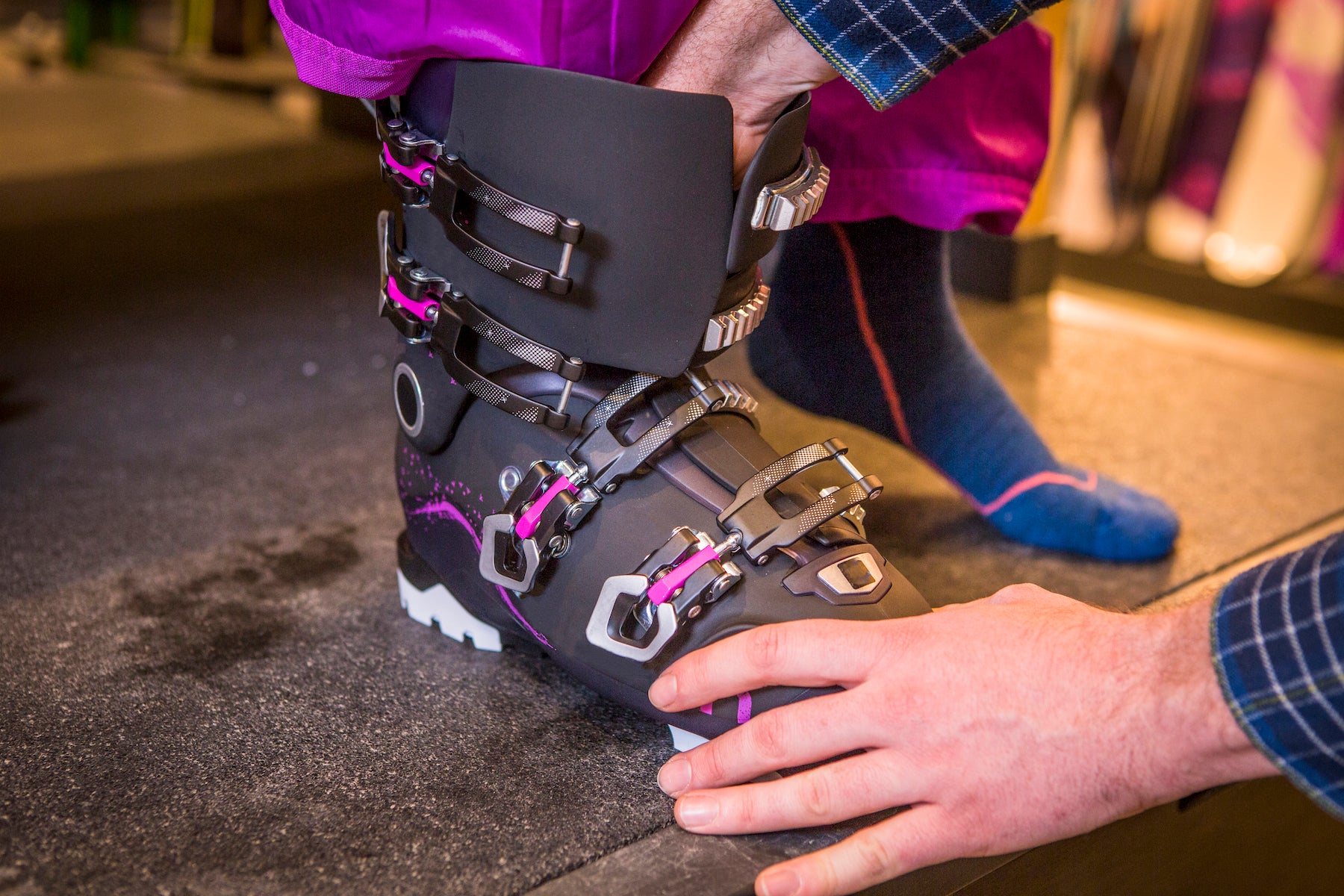
A ski bootfitter helps a customer get the perfect fit. (Photo: Getty Images/ VisualCommunications)
Fact: Ski boots are your most important piece of ski equipment. No other gear item—not even skis—makes or breaks your ability to ski well like ski boots. Sure, your skis make direct contact with the snow and guide your turns, but your feet and ski boots guide those skis. Ergo, good turns come down to a good ski boot fit.
When you wear ski boots that fit your skiing style and your foot, your ski boots and skis enter into a symbiotic relationship—the energy you generate by flexing your knees and ankles is seamlessly transferred to your skis via your boots. Unfortunately, many skiers are skiing in boots that don’t match their ability or don’t fit properly, so they’ve never experienced this kind of seamless energy transfer and efficient skiing.
There are several reasons skiers end up with the wrong ski boot. They buy boots online without trying them on or get ski boots based on reviews without considering whether these boots are the right fit or style. But the biggest culprit is a lack of understanding of how a ski boot should fit. Age-old myths continue circulating—“Ski boots are supposed to be excruciatingly tight and uncomfortable!” or “If your toes touch the end of the boot, you’re definitely going to lose toenails.”
Neither is true. A properly fitting boot should not be painful, but it shouldn’t feel like a slipper, either. What you’re looking for, says professional bootfitter Sam Tischendorf, is a snug fit. “It should feel like a firm, almost creepy handshake. The boot liner should engulf your whole foot and feel like a snug-fitting glove,” says Tischendorf. But what, exactly, does “snug” feel like?
“With an ideal fit, I want people to be able to wiggle their toes still. You shouldn’t be able to curl your toes, but you should have some toe movement. There should be no movement at all through the mid-foot or ankle. Know that the boot is going to be at its tightest when trying it on in the store, and it’s going to become more spacious over time. So, err on the side of feeling contained,” says Tischendorf.
ADVERTISEMENT
A bootfitter can help take guesswork out of finding the right boot, but it still comes down to skiers understanding how a boot should fit and then being able to articulate to a bootfitter how a boot feels. Consider these tips from Tischendorf, then get ready to spend an hour with a bootfitter, talking about your feelings.
Related: How to find a bootfitter who is worth their salt (but not salty)
Explanation of ski boot fit
Boot is too big
The boot’s sole length is too long for your foot and/or its volume too large for the width of your foot and height of your instep.
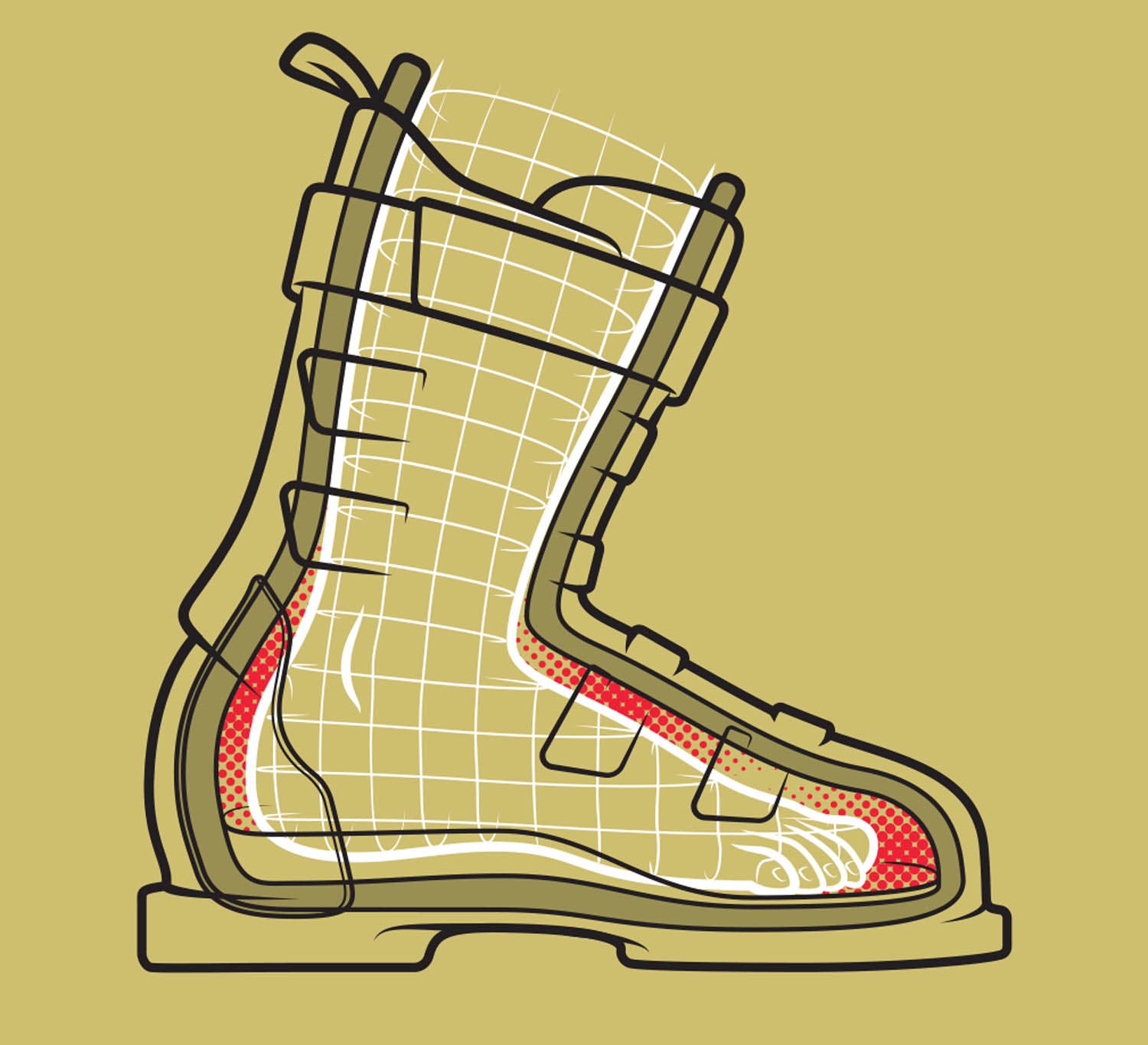
Fit notes:
- Too much room in the toe of the boot, enough room for toes to curl.
- Too much space between the top of the midfoot and the ceiling of the boot, enough room for the whole foot to lift.
- Too much space around the heel and ankle bone, enough room for the heel to lift and move laterally.
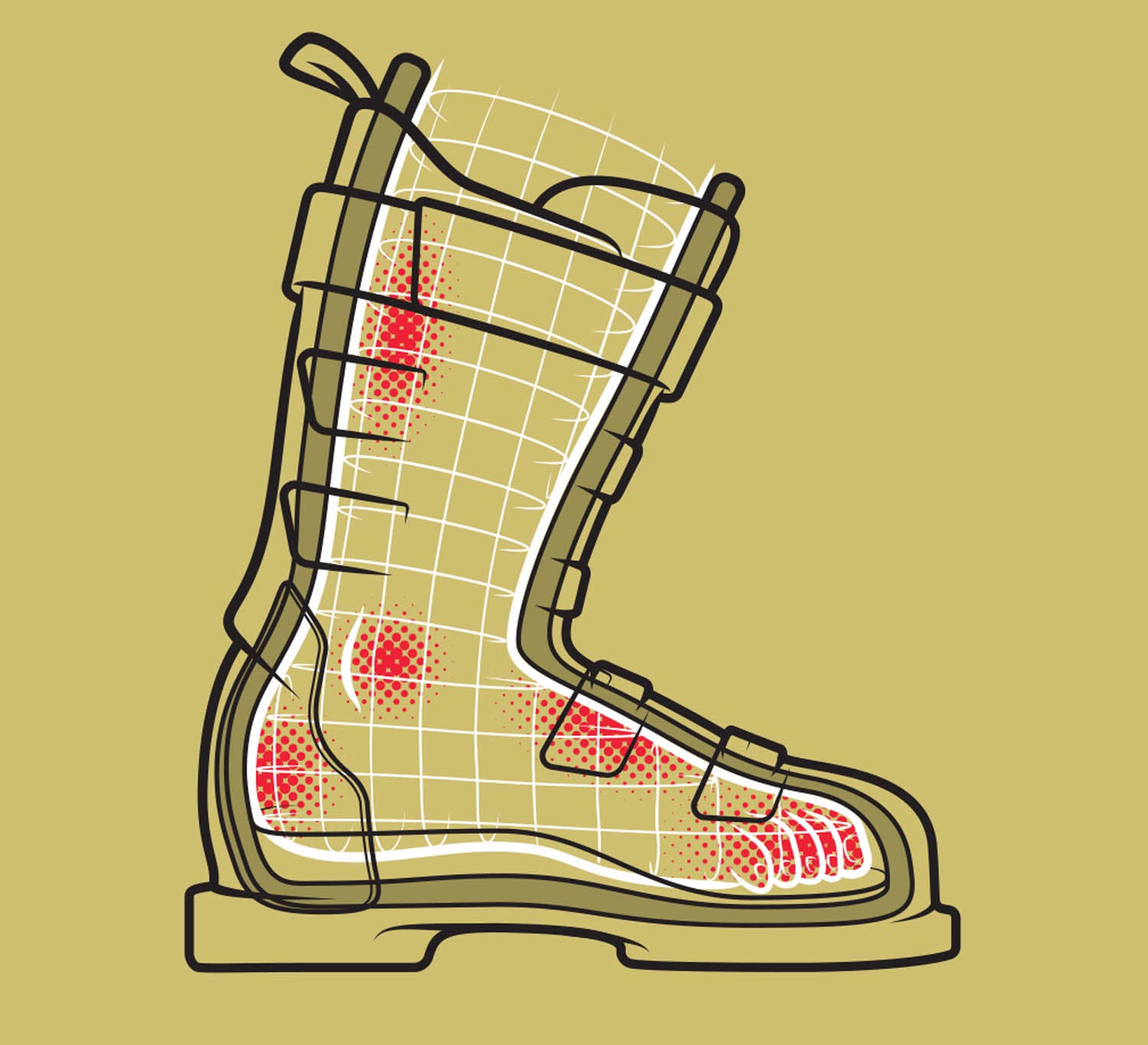
Boot is too small
The boot’s sole length is too short for your foot and/or its volume too low for the width of your foot, height of your instep, or size of your calf.
ADVERTISEMENT
Fit notes:
- Toes are curled or significantly jammed up against the end of the boot.
- The boot is cutting into the top of your midfoot/instep.
- Uncomfortable pressure or hot spot on the outside ankle bone and/or back of the heel.
- Uncomfortable pressure or pinching at the back of the calf.
Good ski boot fit
The boot’s sole length matches the length of your foot. Its volume is appropriate for the width of your foot, height of your instep, and size of your calf.
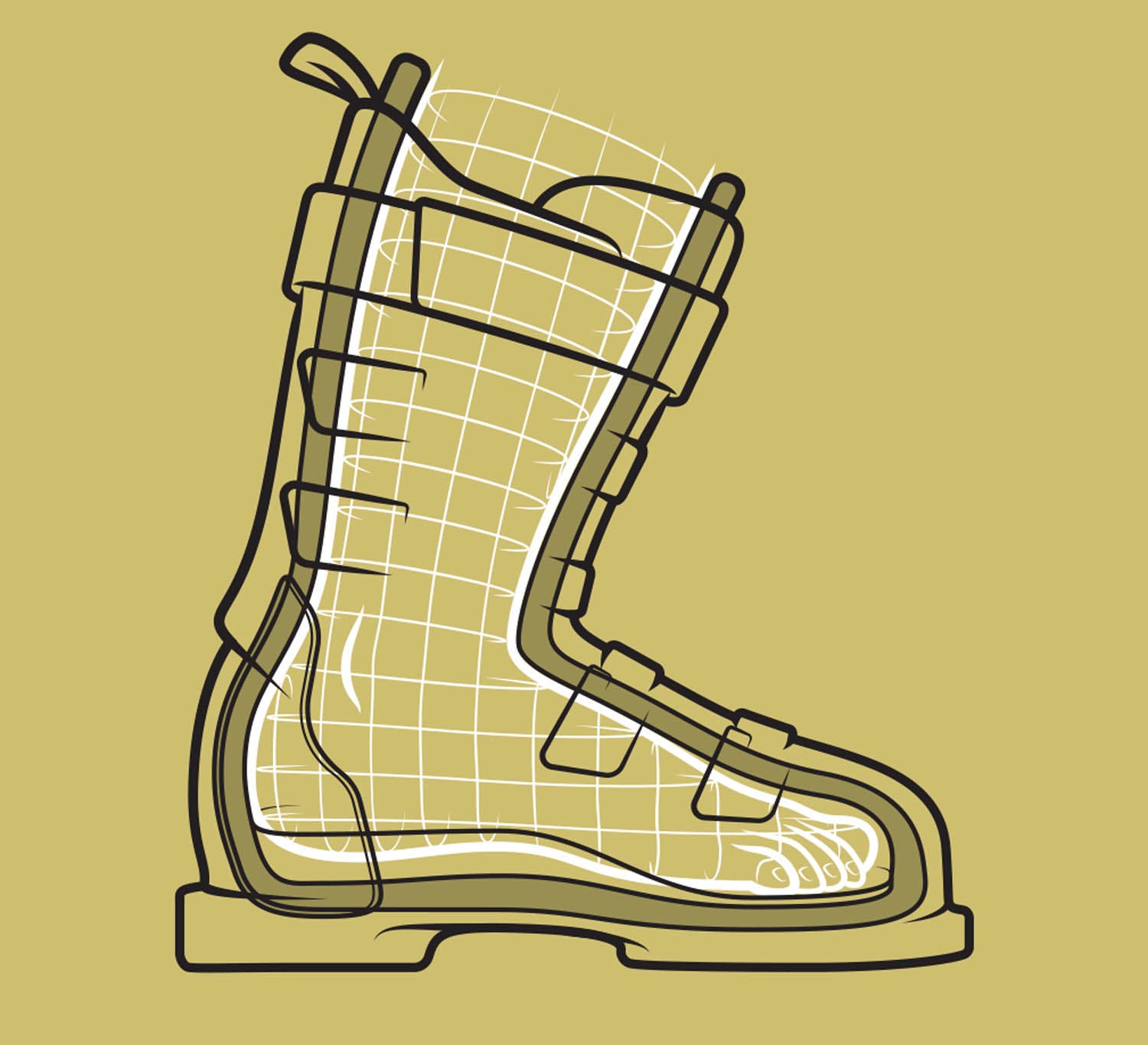
Fit notes:
- Toes are just barely not touching the end of the boot when ankles and knees are flexed.
- No space between the top of the instep and ceiling of the boot.
- The heel is firmly locked into the heel pocket.
- Cuff firmly envelopes shin and calf.
Pro-tip to help you judge your boot fit
When you’re in an unbuckled boot, your toes might feel a little jammed up against the front of the boot. But when the boot is buckled and you stand with ankles and knees flexed, driving your shins forward, your toes should come away from the front slightly as your heel moves back into the heel pocket.
About boot volume
Volume refers to how much space there is between the floor and ceiling in the instep of the boot and how much space there is in the toe box. Most brands now make boots that come in three volume options: low volume (LV), ranging between 97-99mm last; mid-volume (MV), between 99-101mm; and high volume (HV), between 100-104mm.
ADVERTISEMENT
Considering volume when buying a boot is important because too much space above the instep and around the midfoot and heel will leave your foot flopping or sliding around and limit your ability to steer your skis accurately, especially in bumps and off-piste. “If you have a wide foot but short instep, you’re better off accommodating for width than volume,” says Tischendorf.
Translation: Find a boot that fits your instep height, then work with a bootfitter to stretch or punch out the boot shell to fit your wide foot or sixth toe.
Sam Tischendorf is one of the very few professional female ski bootfitters—or as she likes to say, professional feet ticklers—in the industry. She works at Bootdoctors in Telluride, Colo., is a Masterfit University teaching team member, and collaborates with Blizzard/Tecnica on the Women To Women gear project.
More Ski Boot Content
The best alpine boots of 2023
The best backcountry boots of 2023
Five causes of shin bang and how to prevent them
