Updated November 5, 2025 02:18PM
The Best Heated Socks for Sub-Freezing Adventures
Should you splurge on heated socks? These pairs—with built-in heating systems to keep your toes toasty—are worth every penny.
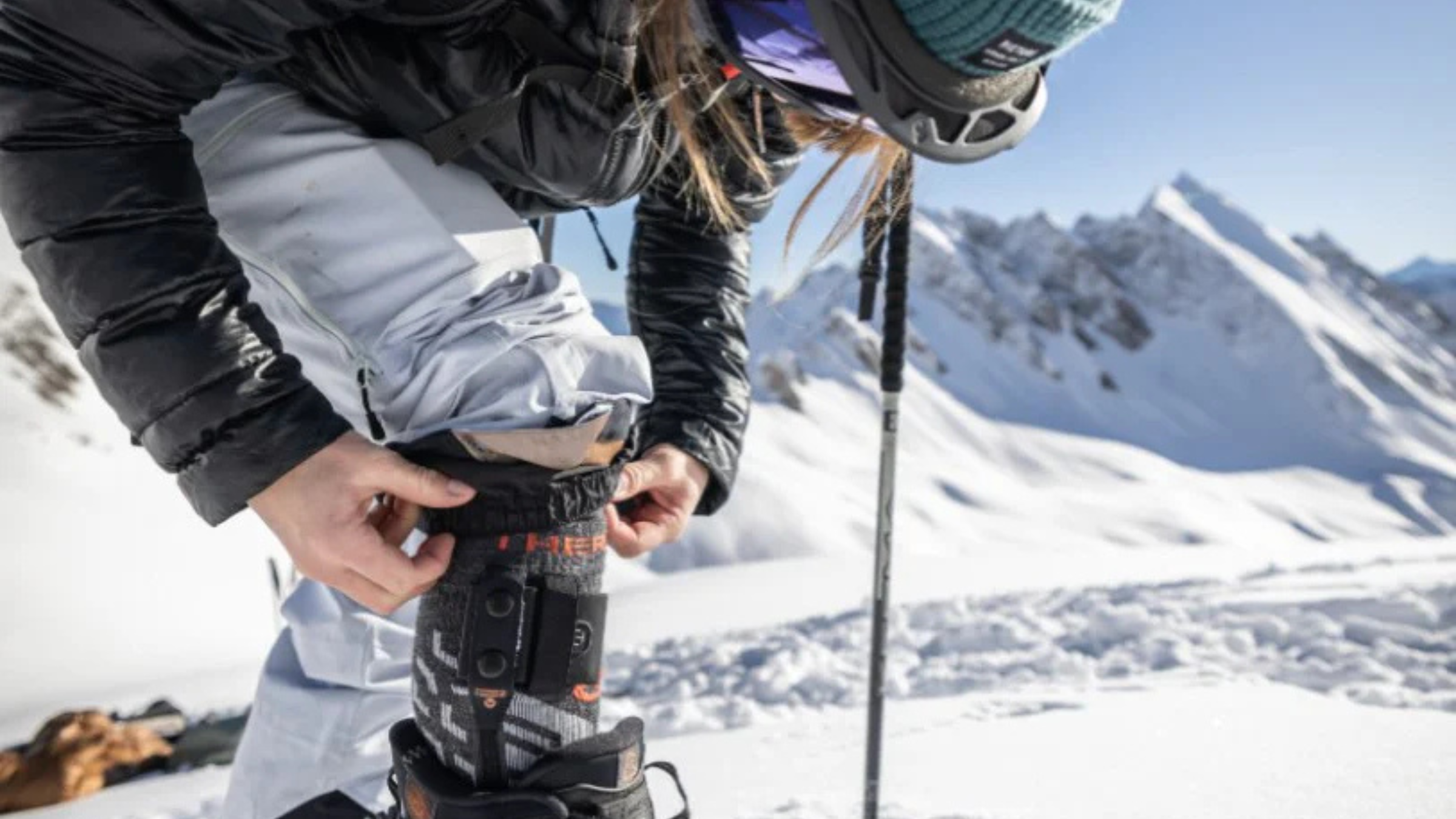
Cold toes are winter’s killjoy. But heated socks cost a couple hundred dollars, and you might wonder if the benefits outweigh the expense. Some models use bulky wiring that creates pressure points underfoot, and plenty of thick and saggy styles can chafe while hiking or snowshoeing. In close-fitting ski boots, some heated socks may not fit at all.
The best heated socks, however, repay your investment with a huge return in comfort. Battery-backed heat allows skiers to stay out longer and wander farther from the warming hut. Heated socks also boost accessibility: Those with Raynaud’s syndrome—which causes numbness, spasms, and coldness in fingers and toes—may find that heated socks helps keep debilitating cold at bay. I spent this winter testing a range of available heated sock models, evaluating fit, warmth, moisture management, and battery ergonomics to see how they performed while skiing, ice skating, and hiking in sub-freezing temperatures. Here are my top three picks.
Best Heated Socks: At a Glance
- Best Fit: Therm-ic S-Pack 1400 BT with Ultra Warm Performance Socks ($460)
- Best All-Around Warmth: Lenz rcB 1400 and Heat Socks 5.1 ($450)
- Best Battery Life: Hotronic XLP Power Set and Surround Thin Socks $(444)

Best Fit
Therm-ic S-Pack 1400 BT with Ultra Warm Performance Socks
Sizes: XS-XL (unisex)
Output: 2800 mAh; two S-PACK 1400B batteries
Pros and Cons
+ Most breathable in our test
+ Thin, wrinkle-free fit
– Battery life lasts for half the day at highest setting
The cheapest heated socks tend to be sacklike and saggy—a far cry from the foot-hugging stockings that I prefer for alpine skiing. Therm-ic’s Ultra Warm Performance Socks deliver everything I expect from a great ski sock. They’re thin enough to let my feet sense changes in my turns and in the pressure I exert on my skis. (And these aren’t even Therm-ic’s thinnest model: The race-oriented Ski Heat LV incorporates zero padding across the nearly sheer forefoot.) Instead of relying on a lot of elastane to prevent bagging, Therm-ic uses zoned knitting to create a smooth, wrinkle-free fit across the instep and ankle. The low elastane content (3 percent) also makes these more breathable than other heated socks we tested, and a blend of 60 percent nylon and 37 percent merino wool does a decent job of wicking sweat. My feet never felt damp or clammy.
The heating element runs along the upper side of the foot and across the tops of the toes. As long as I avoided placing the wire between my sole and the boot, I never felt it while skiing or skating. Battery placement high on the calf is also comfortably unobtrusive—and secure thanks to a slim elastic band. On the lowest of the three heat settings, my toes stayed not-cold for four hours in temperatures ranging from 10 to 20 degrees. Any longer, or in colder conditions, I had to increase the heat to level two or three. I found it easiest to yank up my pant leg and adjust the setting manually by pressing the battery’s single on/off button. Therm-ic also makes an app that lets you control the settings using your smartphone, and that was convenient when handling my phone involved less hassle than exposing my socks (when riding a ski lift, for example).
ADVERTISEMENT
Where Therm-ic’s system falls short is battery life. On the lowest setting, I could count on warmth lasting through eight hours of outdoor use. But on level two or three, the heat quit after three to four hours outside. (My testing confirms Therm-ic’s predictions of 7.5 to 9 hours on the lowest setting, and 3 to 3.5 hours on high.) That’s certainly a sufficient duration for many outdoor enthusiasts, but out-all-day types (or those with especially poor circulation to their toes) may prefer one of the longer-lasting options below.

Best All-Around Warmth
Lenz rcB 1400 and Heat Socks 5.1
Sizes: S-XL (unisex)
Output: 2800 mAh; two lithium rcB 1400 battery packs
Pros and Cons
+ Heating above and below the toes
+ Long-lasting battery
– Bulky battery arrangement
Lenz’s ace in the hole? A patented design that wraps flat-stitched, unobtrusive heating wires across the top and bottom of the toe cap. The result is comprehensive warmth with no noticeable cold spots across the toes—consistency that distinguishes Lenz from the other brands.
The blend of merino wool (25 percent) with polyester (30 percent), along with nylon, acrylic, silk, and elastane, feels soft, not plasticky, and effectively wicks sweat. Though the heating elements are trim, they’re not imperceptible: I felt more bulk around my toes than with the Therm-ic socks, and fit suffers somewhat. Perhaps it’s because the heating elements are channeled across the top of the foot and ankle, but accordioned fabric at the joint prevents a perfectly smooth feel in ski or hiking boots.
ADVERTISEMENT
The battery snaps into the sock’s cuff, which folds down around the top of the calf. It’s a bulkier arrangement than the Therm-ic and inhibits manual operation of the heat settings. That’s where the Lenz app comes in handy. The design is quite comfortable—I noticed no interference with ski boots or base layers, and no pressure on my calves—and battery life is enduring. On the lowest setting (which kept my toes comfortable in relatively warm, 25- to 35-degree temperatures), the battery lasted for longer than any outing I logged (Lenz claims 12.5 to 16.5 hours). On the medium setting, which I preferred for 15- to 25-degree conditions, the battery lasted a whole ski day (Lenz claims 6.5 to 8.5 hours).

Best Battery Life
Hotronic XLP Power Set and Surround Thin Socks
Sizes: XS-XL (unisex)
Output: 4400 mAh; two XLP BT battery packs
Pros and Cons
+ Best warmth output in the test
+ Compressive, no-sag fit
– Thin style is still quite thick
Here’s the flamethrower you want for always-cold toes. Even on the lowest setting, Hotronic’s XLP batteries deliver a blast of warmth. With it, my toes felt cozy (rather than simply “not cold”) in 15-degree temperatures. Credit the battery’s 4400 milliampere hour (mAh) output that has seriously more output than the 2800 mAh in the Lenz and Therm-ic models. Hotronic says it lasts 16 to 18.5 hours on the lowest setting, though I must confess: I never stayed outdoors long enough to verify that claim. On the fourth and highest level, warmth lasts 5 to 6 hours.
Tradeoffs come in the fit and feel of the sock. Hotronic’s thinnest heated sock is still thicker and bulkier than the other options reviewed here, and its blend of nylon (80 percent) and spandex (20 percent) traps more moisture. After a full day of skiing, my feet stayed impressively warm but also somewhat swampy. However, the compressive fit prevents sagging: If you like socks that squeeze, this is your winner. Because the battery pack slides into a sleeve in the top of the compression sock, I wondered if I’d feel discomfort from the battery pressing into my calf. But I didn’t: After a 10-hour day in these socks, I never registered the battery packs. I didn’t handle them either, instead using the Hotronics smartphone app to adjust the power output remotely.
ADVERTISEMENT
Inside the sock, under-toe wires at the tips of the feet and over-toe warmth further back near the knuckles are smooth and unobtrusive. They effectively distributed heat and kept me confident about my comfort through hours in sub-freezing temps.
How to Wash Heated Socks
Yes, heated socks can be machine-washed. But they require extra care: All the socks reviewed here should be laundered in a mesh or lingerie bag using a cold-water delicate cycle (and Lenz advises washing its socks inside-out). It’s also important to note that you can’t just toss them into the dryer—line drying is required. So if you plan on wearing heated socks for multiple days in a row, you’ll probably have to forego a proper laundering between each use. My advice: Air them out between wearings.