Updated February 9, 2026 03:32PM
If you buy through our links, we may earn an affiliate commission. This supports our mission to get more people active and outside.Learn about Outside Online's affiliate link policy
The Best Women’s Alpine Touring Boots of 2026
Designed from the ground up for women, these backcountry boots actually deliver on both fit and performance.
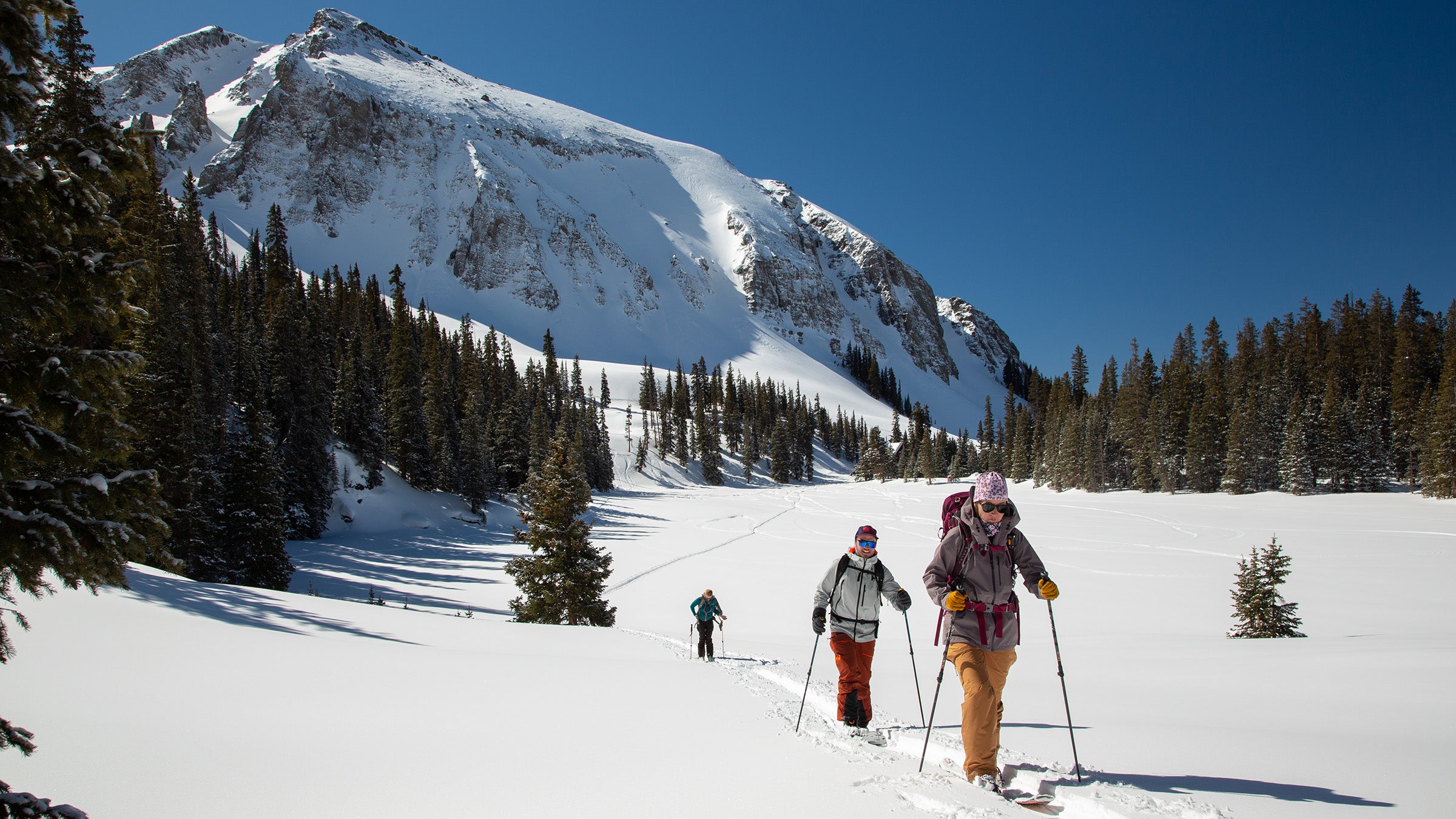
We tested more than a dozen alpine touring boots for women. Our top picks balance comfort and performance, whether you're in it for the ascent or the descent. (Photo: Keri Bascetta)
Table of Contents
We tested 15 alpine touring boots at the annual Masterfit/America’s Best Bootfitters test. After hundreds of laps, testers named the Scarpa 4-Quattro GT WMN the best alpine touring boot for women. We also recommend the Tecnica Zero G Tour Pro W for women looking for a light backcountry boot that doesn’t compromise on downhill performance.
For decades, it was hard to find women’s backcountry ski boots. Then, it was hard to find women’s backcountry boots that actually fit and weren’t just smaller, pinker versions of the men’s. Today, more brands are building women’s alpine touring boots from the ground up, using female-specific lasts and designs that account for women’s biomechanics and performance needs.
All of the models in this guide are made specifically for women, but their intended uses differ. Some are lightweight touring boots built for efficient uphill travel, while others are hybrid women’s backcountry ski boots that balance the downhill power of alpine boots with the range of motion and comfort needed for big backcountry days.
We tested models across both categories to find the best women’s backcountry ski boots of the season—boots that fit well, climb efficiently, and ski beautifully whether you’re chasing steep lines or going fast and light.
ADVERTISEMENT
Updated February 2026: We refreshed this guide to reflect up-to-date pricing and availability.
Best Women’s Backcountry Ski Boots: At a Glance
- Best Hybrid Backcountry Boot: Scarpa 4-Quattro GT WMN ($699)
- Best Lightweight Touring Boot: Tecnica Zero G Tour Pro W ($980)
- Best Downhill Performance: Tecnica Cochise DYN W ($850)
- Best for Narrow Feet: Rossignol Alltrack Elite 110 LT W ($750)
- Best Entry-Level Alpine Touring Boot: Scarpa Gea RS ($899)
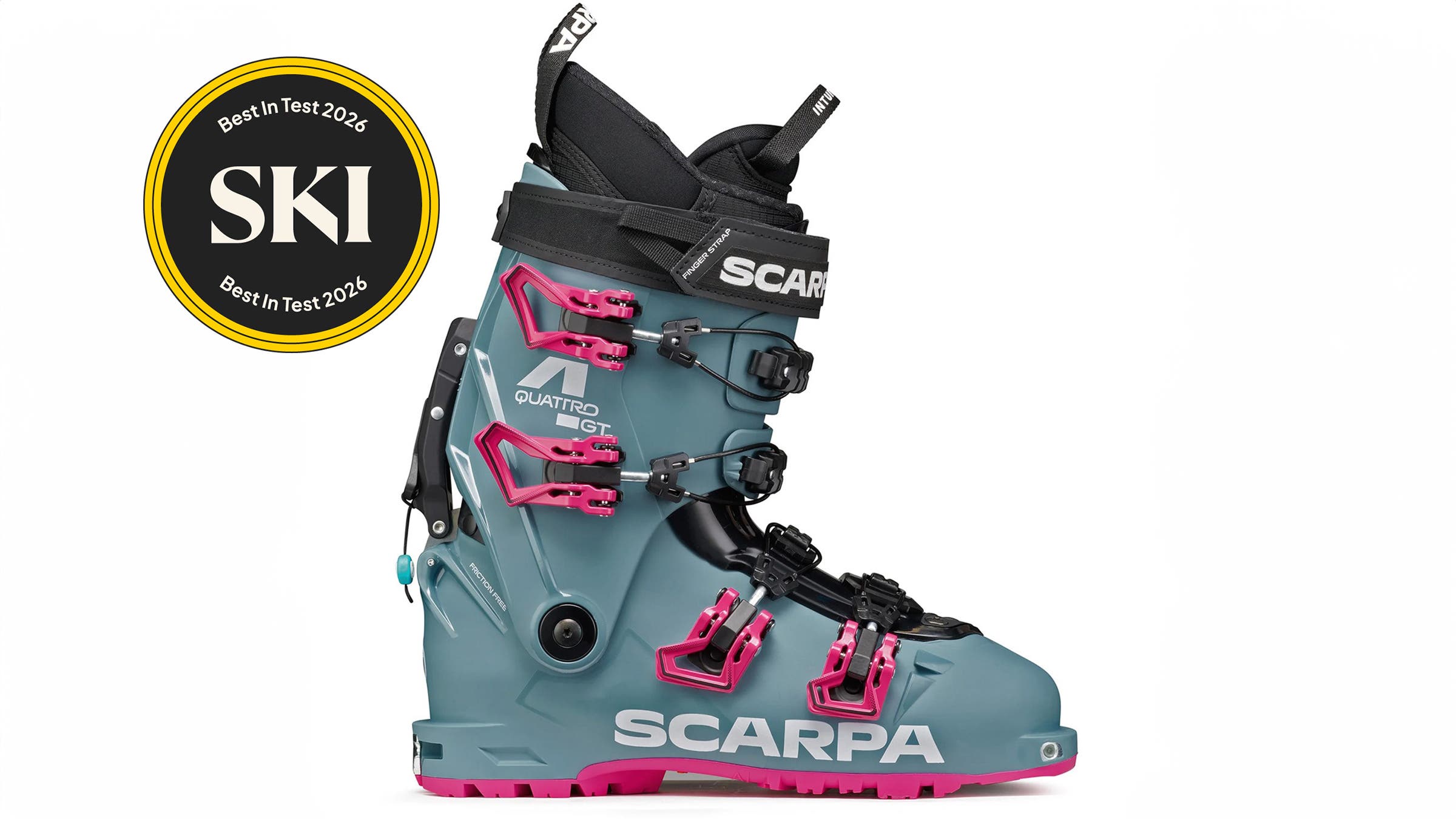
Best in Test Freeride Boot
Scarpa 4-Quattro GT WMN
Sizes available: 22-27
Last: 101 mm
Flex: 90
Weight: 1,510 g
Pros and Cons
+ Comfortable medium to wide-ish fit
+ Skis more strongly than the 90-flex suggests
+ Fantastic touring range of motion and feel
– Might not be powerful enough for bigger, more aggressive skiers
Testers have issued a sleeper alert for the Scarpa 4-Quattro GT—and they mean that in more ways than one. First, they say strong skiers who have overlooked the 4-Quattro alpine touring lineup should wake up to the newly launched GT. Second, they say that this boot will surprise a lot of people with its combination of power, precision, uphill convenience, and value.
At this year’s test, the 4-Quattro GT quietly racked up some of the best scores of the entire lineup, earning four perfect 10s across six categories for initial fit, dynamic on-snow fit, stance geometry, and convenience. No other backcountry ski boot, men’s or women’s, matched that performance.
Fit-wise, testers described the GT as a true, snug medium, exactly in line with its advertised 101-millimeter last (a rarity). It felt slightly tight at first, but after a full heat mold, it opened up to comfortably fit skiers on the wider side of medium. Testers also appreciated the extended toebox, which added both warmth and all-day comfort without feeling sloppy.
ADVERTISEMENT
The real surprise came on the descent. Despite the 90 flex label, the 4-Quattro GT skied like a much burlier 110-flex boot, driving bigger skis at higher speeds with composure and edge power that defied its specs, especially for our more petite testers. Testers praised its ability to hold a strong carve when needed yet release smoothly for quick schmears and pivots, calling it “lightning fast” in tight terrain and transitions.
And uphill? Seamless. Testers who took it for short tours reported Scarpa’s trademark touring efficiency: a long, friction-free cuff rotation and an easy, intuitive switch between ski- and walk-modes. It’s a boot that climbs with grace but descends with authority—a rare and welcome balance in the women’s backcountry ski boot category. And with a full-length molded GripWalk outsole, it can code-switch in a snap to resort skiing on an alpine binding.
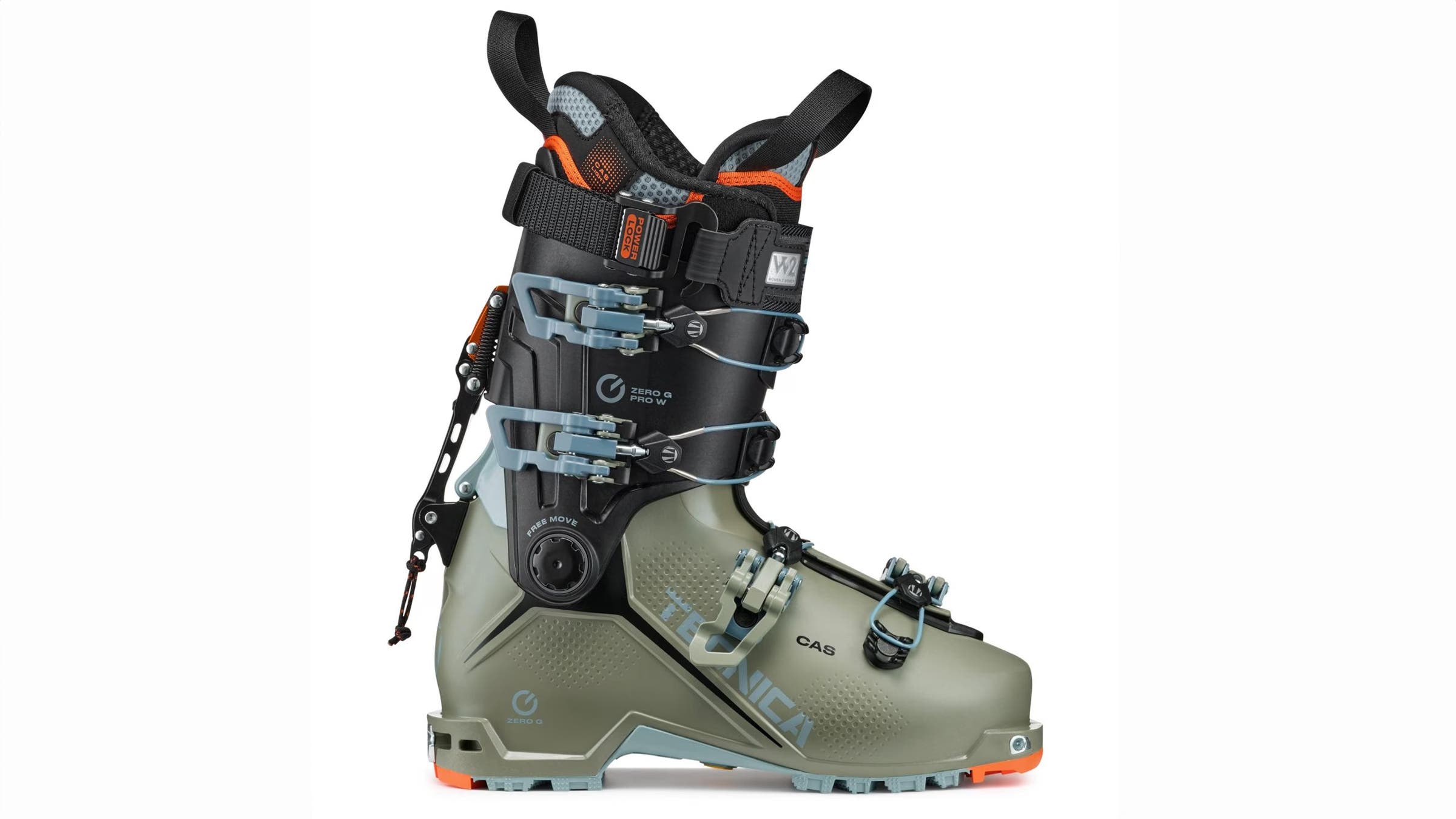
Best Lightweight Alpine Touring Boot
Tecnica Zero G Tour Pro W
Sizes available: 22.5-27.5
Last: 99 mm
Tested Flex: 125 (also available in the Scout W 115, Tour W 105)
Weight: 1,127 g
Pros and Cons
+ Snug medium fit
+ Race-boot level precision and power
+ Light and long-striding touring ability
– Expensive
The Tecnica Zero G Tour Pro W impressed every tester on our team enough to land at the top of the podium in our women’s backcountry boot test. What’s even more impressive? This isn’t its first win—it’s topped the backcountry category for several years running. Testers say for expert skiers looking to charge demanding descents after a real uphill, there’s no better option.
The Zero G Tour Pro W is an expert skier’s alpine touring boot. Its performance scores for dynamic balance, edge power, and quickness all earned perfect 10s. The 125 flex feels true to rating, delivering solid fore-aft support and a stiff, powerful feel that plows through crud. Testers praised the Zero G’s precise edge feel and quick transitions, saying it made skiing with a pack downright fun. The power behind that control comes from its Grilamid shell and carbon-injected Grilamid cuff, which combine to make the boot exceptionally light yet stable—never twitchy or nervous.
ADVERTISEMENT
In touring mode, testers called the Tour Pro W’s cuff range of motion the best in its class. The smooth, fluid stride made uphill travel efficient, and they continued to applaud the updated cuff release mechanism for its simplicity and rock-solid connection when locked for the descent. Testers said the energy saved on the ascent was worth a million bucks—or at least, justified this boot’s $980 sticker price.
The fit remains unchanged this year, and testers say that’s a good thing. The narrow-medium 99-millimeter last is still a benchmark for a clean, anatomical shape. Despite its sleek, low-profile look, the Zero G Tour Pro W manages to avoid hot spots or pressure points. Testers described the fit as firm but comfortable—just enough contour and just enough cushioning to hold an average to narrow foot and lower leg securely in place.
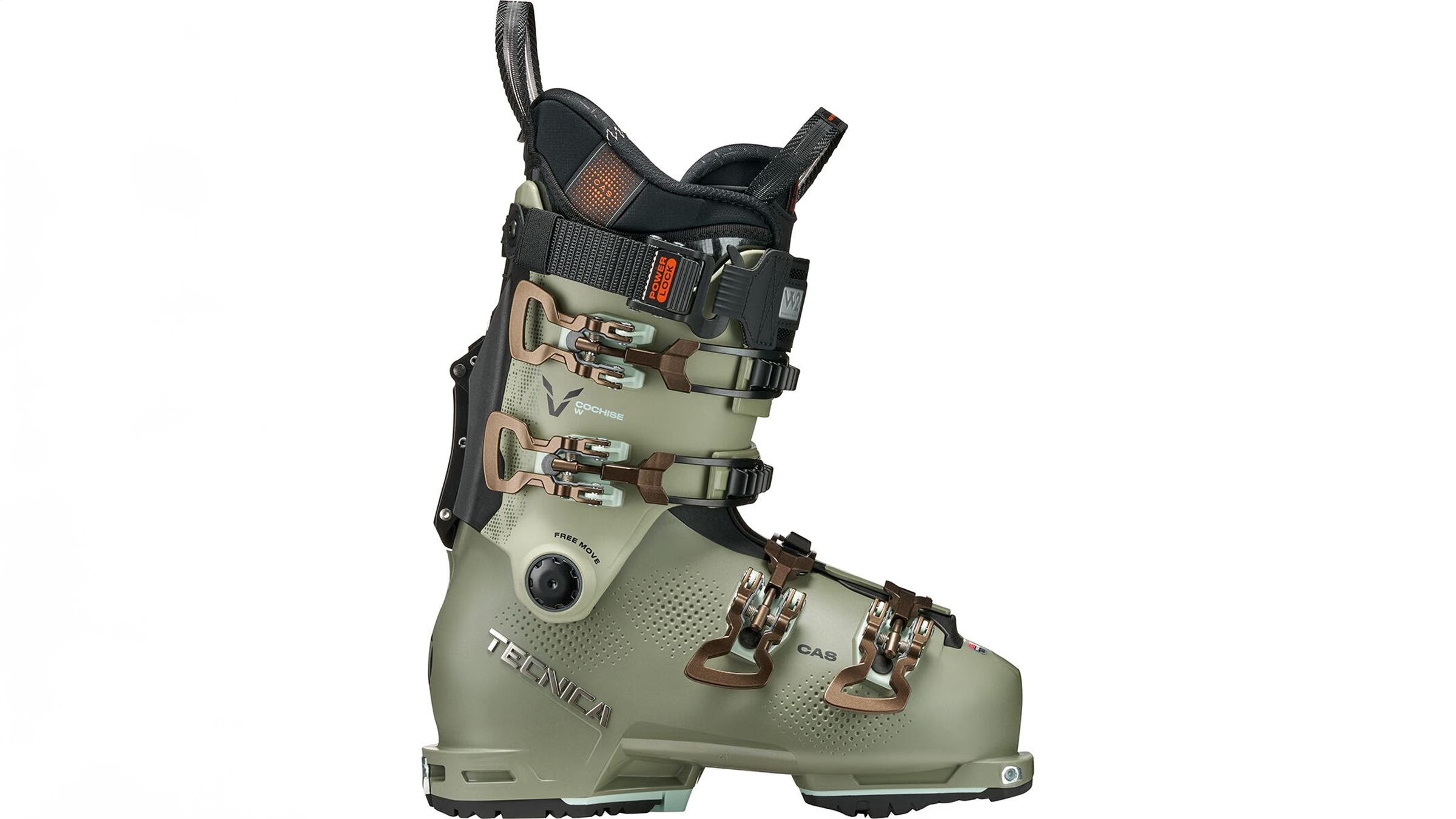
Best Downhill Performance
Tecnica Cochise 115 DYN W
Sizes available: 22.5-27.5
Last: 99 mm
Tested Flex: 115 (also available in 105, 95)
Weight: 1,650 g
Pros and Cons
+ Skis as strongly as the best all-mountain alpine boots
+ Fits true to 99 mm last
+ Hikes and tours surprisingly given its downhill focus
– May not be narrow enough for very low-volume feet
Our test team didn’t think the Tecnica Cochise 115 W needed many upgrades, but this year’s refresh proves that even alpine touring boots can get better. And, most importantly, it hasn’t lost what testers love most: its ability to ski anywhere, with confidence and power.
The revised Cochise experience begins with putting the boot on. It’s easier. The liner is completely new this year and its rear part has a smoother strip of material that allows the heel to glide down into its pocket in one, unimpeded move. Once inside, testers said the heel and ankle hold felt secure without pressure points—plush where it should be, firm where it counts. The new liner strikes that rare balance between comfort and precision, creating a snug, no-slip fit that feels ready for both hiking and charging.
Tecnica also simplified the hardware this year, ditching an unnecessary buckle catch and the tiny lock-out switch on the cuff release (no one missed them). The 99-millimeter last still fits squarely between narrow and medium. Most called it “spot-on” for skiers with average feet seeking performance without pain, though a handful of our very low-volume testers wished it was just a smidge tighter.
ADVERTISEMENT
Small but smart updates carry through the design. Firmer GripWalk soles improve traction when walking to the lift or bootpacking, and the walk mode maintains its generous range of motion.
But what really matters: the Cochise still skis like a dream. Testers say it feels every bit as powerful as a top-tier alpine boot—there’s no indication this boot has a walk-mode when it’s time to ski. The Cochise offers a nice balance of quickness and edge power for skilled skiers who want it all but who mainly stay on-resort. One tester summed it up best: “It’s a powerhouse, a ripper, super-solid, and sneakily awesome.” We couldn’t agree more.
Best for Narrow Feet
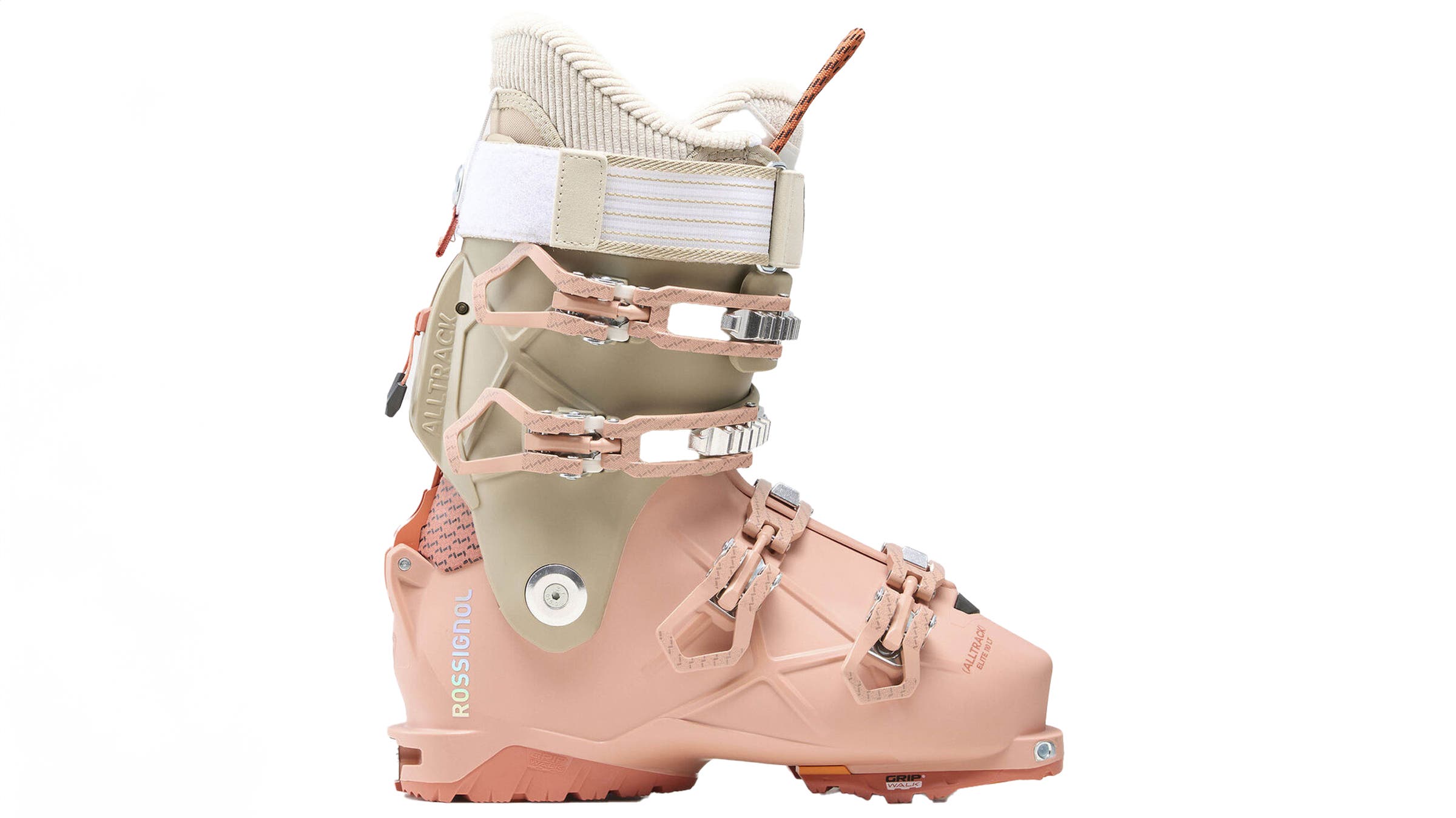
Rossignol Alltrack Elite 110 LT W
Sizes available: 22.5-27.5
Last: 98 mm
Flex: 110
Weight: 1,530 g
Pros and Cons
+ Better touring range of motion than past Alltracks
+ Good blend of power, quickness, and touring ability
+ Very comfortable and warm
– Fits on the roomy side of the narrow group
The Rossignol Alltrack Elite LT 110 W is the rare “narrow” boot that doesn’t feel restrictive. Testers called it an inclusive narrow—snug and performance-ready, but never punishing. The Step-In design makes it easy to slide into, setting the inviting tone of this boot. The new design, adapted from Rossignol’s all-mountain Vizion boots, also dramatically improved the cuff’s touring range of motion.
Testers also couldn’t stop talking about the details. The peach-and-khaki color combo drew plenty of compliments, and the new ribbed micro-corduroy liner became an instant favorite—described as “soft,” and “unexpectedly plush.” Rossignol has built a reputation for giving women’s boots a touch of personality, and testers were all in on this year’s look and feel.
Fit-wise, the Alltrack Elite 110 W continues Rossignol’s tradition of a slightly relaxed take on the “narrow” category. It sits right between narrow and medium—ideal for skiers with low-volume feet who still want some breathing room. Our testers didn’t see that as a flaw but rather a well-sculpted, realistic shape for everyday comfort. Those seeking a race-level squeeze can always find it elsewhere, or visit a good bootfitter.
ADVERTISEMENT
Of course, none of the comfort features matter if the boot didn’t ski well. Thankfully, it does. Testers praised the Alltrack Elite’s agile, energetic feel and its lively connection to the snow. It’s quick when you need it to be but steady enough to keep up with stronger skiers on the frontside. The flex felt smooth and progressive—maybe a touch softer than its stated 110—but delivered that perfect middle ground between power and quickness.
Best Entry-Level Alpine Touring Boot
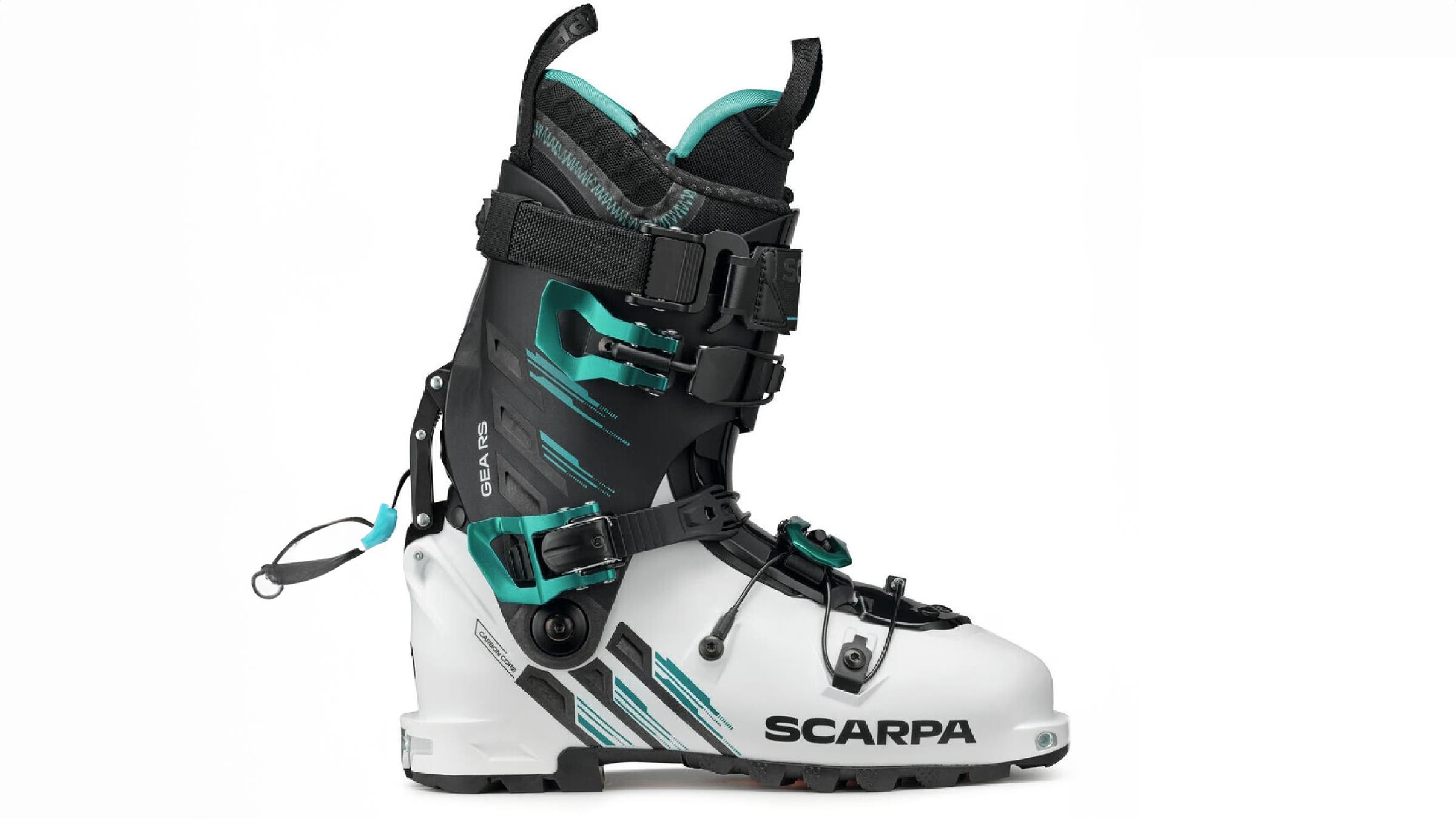
Scarpa Gea RS
Sizes available: 22.5-27.0
Last: 102 mm
Flex: 120 (also available in Gea 100)
Weight: 1,337 g
Pros and Cons
+ Comfortable, anatomical fit for average and thicker feet and insteps
+ Solid for experts but forgiving for less-skilled skiers
+ Category-winning touring range of motion
– Entry and closure system can be cumbersome at first
Testers describe the Gea RS as a backcountry ski boot for every-woman. While experienced backcountry users will appreciate its solid-enough flex and massive touring range of motion, the beauty of the Gea RS is that it’s an easy lift for any skier who’s new to the skin track.
The pre-molded, fully customizable Intuition Pro Flex Performance liner works well for a medium-width foot and leg right out of the box. Testers noted that higher-volume feet benefit from the liner’s heat-moldable design, which allows for additional fit forgiveness.
The cuff delivers supportive, well-distributed shin contact. While slightly softer than its 120-flex rating suggests, it holds firm under heavy load, whether from hard flexing or skiing with a pack. Testers said the progressive flex ensures less-experienced skiers aren’t tossed into the backseat. Edge changes and lateral movements are enhanced by the stiff, carbon-reinforced Grilamid Bio lower shell. Its low-profile design keeps the foot close to the ski, providing a connected, responsive feel on snow.
ADVERTISEMENT
Veteran testers are accustomed to the Gea RS’s trio of style buckles and overlapping cuff layers, but they caution new users to be patient when putting the boot on and securing all components. It may take a few tries to get comfortable with the system.
Once on the move, however, uphill travel is smooth and natural. The cuff release is easy, and the stride feels intuitive, comparable to—or in some cases even more comfortable than—a modern hiking boot. Testers particularly praised the cuff’s smooth fore-aft rotation and anatomically correct ankle flex point.
Best Women’s Alpine Touring Boots Comparison
| Boot | Scarpa 4-Quattro GT WMN | Tecnica Cochise DYN W | Rossignol Alltrack Elite 110 LT W | Tecnica Zero G Tour Pro W | Scarpa Gea RS |
| Price | $699 | $850 | $750 | $980 | $899 |
| Last | 101 mm | 99 mm | 98 mm | 99 mm | 102 mm |
| Flex | 90 | 115, 105, 95 | 110 | 125 | 120 |
| Weight (per boot) | 1,510 g | 1,650 g | 1,530 g | 1,127 g | 1,337 g |
| Best For | Skiers looking for a one-boot quiver for 50/50 touring and resort skiing | Skiers looking for a one-quiver boot that excels on the descent and is still capable on shorter ascents | Strong backcountry freeride skiers with narrow feet | Strong skiers looking for a lightweight touring boot that still excels on the descent | Anyone and everyone looking for a lightweight alpine touring boot that they can still trust on the downhill |
Alpine Touring Boots Buying Guide
Shopping for ski boots can be overwhelming, especially now that the choices include both traditional alpine ski boots and alpine touring (AT) boots designed for backcountry travel. Here’s how to narrow it down.
Alpine Ski Boots vs. Alpine Touring Boots
If you’re a resort skier who exclusively rides the chairlift, you want alpine ski boots—also called all-mountain or downhill boots. These focus on downhill performance and power transfer. Some alpine ski boots include a “walk mode” for easier walking or après-ski comfort, but they’re not built for skinning uphill. Most alpine boots now come with GripWalk soles, which provide better traction while staying compatible with modern bindings.
If you plan to skin uphill to earn your turns, you need alpine touring (AT) boots. These feature walk modes, lighter materials, and tech fittings that connect to specialized “pin” or “tech” bindings for climbing. AT boots are also known as backcountry ski boots or touring boots.
ADVERTISEMENT
Generally speaking, there are two types of alpine touring boots:
- Freeride boots (also known as hybrid boots): The best option for skiers who split time between the resort and backcountry. They ski nearly as powerfully as alpine boots but have uphill-friendly features like lighter shells and full GripWalk soles.
- Backcountry boots: Prioritize uphill efficiency with lighter plastics, flexible walk modes, and rockered, lugged soles (ISO 9523). They still ski well but are designed for longer tours and off-piste terrain.
Understanding Boot/Binding Compatibility
Most backcountry freeride ski boots now come with GripWalk soles—and that’s a good thing. GripWalk’s rockered, grippy design makes walking easier and simplifies boot-to-binding compatibility. If your bindings have the GripWalk logo, you’re all set: they’ll work with any GripWalk-soled boot, as well as older flat (ISO 5355) alpine soles.
Where things get tricky is mixing old with new. Don’t force a GripWalk boot into an older alpine binding—the curved sole won’t sit properly on the binding’s toe plate, which can mess with your stance and, worse, prevent safe release in a fall.
Since nearly all new ski boots now ship with GripWalk soles, skiers using older alpine bindings may need to upgrade to stay safe. If replacing bindings isn’t an option, tell your bootfitter you’ll need ski boots with flat alpine soles. Just now: This will significantly reduce your options.
ADVERTISEMENT
What Backcountry Bindings Should I Get?
If you prioritize downhill performance, go for a hybrid binding. It combines the power and safety of an alpine binding with the uphill efficiency of a tech toe. You’ll get a strong, confident feel on the descent, but you’ll haul a bit more weight on the climb.
If your goal is to cover ground quickly, a tech binding (or pin binding) is the lightest and most efficient option. It uses small metal pins at the toe and heel for climbing and descending, but it won’t feel as powerful on edge as a hybrid setup.
Finally, frame bindings work with traditional alpine boots and mimic a standard downhill binding but are heavier and less efficient for long tours.
ADVERTISEMENT
How We Test Ski Boots
- Number of boots tested: 80
- Number of testers: 20
- Testing location: Mt. Bachelor
- Vert skied in each boot: 6,000 feet
Conducting a ski boot test isn’t easy. Feet and leg shapes vary widely, and a boot that fits one tester like a Cinderella slipper can feel like a pair of vice grips to another. That’s why we partner with Masterfit/America’s Best Bootfitters, a team of professional bootfitters and expert skiers, to conduct our annual ski boot test and report back their findings.
Their boot test is among the most thorough in the industry. Every brand, large or small, is invited to submit models. This year, we tested 80 boots over an intensive eight-day period. Twenty expert testers, evenly split between men and women, averaged three runs per boot across a variety of conditions. To ensure fair comparisons, boots are evaluated within both their performance category and specific width group (LV, MV, and HV). Every year, we test boots in the following categories:
- Frontside Boots: Built for skiing firmer, smoother surfaces
- All-mountain Boots: Designed to tackle more versatile terrain
- All-Mountain Access Boots: Boots with features intended to make skiing easier and more enjoyable
- Freeride Boots: Also called hybrid or “one-boot-quiver” models, these alpine touring boots ski and fit much like traditional alpine models but include walk modes and tech fittings for touring.
- Backcountry Boots: Lightweight backcountry boots that prioritize comfort and mobility on the ascent over the downhill performance of a traditional alpine boot.
Each boot is rated on 15 detailed fit and stance parameters, then scored across six key
ADVERTISEMENT
performance criteria: initial fit, on-snow fit, stance, edge power, quickness, and features. Testers are trained to work through personal fit issues and judge each boot on how it performs for its intended user.
Boots with hike mode or touring features are put through additional tests to record impressions of cuff travel range, quality of motion, perceived weight and ease of operation. Special consideration is given to both the skiing and touring fit of uphill-focused boots.
To capture feedback in real time, testers use a proprietary smartphone app developed in partnership with Masterfit/America’s Best Bootfitters. Each boot is first evaluated straight out of the box for fit, flex, cosmetics, and entry. Then testers hit the slopes, assessing dynamic balance, edge control, quickness, steering, warmth, and overall convenience.
This rigorous, multi-layered approach allows us to provide skiers with trustworthy, nuanced guidance and identify boots that truly deliver precision, comfort, and performance on snow.
ADVERTISEMENT
Meet Our Ski Boot Experts
Mark Elling
Mark Elling has worked full-time in the ski industry for over 35 years as a level 3 PSIA certified instructor, a snowcat skiing guide, and as a professional bootfitter. He runs a small bootfitting lab in Bend, Oregon, and also works on-mountain, selling and fitting boots at Mt. Bachelor Sports Pro Shop. Elling coordinates Masterfit’s annual boot test and writes the reviews that appear here and on the America’s Best Bootfitters website. He is formerly a board-certified pedorthist and is the author of The All-Mountain Skier: The Way to Expert Skiing.
Steve Cohen
Executive Editor of SKI Magazine from 1981 to 1994, Cohen, along with Jeff Rich, co-founded SKI’s on-hill boot test program in 1987. Cohen has been testing ski boots every year since. He and Rich founded the bootfit specialty company Masterfit Enterprises in 1994. The company teaches bootfitting at its Masterfit University, operates an organization of top bootfitting shops called America’s Best Bootfitters, and manufacturers aftermarket insoles for snow, cycling, and other sports. These days, Cohen mostly skis steep groomers and not-too-deep powder. He adopted the Lange Shadow 130 MV last year as his daily driver boot—the first Lange that’s ever fit his foot.

