Updated April 12, 2024 09:46AM
These Carving Skis Have Me Questioning My Identity as a Powder Skier
If carving the groomed side of the mountain is this fun, maybe I’m not a jam band-loving powder skier after all?
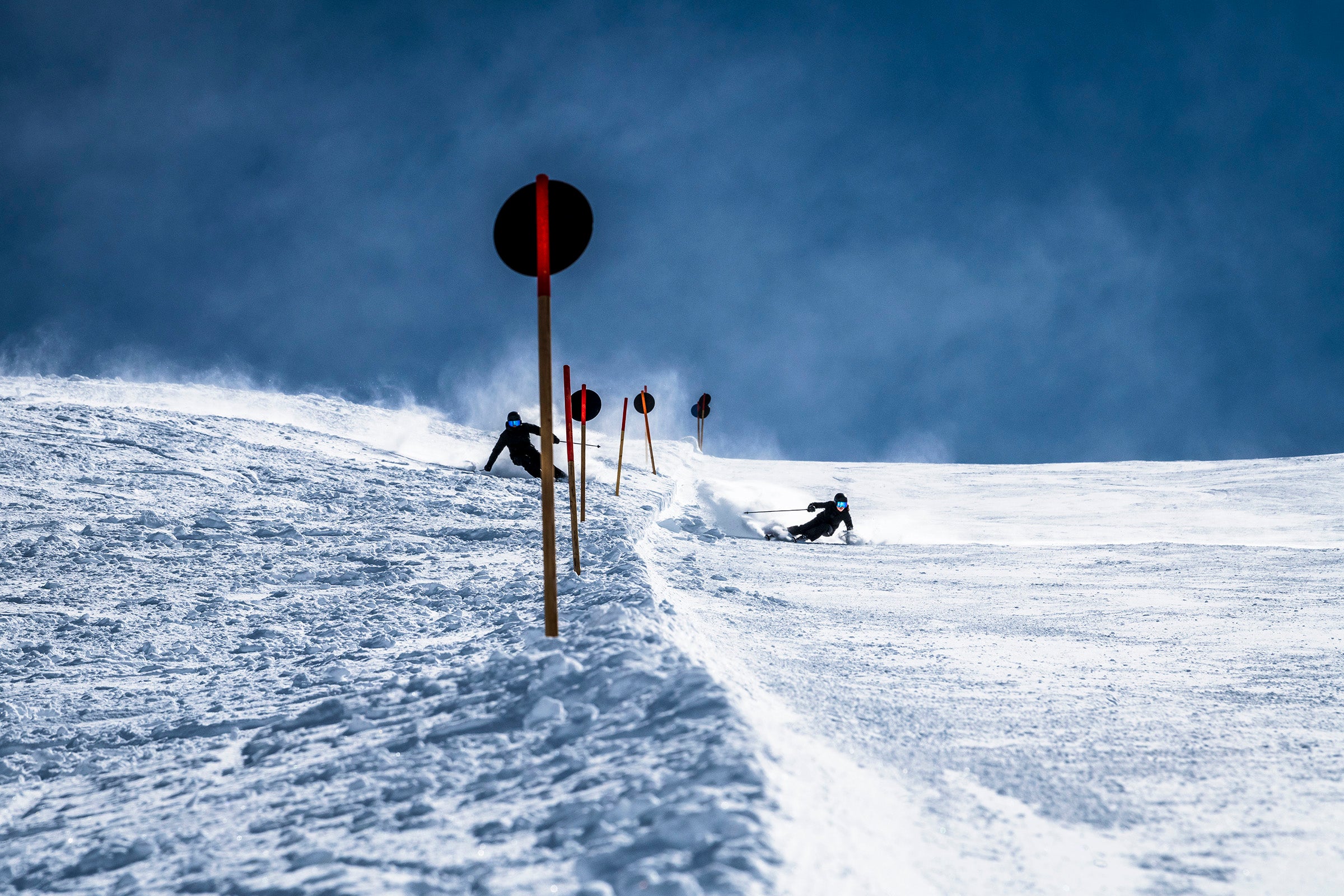
(Photo: Courtesy Völkl)
I experienced an identity crisis this winter. In my heart, I’m a powder skier, most comfortable knee-deep in the woods, expertly avoiding tree wells far away from the groomers. Naturally, I’ve always gravitated towards skis that are appropriate for that type of terrain. Give me boards with a triple-digit waist and more rocker than your grandma’s chair. Because, in my mind, I live a life where I chase storms and float fat pow, and I need the appropriate gear to live that life to its fullest. If anyone asks, I identify as a powder skier, and I have a penchant for jam bands and pocket burritos to prove it.
The trouble is, I live on the East Coast and ski mostly hard-packed powder and ice mixed with a touch of crud. I’m like a surfer stuck in Kansas. But I’m stubborn, so I’ve always skied powder skis anyway, forcing fat skis to carve turns on my overly groomed home slopes. Finding the edge of these wide boards has never been easy, but performance be damned, powder skiers need powder skis.
But something interesting happened after I was “forced” to test the new Völkl Peregrine 82 this winter (Völkl also released an 80-millimeter Peregrine this season). This new addition to Völkl’s lineup is an all-mountain ski designed to handle changing conditions, from hardpack to slush to ice and crud. In other words, the exact conditions I ski all the time. The Peregrine model is only 82 millimeters underfoot, putting it into frontside ski territory, which sounds boring as hell to snobby powder skiers. But damn, these skis are anything but boring. The Peregrine isn’t a cruiser; it’s an aggressive on-piste ski that’s super agile, especially at higher speeds, transforming a ho-hum groomed slope into a playground for hard chargers.
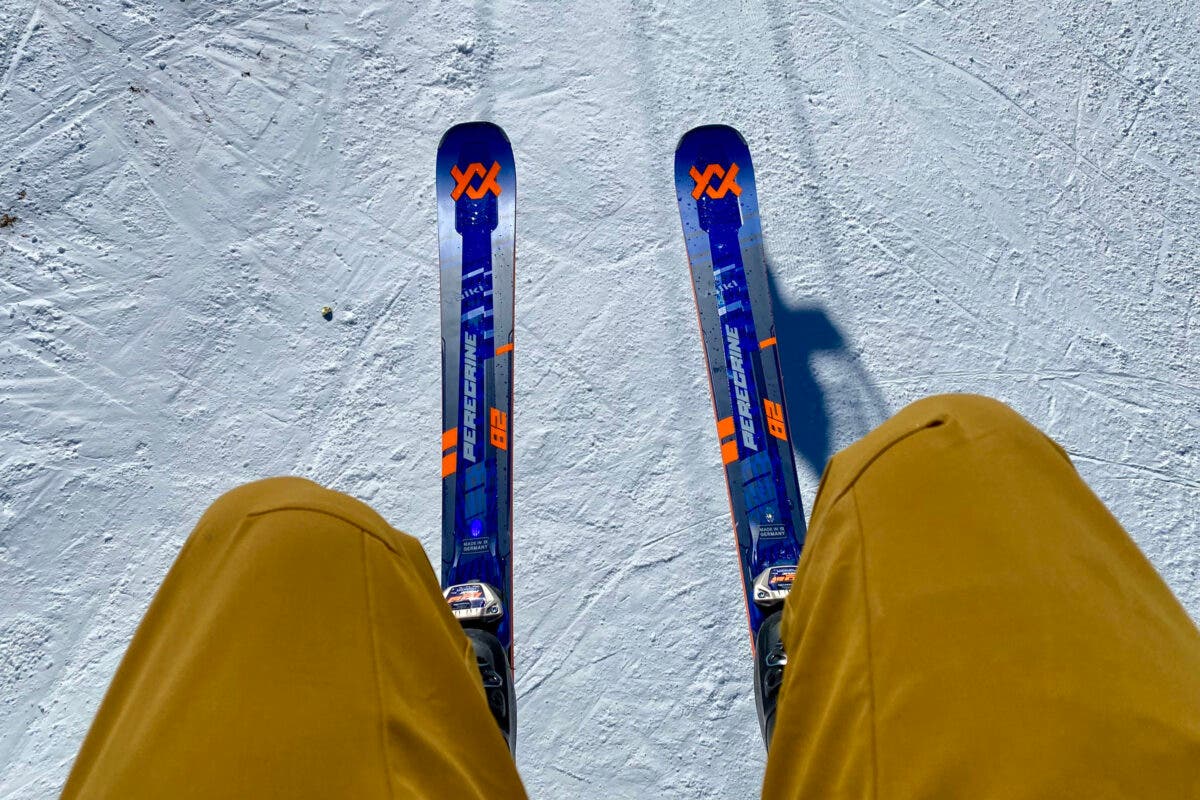
Völkl is known for loading its skis with all kinds of proprietary tech, and the Peregrine is no exception. They feature a layer of carbon in the tips, which helps distribute energy (you’ll notice a peppy rebound during the turn), and a metal frame width that’s adjusted based on the length of the ski to tailor stiffness to the user’s physical build. The Peregrine also comes pre-mounted with the LowRide Integrated Binding System, which includes a wider binding design connected directly to the wood core that drops your center of gravity by putting the bottom of your boot closer to the top of the ski. Hold the Peregrine up against most other skis at the mountain and you’ll notice less of a gap between the boot and the binding plateau.
All of this tech is designed to create a ski that’s incredibly responsive and easy to initiate at the beginning of a turn. You find the edge quickly, and when you pressure it, you can feel a bit of flex in the tips helping you complete the turn. In other words, it takes very little effort to whip the Peregrine around in typical resort conditions. But that doesn’t mean you can sit back and cruise, because these things want to go fast and you need to stay on them—they’re snappy.
ADVERTISEMENT
And yet, the Peregrine is also surprisingly forgiving. I don’t have perfect technique, but these skis make me a better skier in the same way that a well-tuned full-suspension bike makes me a better mountain biker—it does a lot of the work for me.
That’s not to say the Peregrine 82 is for beginners. It wants to go fast, and Völkl has positioned it on the speedy side of its all-mountain carver lineup. It’s named after the fastest animal on the planet, after all, so buyer be warned. In my experience, they shine when you’re taking an aggressive line down steeps. Conversely, I thought they got antsy when I forced them into slow, languid turns across the slope. It felt like cruising a 25mph neighborhood street in a Lambo—you could do it, but why?
I skied the Peregrine 82 steadily at North Carolina’s Cataloochee, my home resort here in the Southeast, during a winter that was plagued by a vicious freeze-thaw cycle with not enough natural snow to get excited about, but the Peregrine made this season’s lackluster conditions more fun. I love deep pow and face shots as much as the next guy who wears flannel as a mid-layer, but it turns out carving groomers is a blast on these skis. I never had more fun skiing “packed powder” in my life. All of a sudden, ripping the frontside of the mountain became interesting again.
As I said, the Peregrine 82 is so much fun that they have me questioning my identity altogether. If carving the groomed side of the mountain is this amazing, maybe I’m not a jam band-loving powder skier after all? Maybe I like yacht rock and overpriced resort burgers?
ADVERTISEMENT
I don’t want to be a Debbie Downer, but a ski like the Peregrine 82 might become even more relevant as ski conditions across the country become more hit-or-miss. How many weeks were people skiing East Coast conditions in Colorado this winter? You might want to consider adding to your quiver a ski that makes ripping firm groomers fun as hell.
2024-’25 Völkl Peregrine 82 Specifications
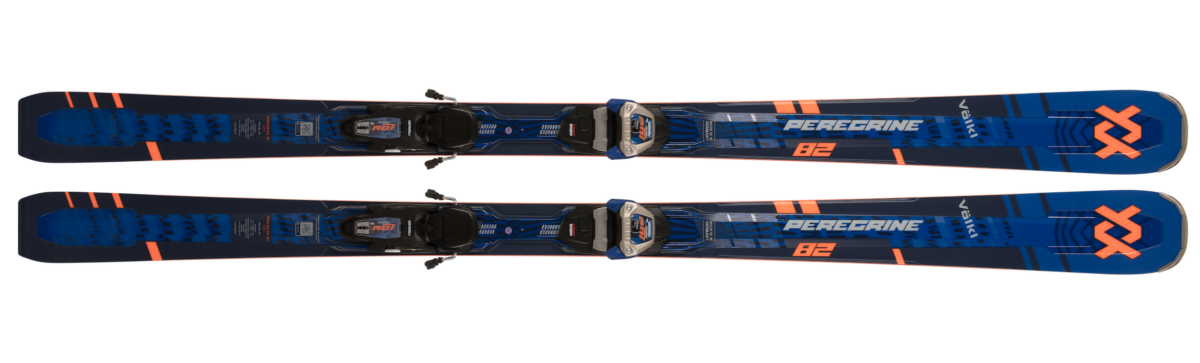
| Available lengths | 162, 167, 172, 177, 182 |
| Dimensions | 128-82-111 mm |
| Radius (3D Radius Technology) | (R1) 27 m, (R2) 15 m, (R3) 23 m |
| Core | Multilayer wood core with Tailored Titanal Frame |
| Included binding | Marker Lowride 13 FR |
Read More
The Best All-Mountain Skis of 2024
The Best Frontside Skis of the Year
The Best Alpine Boots of 2024