Updated February 21, 2024 09:46AM
Protect Your ACL With These Essential Butt and Hamstring Exercises
To protect your ACL, you need to beef up security around the knee.

SKI Tester Tim Dyer sends it on the second day of testing. (Photo: Keri Bascetta)
Over the years, I’ve learned to think of my glutes and hamstrings as vital pieces of skiing equipment—a lesson I learned the hard way.
Like most skiers (and humans in general), I am quad-dominant. Everything I do, from hiking and running to mountain biking and skiing, works my quadricep muscles more than anything else. As a result, my quads are stronger than the muscles on the backside of my legs.
This kind of strength imbalance between antagonistic muscle pairs—where one muscle contracts to move a body part, and its counterpart muscle contracts to move that body part back to its original position—puts you at risk of all kinds of knee injuries, including ACL tears.
Related: Your most pressing ACL injury questions answered
Here’s why: The anterior cruciate ligament in your knee is a stabilizer ligament, one of four major ligaments that keeps your knee stable and protected. “It prevents the shin bone from slipping forward, but it also helps prevent excessive rotation of the knee when fully extended,” explains Dr. Matthew Provencher of the Steadman Clinic in Vail.
But the ACL is just one tiny ligament in the grand scheme of knee stabilization. Yes, you want and need strong ligaments to stabilize the knee joint. But you also need to beef up security around the knee. That means calling on the big guns of the leg: the quads, hamstring, and glute muscles.
ADVERTISEMENT
“Skis provide a unique torque on the knee joint. If a ski, which is rigidly affixed to your foot and ankle, twists too aggressively without quadriceps and hamstring activation, the ACL is left to take a huge load across the ligament and may tear under the force,” says Dr. Provencher.
I’ve torn my ACL on three different occasions, all while skiing. I blame weak hamstrings and glutes for every one of those tears. My strong quads were there to protect my knee joints, but my hammies and glutes, which I used to neglect in the gym, were not.
Related: ACL Recovery Timelines for Skiers
The lesson here: Don’t be me. Make sure you invest as much time and energy in strengthening your hamstrings and glutes as you do your quads. Not only will stronger hammies and glutes help protect your knees, they’ll also increase your staying power on the slopes because your quads won’t have to do all the work.
To start, try working these basic but effective hamstring and glute exercises into your regular workout routine. Do them with free weights or kettlebells—do them.
ADVERTISEMENT
5 Essential Hamstring and Glute Exercises for Skiers
Single Leg Deadlift
Works: Hamstrings, Glutes, Quads, Core, Lower Back
Focus: Balance/Stabilizer Muscles
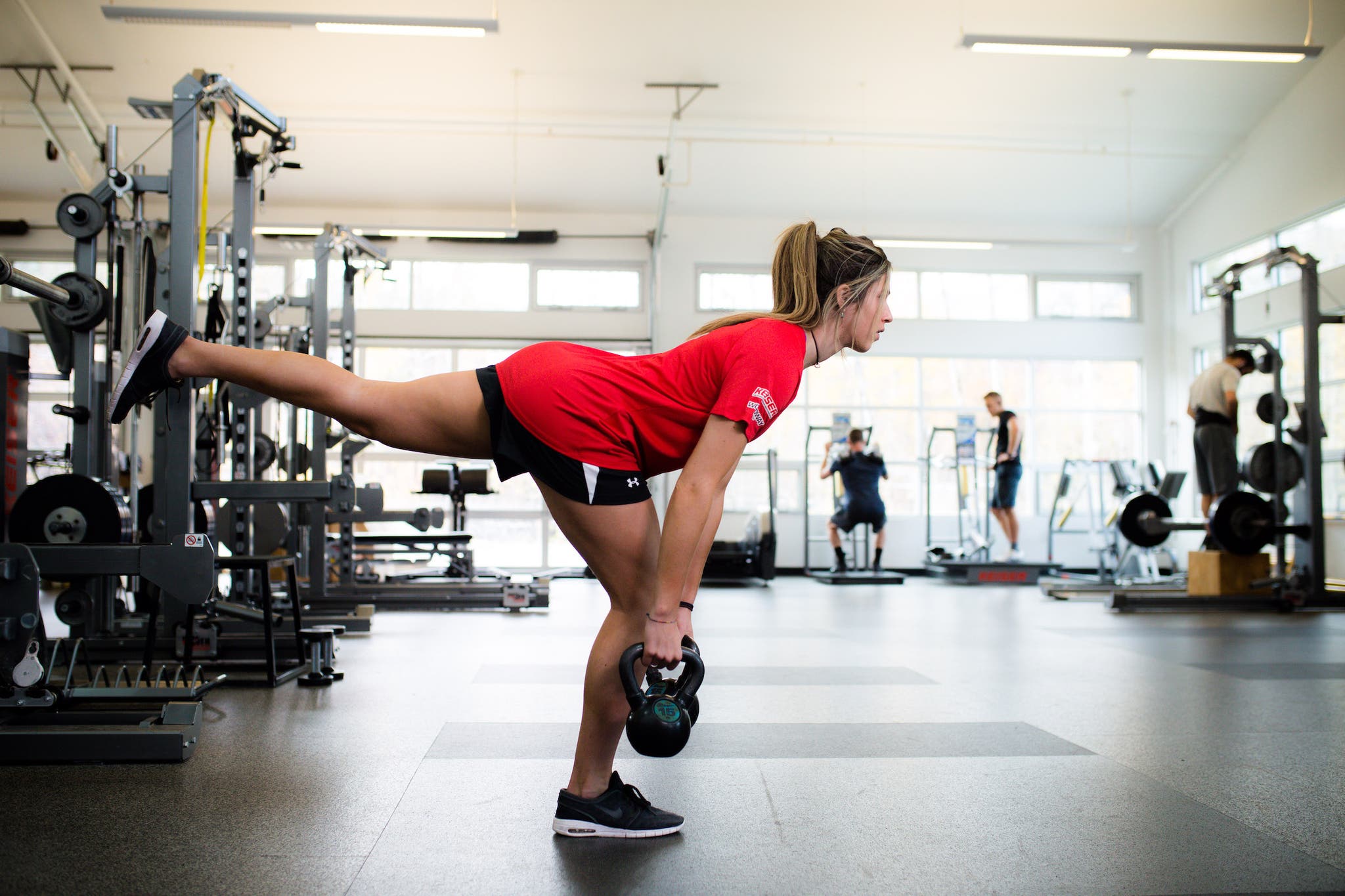
- Stand in a basic athletic stance, feet hip-width apart, with a kettlebell or dumbbell in each hand by your side.
- Shift weight into one leg while lifting the opposite leg off the ground.
- Hinge at the waist to lower the upper body while raising the extended leg behind you, heel pointed toward the back wall.
- Allow dumbbells or kettlebells to naturally gravitate toward the floor as you keep your chest upright.
- In this position, you should feel a stretch in your hamstring
- Activate glutes and core to return to starting position; tap a foot to regain balance, or move directly into another rep
- Complete 8 reps on one leg before switching to the other leg
Weighted Squats
Works: Hamstrings, Glutes, Quads
Focus: Strength under Resistance
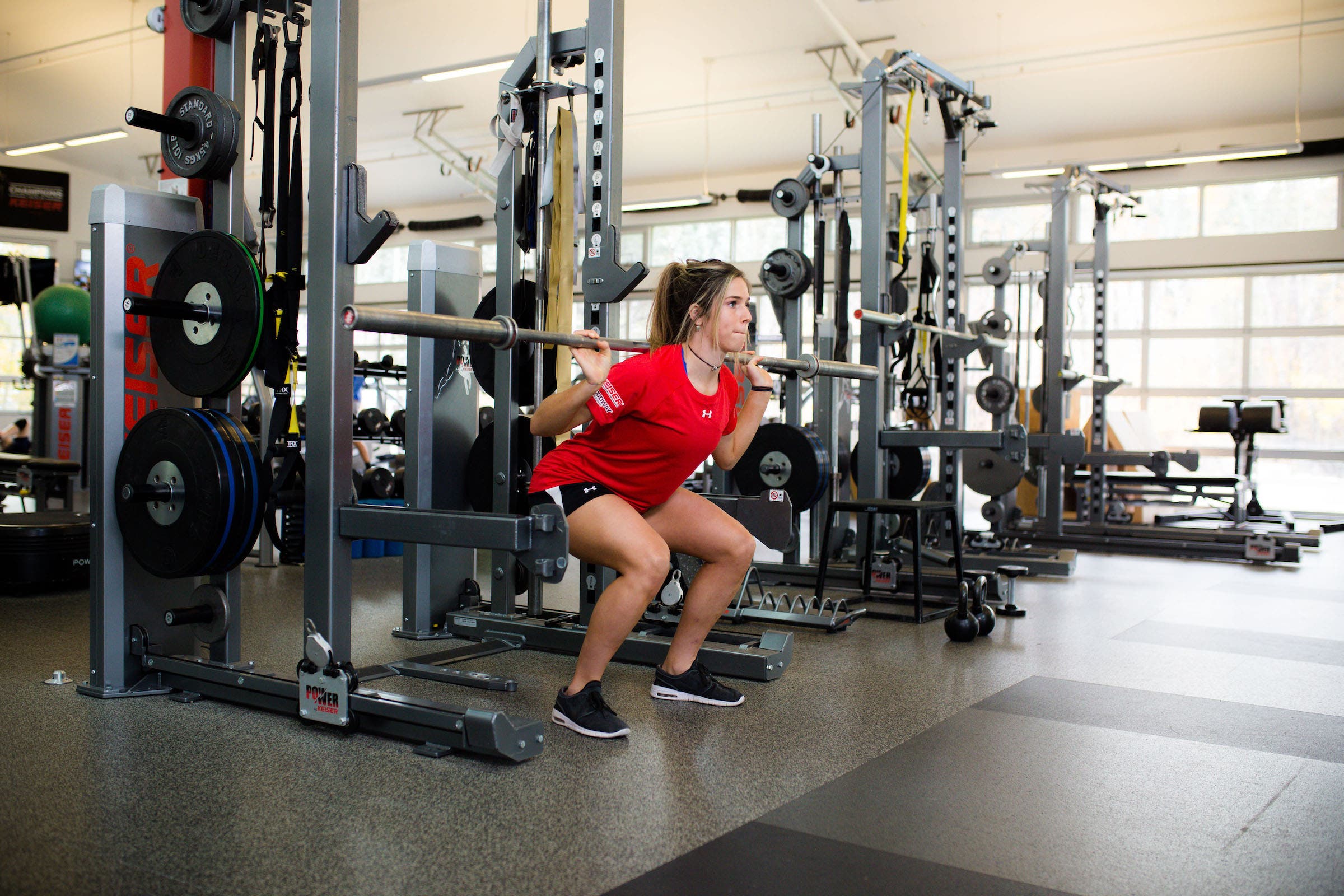
If you can access a squat rack, place the unweighted bar behind your shoulders to perform this squat. If you don’t have access to a squat rack, perform a squat with kettlebells or dumbbells in each hand.
- From an athletic stance with feet hip-width apart, hinge at the waist and drop your backside back as you lower into a 90-degree squat.
- Focus on keeping your weight over your heels and your knees tracking straight over your toes, not angling inward.
- Keep your chest and eyes forward.
- Hold squat for 2 seconds before engaging the glutes, quads, and core to return to the starting position.
- Complete 10 reps
ADVERTISEMENT
Weighted Box Squats
Works: Hamstrings, Glutes, Quads
Focus: Strength and Range of Motion
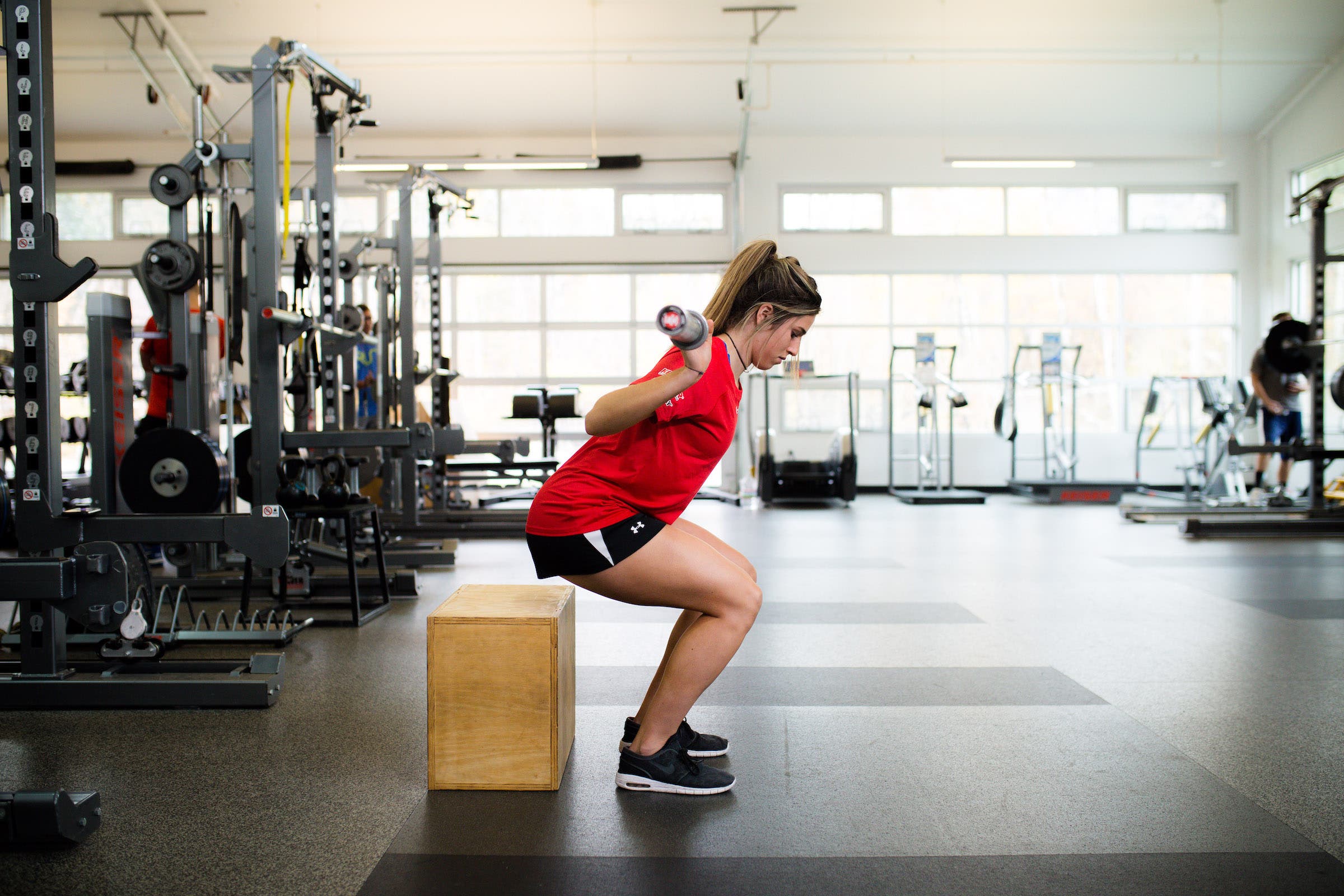
- For this move, use a plyometric training box, bench, or ottoman that comes to just below the knee.
- Stand in front of the box.
- Perform a weighted squat as outlined above, with the goal of lowering your backside until it lightly touches the top of the box.
- Return to standing
- Complete 10 reps
Goblet Squats
Works: Hamstrings, Glutes, Quads, Adductor Muscles
Focus: Adductor Muscles and Range of Motion
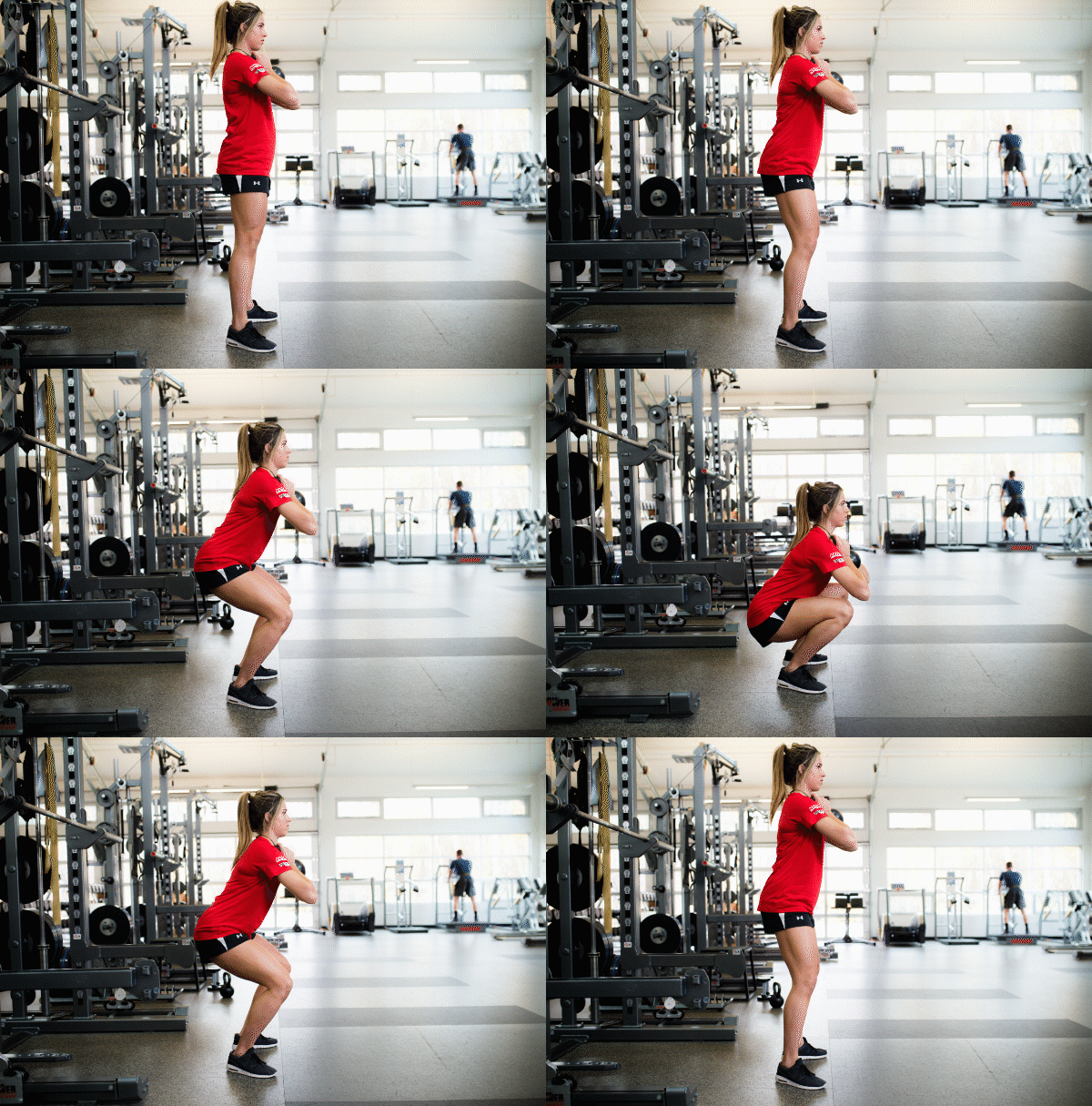
- Stand with feet slightly wider than hip-width apart, toes pointing slightly outward.
- Hold a kettlebell or dumbbell with both hands in front of your sternum
- Hinge at hips and drive backside back to lower into a deep squat slowly
- Focus on keeping your weight over your heels and your knees tracking straight over your toes, not angling inward
- Keep chest and eyes forward
- Engage hamstrings, glutes, quads, and core to return to standing
- Complete 10 reps
Hip Thrusts
Works: Hamstrings, Glutes, Quads, Hip Complex
Focus: Glutes and Hip Complex
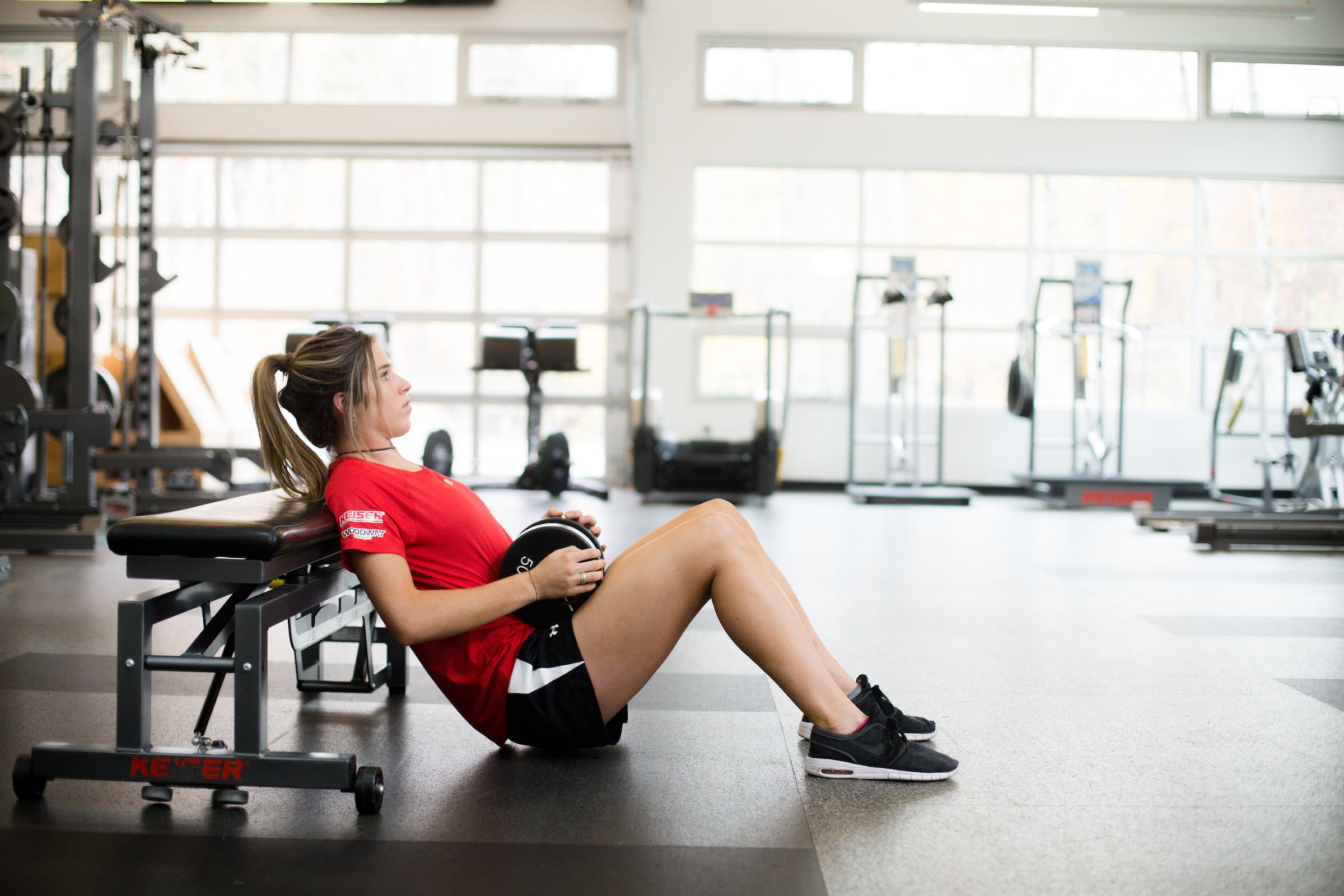
- Sit on the floor with your upper back against a bench or box
- With a dumbbell, weight plate, or kettlebell in your lap, push your upper back into the bench and thrust your hips toward the ceiling to move into tabletop position
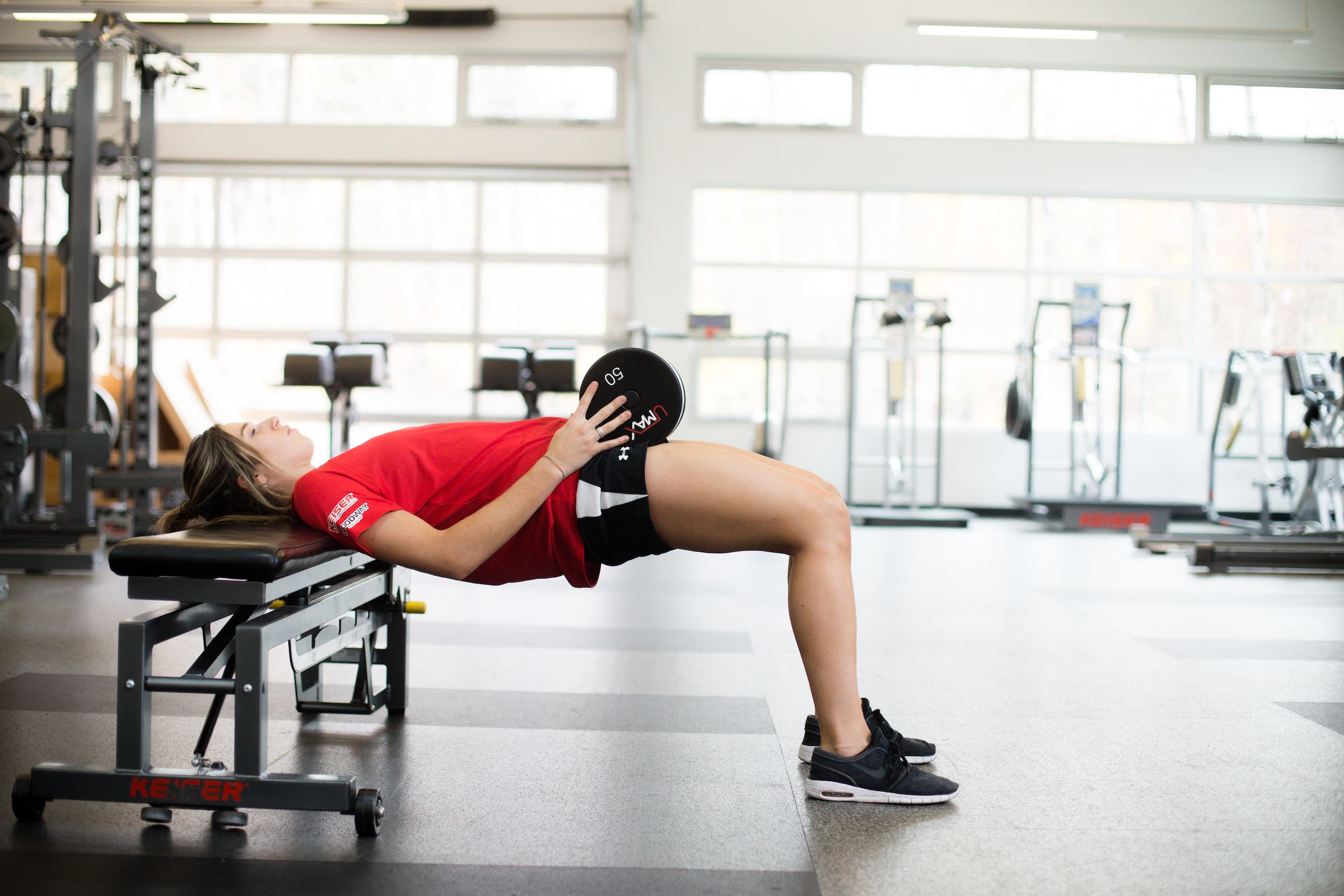
- Hold for 2 seconds, then lower hips to starting position
- Complete 10 rep
Looking for more training tips designed specifically for skiers? Check out SKI‘s Get Fit to Rip course on Outside Learn. The comprehensive online training plan was designed by former U.S. Ski Team strength and conditioning coach Chris Miller and features full workout videos that you can follow at home.
