Updated December 3, 2024 10:52PM
If you buy through our links, we may earn an affiliate commission. This supports our mission to get more people active and outside.Learn about Outside Online's affiliate link policy
How To: Post-Season Ski Tuning
Give your skis a little TLC after a long season of abuse.
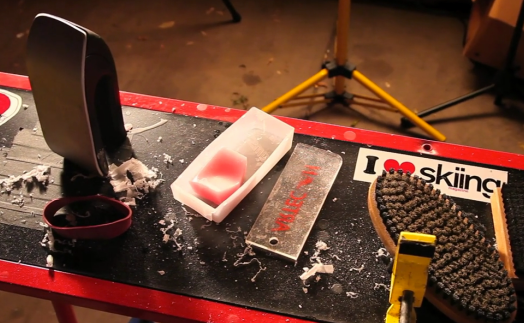
When you pack up your skis at the end of the season, it’s important to retire them properly—they’ll most likely need a little tuning and TLC after a long season of abuse. We asked General Manager Brian Foley at Pierce Skate & Ski in Bloomington, Minn., to share some of his summer-prep techniques.
Why It’s Important to Tune your Skis Before Storing Them
A season of shredding has likely left your bases looking rough—either dehydrated, scarred, or both—and your edges may show wear and tear in the form of burrs, dull edges, or rust patches. While most skiers tend to wait to take care of these issues until the start of the next season, best practice is to address maintenance issues before you store your skis in a garage or basement all summer, where fluctuating temperatures can cause further damage.
Related: When to reuse, repair, or replace your ski gear
Post-Season Ski Tune vs. Regular In-Season Ski Tune
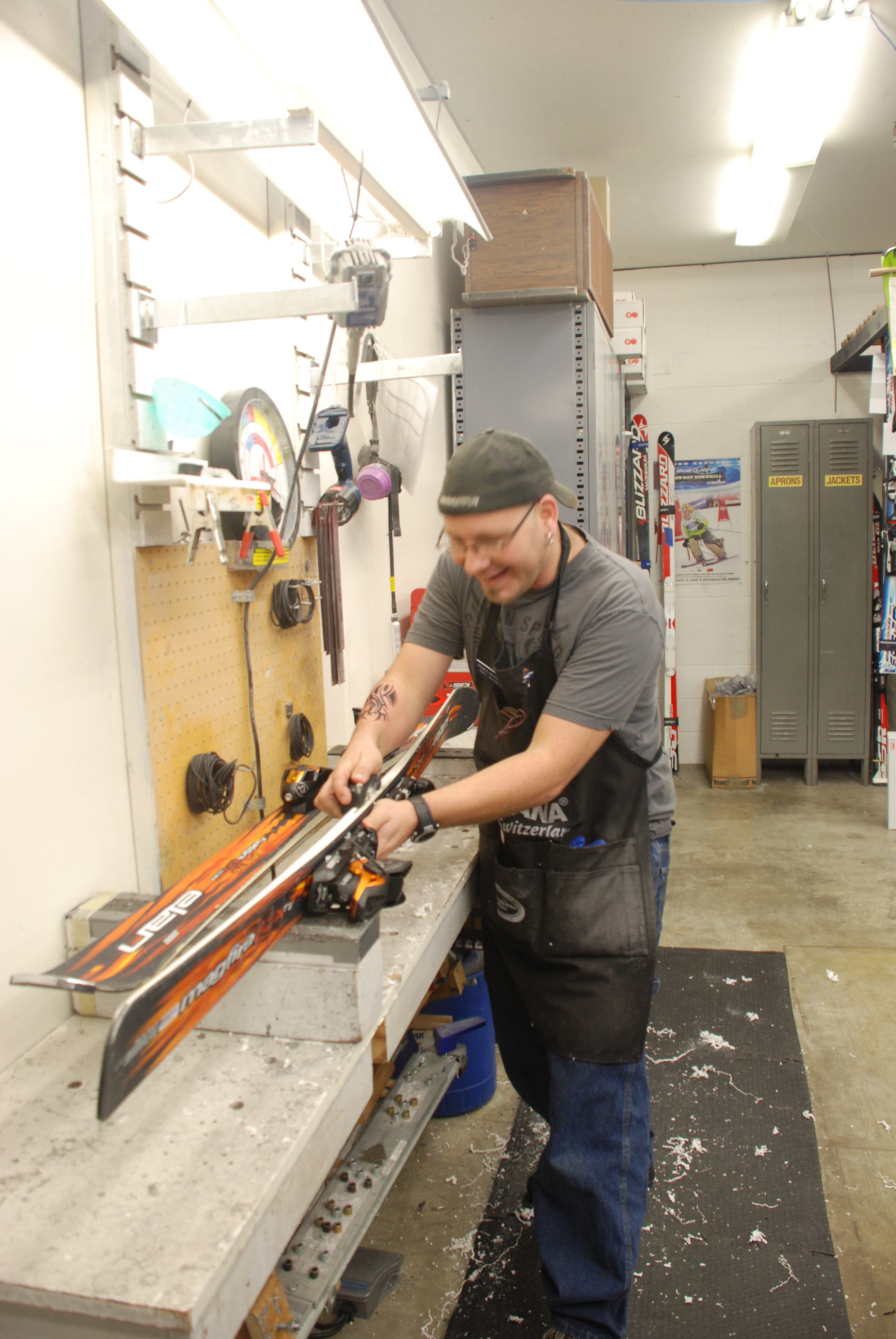
During the ski season, the best rule of thumb for ski tuning is “do a little work more often.” This means cleaning and waxing your skis’ bases every four to six ski days at minimum to keep your skis gliding efficiently, and regularly removing rust patches and burrs from your edges.
ADVERTISEMENT
In the off-season, when skis will be stored for a long period of time, you’ll want to do more work before stashing them to protect them from fluctuation temperatures. Post-season ski tuning steps include the following:
- Thoroughly cleaning your ski bases using a base cleaner and conditioner
- Filling scratches or gouges in your bases with P-Tex so no moisture can penetrate the ski’s core
- Applying a thick layer of wax without scraping to help keep your skis hydrated for a few months
Step-by-Step Post-Season Ski Tune
1. Remove excess sidewall. Prior to any tuning, remove excess sidewall material using a sidewall cutter.

2. Polish and bevel edges. Using a file or coarse diamond stone, bevel your side edge and your base edge if necessary to your desired angle. Foley recommends that intermediate to aggressive skiers use a side bevel between 1 and 3 degrees. Make sure all scratches and abrasions are polished out of your edges. The goal here isn’t necessarily a sharp edge, but a smooth edge.
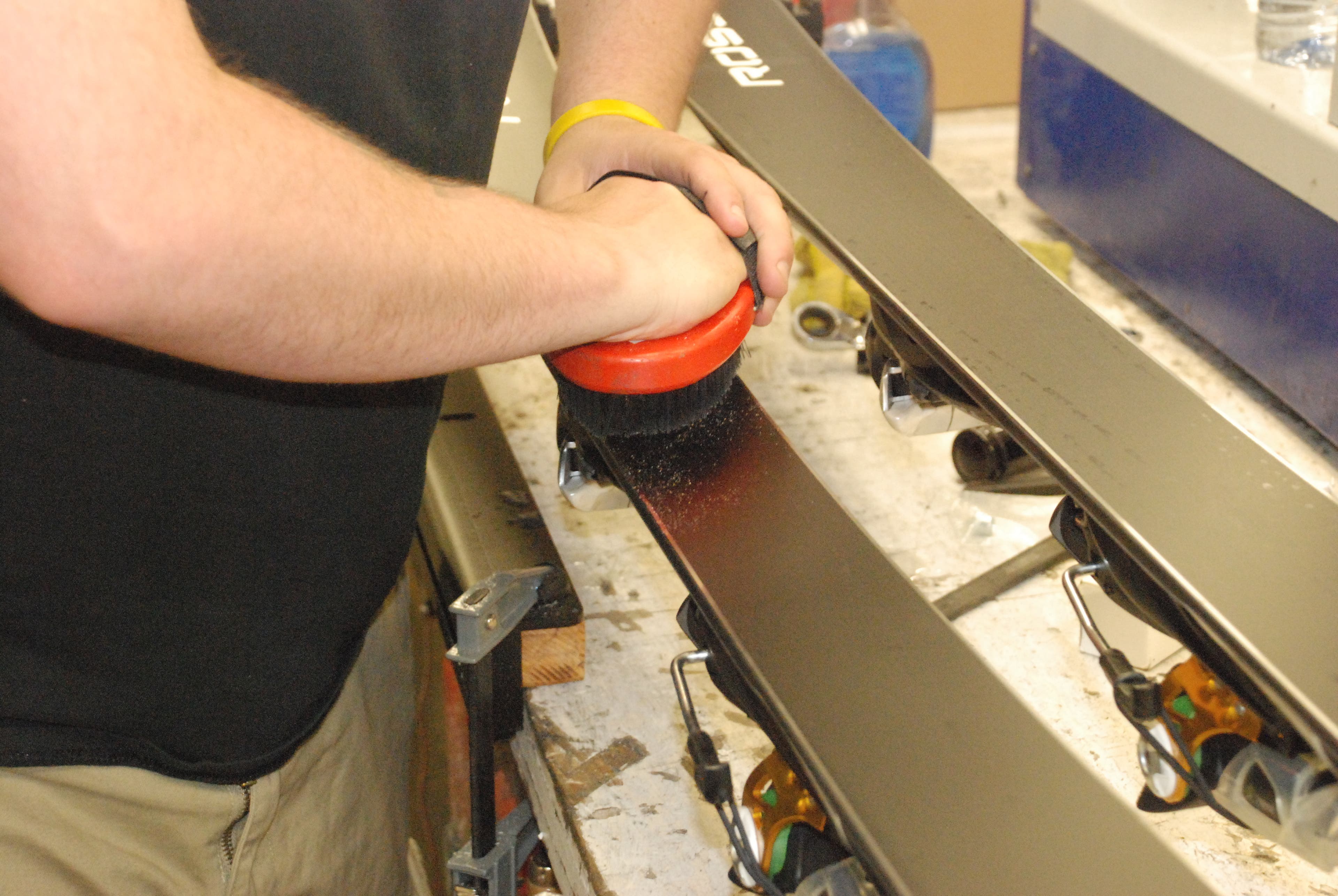
3. Clean bases. “Cleaning” a ski consists of stripping the base of any fluorocarbons or other materials that might harm the ski. To do this, use an iron to apply a generous amount of wax, and quickly scrape it off before it cools. Once the wax is removed, use a steel, brass, or bronze brush to further clean the bases.

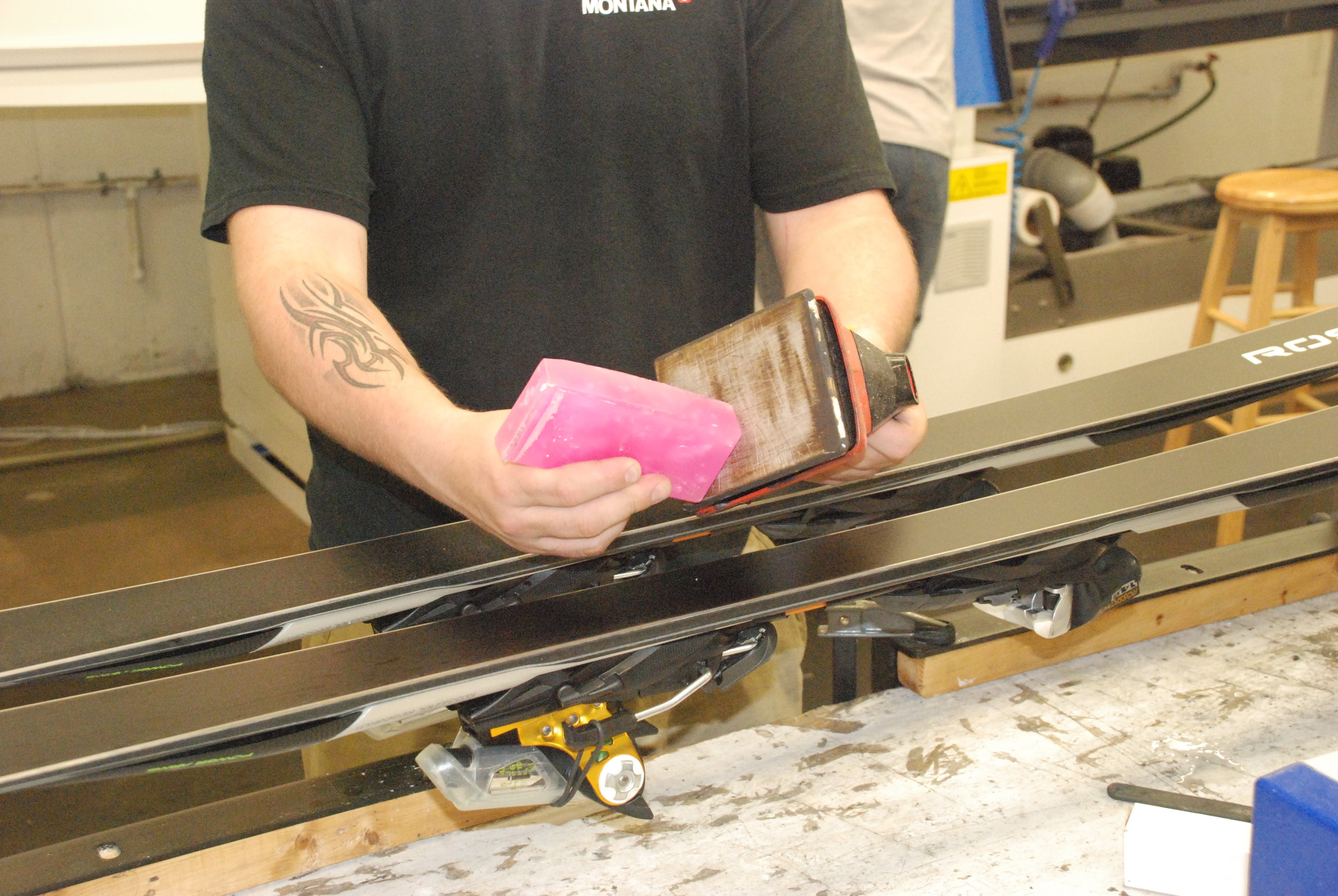
4. Wax bases. Proper waxing is vital for your ski’s performance. For best results, Foley says to apply two-four layers of base-prep wax, scraping and brushing between each coat. Make 10-15 passes with varying brush stiffnesses before applying the next coat. The final layer of wax should be a thick application— eave this layer on to protect your base and edges during summer storage.
Check out: How to Repair Damaged Bases
Get the right ski tuning equipment
ADVERTISEMENT
Pro Tips for Summer Ski Gear Storage
- Before you hang ‘em up for the season, be sure to turn down your DIN setting on each binding so you don’t wear out the springs.
- Stuff clean socks and dryer sheets into your ski boots, so they’ll be less appealing to mice looking for a new home. Avoid storing your skis in the garage if possible.
- Find a cool, dry place where they will be safe from the elements over the summer.
Read next: How to Build a Ski Rack