Updated November 24, 2025 05:24PM
In Ski Country First, This Resort Added Indigenous Language Translations to Trail Signs
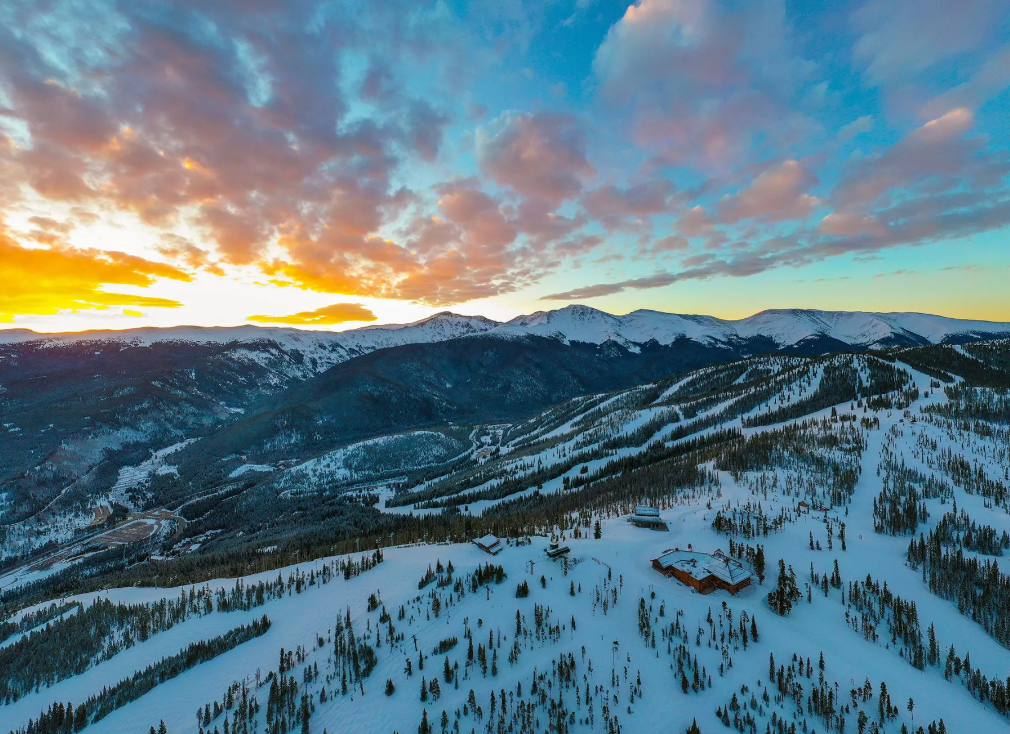
Winter Park added an art installation and signage in homage to the people and cultures who originally inhabited its land.
(Photo: Courtesy of Winter Park)
Long before the hoots of Gore-Tex-clad powderhounds on fat skis echoed through the mountains, present-day ski country witnessed the movement and sounds of America’s first peoples—from the Nooksack and Skagit, whose territory included Mount Baker, to the Abenaki land under Mount Snow.
That all changed between 1776 and 1887, when the Indigenous tribes were forcibly removed from their ancestral homelands and pushed westward, eventually relegated to federally mandated reservations.
The largest land heist in history looks worse when you consider who uses that stolen land today and how much money it makes. According to data from the National Ski Areas Association, over 88 percent of skiers identified as white, and 0.6 identified as Indigenous. And according to Statistica, in 2022, the market size of the ski industry was $4.4 billion.
Many ski areas have issued a statement that acknowledges that their booming businesses operate on stolen lands—then everyone gets on with their day.
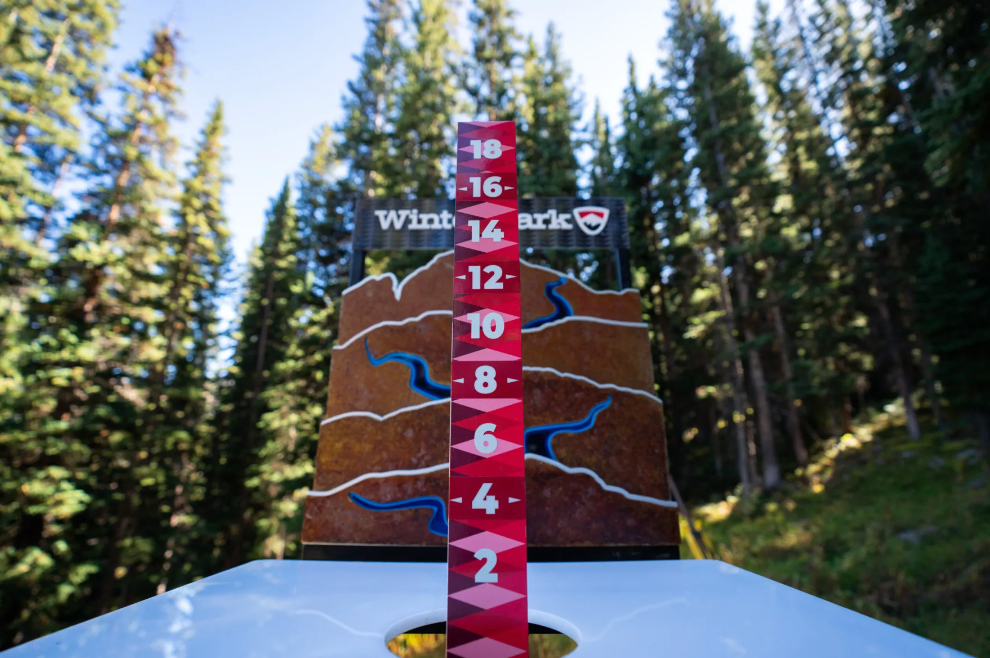
Colorado’s Winter Park Resort is taking that acknowledgment one step further. This year, the Front Range ski area, which operates on the ancestral homelands of the Arapaho, Cheyenne, and Ute tribes, has launched a permanent art installation and a new snow stake designed by Indigenous artists. In addition, the resort is adding Arapaho language translations to their trail signs this season and installing historical markers that share the history of the land prior to 1940, the year the ski area opened.
Also Read: Ride the Rails to Winter Park and Ditch the I-70 Traffic This Season
The project, titled “There Is Snow On The Ground” (the English translation of the Arapaho word, heniiniini, pronounced “hee nee nee neh”), is the result of a four-year partnership between Winter Park Resort, Indigenous artists, and NativesOutdoors, a Native-owned collective that works to amplify Indigenous art and stories.
The artist-designed sign and snow stake feature four mountain outlines—Longs Peak, Mount Blue Sky (formerly Mount Evans), Byers Peak, and Parry Peak—which symbolize the four directions that anchor the area. The use of water in both installations serves as a reminder of the life-sustaining water contained in the snowpack we play on in the winter. The sign, which prominently displays the Arapaho word Heniiniini, sits at the top of the gondola in front of Sunspot Mountaintop Lodge. Both the sign and the snow stake feature patterns created for the project by Native artists Jordan Craig and Vernan Kee.
“Snow on the ground here at Winter Park is important for much more than just fun and recreation. Snow on the ground creates a vital resource—water—for communities and millions of people downstream. ‘There Is Snow On The Ground’ is a project that will hopefully make people stop and think about the intersection of snow, water, recreation, heritage, history, and sense of place here at Winter Park, and join in our collective effort to steward this amazing mountain community,” said Sky Foulkes, president of Winter Park Resort, in a press release shared with SKI.
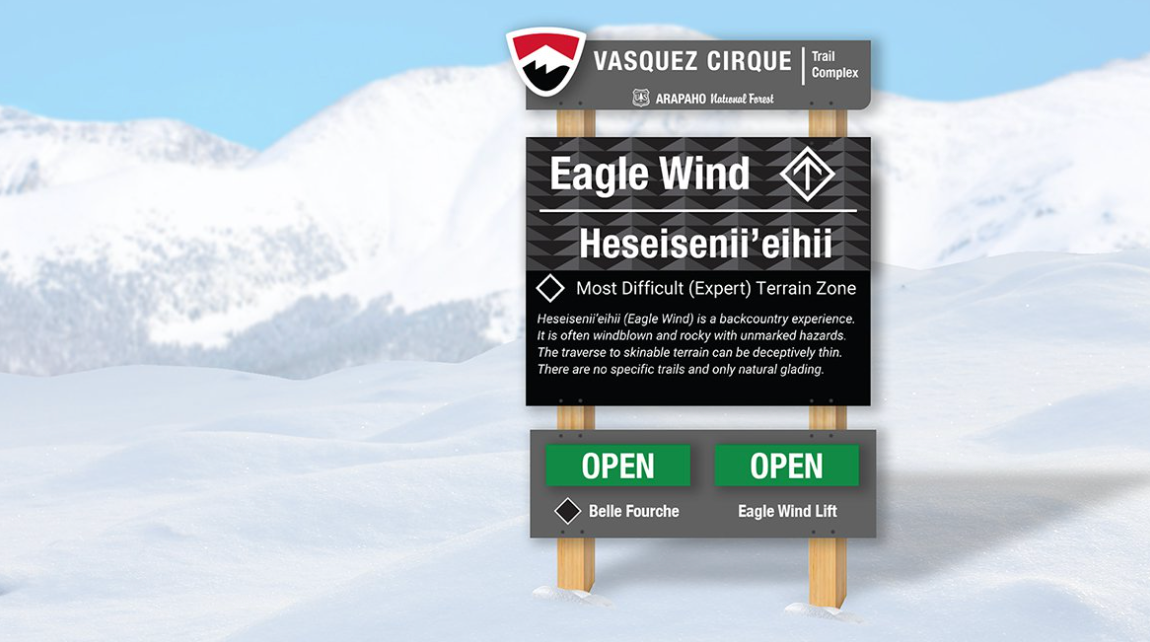
As part of the “There Is Snow On The Ground” project, the trail signs off the Eagle Wind Lift will soon feature translations of the trail names in the Arapaho language. The Eagle Wind Lift, which opened in 2006 and features some of the resort’s most challenging terrain, was so named following a consultation by Northern Arapaho Tribe elders who say the Arapaho people once called the land “Eagle Wind.” Each ski run in the Eagle Wind area was also named during these meetings, and honors significant figures from Arapaho history—Thunderbird, Left Hand, Black Coal, Sharp Nose, Medicine Man, and Little Raven.
Finally, as part of the project, Winter Park added new historical markers that provide a more complete story of the land. The markers will recognize the people who stewarded the land long before the resort opened and note Arapaho place names. All the markers (new and old) will be updated with the pattern specially created for the project.
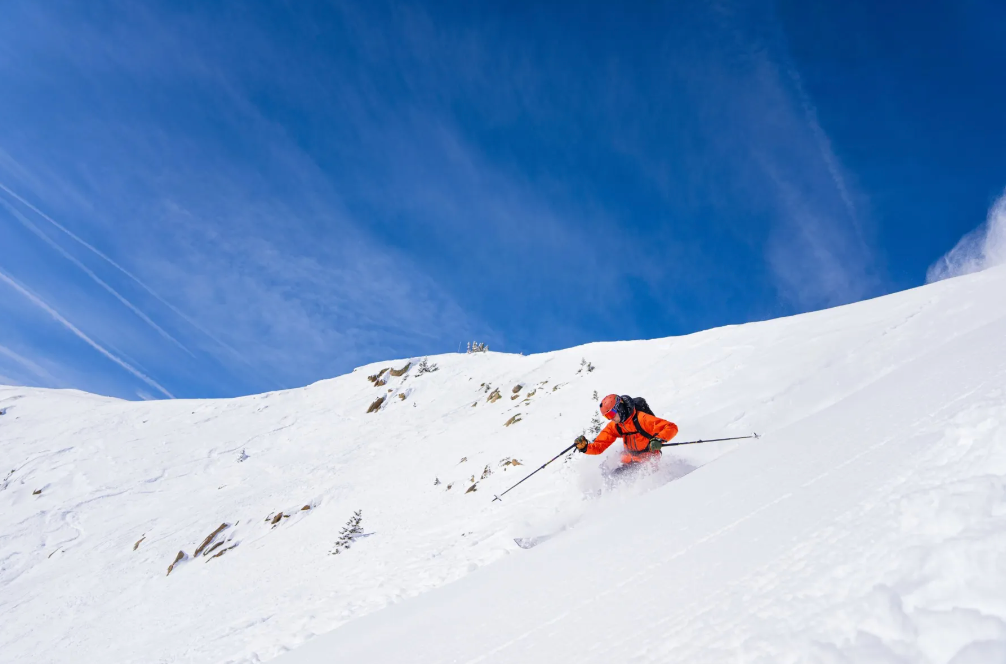
“Native nations and people have deep roots when it comes to connecting with the land and water and all the natural resources they provide,” said Connor Ryan, a Lakota professional skier and filmmaker. “It’s been embedded in our culture for centuries and continues to this day. For Native people, skiing can be a space for that connection and to experience the joy with these elements that have always been a part of our cultures.”
Perhaps with time, the hoots of happy skiers will include more than the current 0.6 percent of Native voices, allowing for a complete return to the land and a chance to enjoy it in its current form.
